We found this rather addictive app on the iPad called Merge
Dragons. It’s a game that allows you do
exactly what it says. Merge dragons.
They have occasional weekend special games, where you get
nice prizes if you go on and do the special event. The trick is to collect
enough points to collect all the prizes.
The dragons harvest various seeds and you combine them to make something
worth more points.
The higher level the plant is that the dragons click on, the better the harvest, and the more points
There are a lot of plants on the board, and only a small
number of high-level plants. (It takes time to set them up.) But you can force the dragons to harvest the
plants you want.
I have two dragons. But these poor little creatures. All they want to do is collect hearts, and mean old me keeps double-clicking on the big old tree I want them to harvest. If I give them time in between, off they fly to collect some more hearts, which is slow, and doesn’t get you many prizes.
So the only way to keep these little creatures on track is
to double-click on the appropriate fruit tree immediately after they have
harvested.
This is cracking the whip. This is slavery.
I feel really bad.
So bad, I’m losing any stomach for finishing the game.
I have to admit to being disappointed with the result. Not
just because I was hoping for a government that would take climate change more
seriously, but mostly because the winning party indulged in a scare campaign that
worked. All they seemed to do was tell you how much more badly off you will be
if you vote for the other parties. There was a lot of dishonesty with it, too.
Advertising made to look as if it came from the AEC (Australian Electoral
Commission), and so on.
Sadly, other parties will see now that it worked. Sigh. It’s
the Tragedy of the Commons.
In contrast, the Eurovision Song contest was an affirmative
statement of ‘be who you are’.
Saturday was also Eurovision grand final.
Because we write, we don’t get a lot of time to watch
television, but the one thing we do watch is the Eurovision final. Three years
ago we switched from cable television to internet-based TV. Loved the cable,
incidentally, it just worked; all the time, with no problems. Sadly, the phone
company discontinued the service. We bought a smart TV to work with the new
internet connection.
But every time we turn the television on now, we have to
relearn how to use it.
That means that the first half hour of the Eurovision is
spent by us trying to get the TV to work and trying to get a channel. We don’t
have free-to-air any more, we have to rely on SBS On-Demand to see the show,
and we always forget how to set it up.
I have no idea why it takes so long. Well, I do, because
we’ve never really learned to use the television. In the end, we gave up and put
it on Sherylyn’s laptop.
We missed the first two entries, but we heard the rest.
I liked most of the songs, and many of them were about
acceptance, or being yourself. Australia’s entry, for example, was about post-post-natal
depression. (We know, Australia, Eurovision. Don’t ask. We have no idea why,
either.)
Actually, I was more impressed with Kate Heidke Miller’s (Australia)
entry than I expected to be. I like the song, but the poles got to me. Three
people swaying around on poles seemed a weird thing. But in the end, when they
put the effects of the earth and the stars together with it, it was amazing.
The poles are still weird when you see them, though.
You have to watch it to see what I mean.
So politics is getting dirtier, but there’s hope if people can still sing about positive affirmative things. I’ll leave you with my favourite Eurovision song. It didn’t win (I did like the Netherlands song, which won) but I really liked Norway’s song. This one is about the northern Aurora, and has a really catchy chorus.
When Gruen comes aboard her ship luckily all went fine.
But what if Ean hadn’t said, “Don’t kill,” through the lines and she had not listened to humans and killed Radko and Ean?
How would the Gruen lines feel with Ean dead, especially line eight which could have saved him, but did not want to contradict its Ship? How would the other lines feel with Ean dead? Or would the other eights save him? After all they are not captain Gruen bound as is the Gruen.
We know how important the captain is, but how important is one of their lines? Line nine did not care about Ean’s panic in the void, all that mattered was Kari Wang.
Just curious. Ean would never hurt the lines, but what if Gruen had killed him (if Ean had forgotten to tell her no shoot through the lines)?
We thought this would be easy to answer, until we started to
think about it, and it generated a lot of discussion in our writing household.
Instinctively, we felt the lines would save line twelve. But they wouldn’t.
As our reader pointed out, in the void the Eleven listened to Kari Wang over Ean,
and we know that if Wendell wanted his ship to do something against Ean’s
wishes, Wendell would win out, for certain.
We digress here to note that Kari Wang and the Eleven bonded very quickly. We think that’s because Kari Wang had been on
a ship (with a good relationship to it) not long before and was already open to
the lines. Both were grieving their lost
crews, both were used to and ready for a ship/’ship’ relationship.
So yes, after a point, the captain’s commands would win out
over Ean’s if the meld between ship and ‘ship’ was strong enough.
But how would the lines cope with a conflict between captain
and line twelve? Especially if they
killed Ean. It would create a
conflict. They don’t want to destroy
line twelve. Other ships don’t want them
to destroy line twelve.
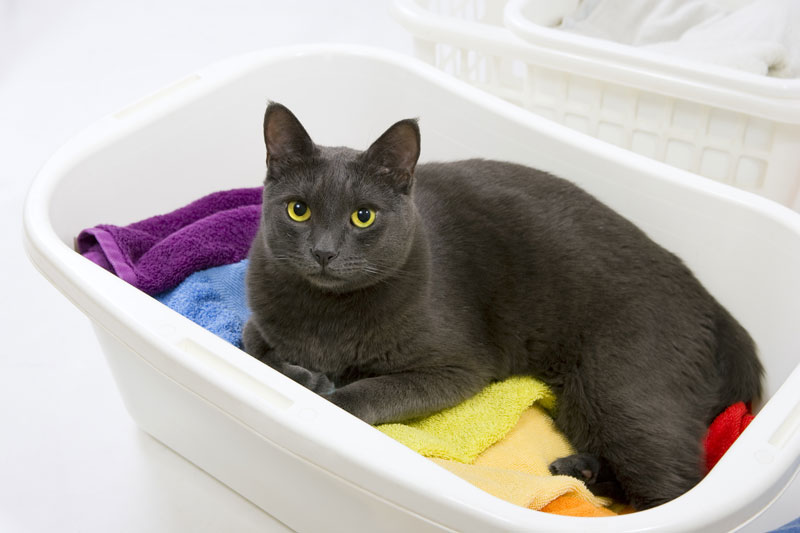
This is not a washing machine, or even a dryer, but when I was looking for clip art for this post I got pictures of cats in dryers. I know cats love dryers, because they’re warm and soft. The pictures are cute but call me paranoid—I didn’t want a picture like that. Too scary. So instead, I chose another cat laundry picture. Mum’s cat, Mercedes, used to love our laundry basket when we took the warm clothes out of the dryer. (Of course, our laundry wasn’t neatly folded like this. 😊)
Maybe it was talking about bots that set it off, but last week our washing machine stopped working. We did the obvious. Plugged it into a different power source. It still didn’t work. We still had power everywhere else in the house, so it took a while for us to check the fuses. Sure enough, the circuit breaker had tripped.
We reset the fuse. The circuit breaker tripped again as soon
as we turned on the washing machine. Or
the dryer. We then ran an extension cord from another part of the house. The
washing machine worked perfectly. At
least we could wash clothes. Albeit with
a few OH&S issues. But it was
enough.
We called the electrician.
He came. Tested the power points. Everything worked, including the washing
machine, and the dryer, in the same sockets it wouldn’t work for us.
Arrgh.
“It’s probably the washing machine,” he told us. “If it keeps
tripping as soon as you turn the appliances on, it’s probably the appliance.”
It worked for three days. After that it started tripping again. Two days
after that, it started tripping on the light switch in the garage (or,
officially, Sherylyn’s art studio), and when she tried to use a heat gun out
there.
Naturally, we’re waiting on the electrician again, but meantime,
we’re not washing our clothes as frequently as we used to. Come the weekend there’s
an overflowing basket of clothes.
To me, one of the most freeing inventions of the industrial
revolution is the washing machine.
If I could only have one single electrical appliance in the
house, it would be a washing machine. Driers, robot cleaners and dishwashers are
lovely to have, and they free up time, but they don’t free up any way near as much
time as the washing machine does.
I’m off now to get my extension cord and do a week’s
worth of washing.
Easter Monday and the Anzac day holiday were in the same
week this year, which meant that if you took three days’ leave, then you ended
up with an unbroken stretch of ten straight days of holiday.
Naturally, I took it. We both did.
Which is fine, except Monday, Wednesday and Fridays turned
into a game of beat the bot.
Housekeeping is never a fun chore, it’s just something that
has to be done. So last Christmas we
bought bots. A vacuum robot, for cleaning the wooden floor and carpets, and a
wet mop for the wet areas.
I find that robotic floor cleaners are a lot like dishwashers. Even though you have to do pre-work (load)
and post-work (empty), it’s faster and more convenient than having to wash
dishes by hand. Even when the hand washing can be done in half the time, and
when the dishwasher breaks down, you can’t wait until it gets fixed so you
don’t have to handwash any more.
Bots are like that. For
the vacuum cleaner to make sure the floor doesn’t have anything around that
might trip the bot up, and that the furniture hasn’t been moved so it gets
stuck, and afterwards you have to empty the dirt tray. The wet mop is even more
manual—sweep the floor first, set up the cleaner, then wash out the wet mop after
it’s done. Even so, housework has less of
a hassle since they’ve been around.
We named our bots. As you do, of course. Zoomba, because it’s a Roomba, and because
Zumba (don’t ask, I’m not going to explain) and Wetta, because the mop is a
Braava Jetta and because we’d just come back from New Zealand and the Weta
factory and it made sense at the time.
The Wetta is totally manual. Set it up, press go, put it
away when it’s done.
The Zoomba is scheduled to run every Monday, Wednesday and
Friday at 9:00. We’re out of the house
by 7:30 normally. It’s not a problem. Except this week. When we were on
holidays.
Something else you do on holidays. Sleep in.
We could, of course, have just changed the settings, but
that would be too simple. No. Instead, we played beat the bot.
Nine am on the scheduled days. We’re asleep, of course, because
we stayed up late last night reading, or writing, or just talking. The very noisy Zoomba starts up. (The Wetta
is whisper quiet.)
We fall out of bed in our respective rooms. Run out, check
the cords, check the furniture, do what we have to do to be sure the bot has a
clear path. So tired we’re both doing
the same thing, one after the other.
By then we’re wide awake.
“You can have first shower,” one of us says. We go through the walz of “No,
you can,” a couple of times before one of us gives in and heads for the bathroom.
The other, wide awake by now of course, turns on the
computer.
I’m sure, if you could read bot-minds, you’d hear the Zoomba
laughing.
Spoilers here for Jim Butcher’s Codex Alera series. If you don’t want to know how it ends, don’t
read on. Well, not so much how it ends, but
who survives.
Jim Butcher’s first book in the Codex Alera was on sale for US99c
(about A$1.50). I bought it, and even though my TBR pile is enormous, I started
to read it.
At 11:00pm that night, I bought the second book.
Oh, it’s a slippery slope when you start on a series you
enjoy.
I was part way through the second book when I told Sherylyn,
“All I can say is, they’d better not kill Frederic.”
They didn’t kill Frederic, much to my relief. And, in fact,
most of those who survived the first book also survived the second.
I haven’t read any further. Two books in two days. I’m stiff, I haven’t moved. I need to walk around a bit. But, I did jump onto Goodreads and read the synopses of the next four books. And, let’s be honest, I read a few reviews, too.
Spoiler coming … be warned, stop here if you don’t want to
know.
I don’t know if Frederic survives to the end of the last
book. I hope he does. He’s only a
secondary character (minor secondary, at that).
But everyone else survived. All the main characters lived.
I read a few reviews where readers were critical of this.
They felt that some of the main characters should have died. That it was unrealistic.
Of course it was unrealistic, but that doesn’t mean it
couldn’t happen. Why can’t the story follow only the survivors? Why is a book only
realistic if people die?
Other reviewers were happy the characters survived, and I
confess, even though I haven’t read the other books yet, so am I. I was
dreading learning that one of my favourite characters being killed.
I’m a lot more inclined to read the other four books now.
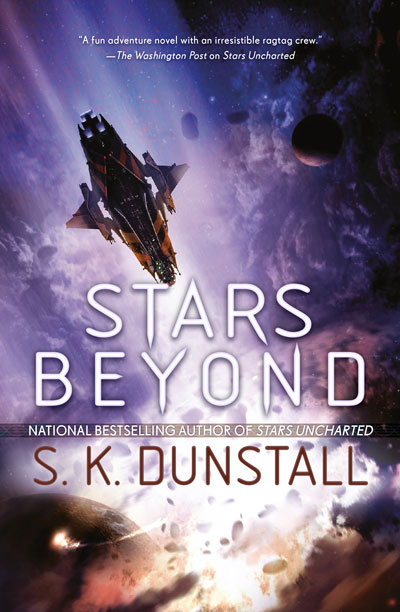
I’m making changes to Stars Beyond, based on our editor’s
feedback. A few changes to the first
chapter. Well, let’s be honest, more than a few. (It’s okay, not a total
rewrite, we did leave some words the same at the end of the chapter.)
Sherylyn is following along behind, unmaking half of them.
“But you’ve cut out all his thoughts, his emotions,” I
protest.
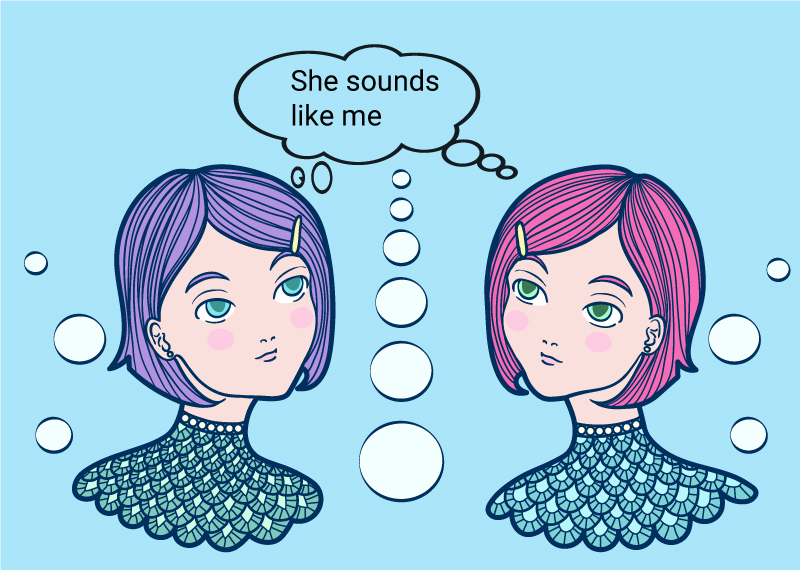
“Because he sounds exactly like Alistair. I can’t tell who’s who.”
I never used to be conscious of how similar our characters
sounded. I don’t know if it’s because we’re becoming better writers, and thus noticing
it, or if it’s an unconscious laziness we’ve developed over time.
Either way, we have to change it.
Right now, I’m just happy Sherylyn can at least pick it up,
even if I can’t.
One piece of writing advice I’ve heard is that if your book
takes more than a year to write, then you should dump it and start another one.
I can see some merit in a very small part of this, but no, if
we dumped our novels after twelve months, we’d have a string of unfinished
stories behind us.
I think where the advice comes from is that you shouldn’t take forever to write your first draft. Stephen King says three months, which would be nice if you can do it, but a lot of us can’t. I’m more in favor of so long as you keep plodding along, and getting further into the story, then keep writing.
In an ideal world, the first draft is written quickly. But remember, for many people, that first draft is very basic. Many of them are skeletons of what is to come, way short of the word count. For others (like us) they’re often the opposite. Long, rambling epics we need to trim. The most important thing is that you keep writing.
Many non-writers are surprised at how long it takes to write
a novel. Ours certainly take a long time.
Years. Unless we’re under a deadline,
and that speeds things up considerably.
Let’s look at the timing of some of our books.
Linesman
Started: 18 July 2010
Finished draft 1: 29 January 2012
Four months and four drafts later we sent a draft to Caitlin,
who’d just become our agent.
For the next year we wrote new stories while the novel did
the rounds with the editors. Then, when it
looked as if Linesman wasn’t going to
sell, we did a major rewrite at the agent’s recommendation, from the feedback
from the editors. Our final version was completed in September 2014.
All up, four years.
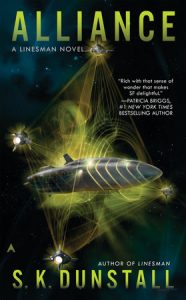
Alliance
Alliance was written
under contract, and we hadn’t started it before we wrote the contract. It’s one
of the fastest books we wrote.
Started: 16 February 2014
Finished draft 1: 7 December 2014
Final to editor: 10 August 2015
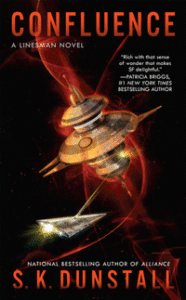
Confluence
Likewise, Confluence
was written under contract and we hadn’t started it prior. We were still finishing this the day before
we sent it through.
Started: 1 February 2015
Final to editor: 21 May 2016
I don’t have a first draft completion date for this one.
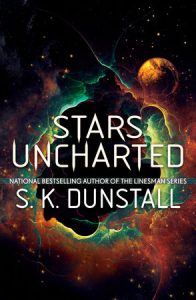
Stars Uncharted
We started Stars
Uncharted while Linesman was doing the rounds to editors, before Anne (editor)
had asked for a three-book series about Ean Lambert. Linesman
didn’t look as if it would sell, so Caitlin (agent) suggested we write something
else altogether. (We weren’t sitting
around before that, by the way, we were writing stories in the Linesman
universe, but not series books.)
Started: 15 August 2012
Finished draft 1: 1 August 2013
Started the rewrite: 4 April 2016
Final to editor: 9 May 2017
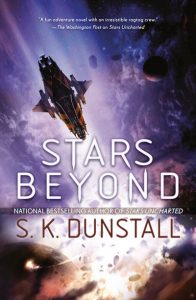
Stars Beyond
Stars Beyond has
had a few changes. It, too, was under
contract, but because the time between books was so long, we had plenty of time
to write it. Except, that we went off on a tangent, then went off on a
different tangent, and finally found our path very late. Our original delivery
date was 31 May 2018.
Started the original story: 24 February 2017
Rewrote after talking to editor: 29 October 2017
Sent to editor (and agent): 31 May 2018
Agent recommends rewrite: August 2018
Final copy sent to editor: 31 January 2019
As you can see. It takes us a while to write a book.
We got the edits back for Stars Beyond early this week.
The changes our editor asked for weren’t too bad. Although, I have been rereading the story
since, and some of the word choices in the first four chapters sound flat.
It doesn’t take much to fix. Little tweaks here and there, but I’m relieved we’ve had enough time away from the book to pick them up.
Edits are due back by early May. We have some work to do.