Categories
Writing process

Biometrics–minority report is here

I went to the Romance Writers of Australia conference this weekend. A great conference, with lots of interesting talks. There were too many good presenters and interesting topics to mention, although I do have to mention Amy Andews’ closing talk. It’s a hard place to be but Amy gave an entertaining talk to a packed room. That’s a feat in itself. Normally any conference or con you go to is pretty empty by the last session. She deserved her standing ovation.

But the session I wanted to talk about was A. J. Blythe’s Biometrics. Think Minority Report type identification. Or any science fiction story where you have to ID yourself, really.

It was a fascinating look at identity, and what can or can’t be used to identify you.

Fingerprints, for sure. And for forensics, fingerprints means fingers, toes, your palm and your foot. What I didn’t realise is that each finger and toe is unique. Nor that fingerprints can be temporarily rubbed off in some trades, like bricklaying, with the excessive rough mortar. Or by someone who handles paper all day every day, because paper acts like a very fine sandpaper.

Your face is unique, and even if your face changes, the points security systems measure stay the same, so it can be used to identify you. Unfortunately, it’s also easy to hack, especially given the photos people have on social media. Some university ran a study where a group of people who used photo ID on their phones gave the researches their phone. The researchers were able to hack the phone just from stalking the people online.

Your ear is also unique. It, too, could be used in security. Except, I suppose, you’d have to press your ear up to the phone.

Weirdest moment of the session was when A. J. put up a photo an ear—just the ear—and someone in the room immediately recognised it as Hugh Jackman’s.

Your voice isn’t as unique. Under the right circumstances an identical twin can fool voice ID. After that we got onto the various ways you can change your appearance, including an interesting video from the CIA former Chief of Disguise (how’s that for a cool title?), showing of a man changing his clothes in the street (not literally, but taking off his tie, and his jacket), putting on a fisherman’s hat, and dark glasses, and how he suddenly wasn’t the same person any more. I mean, if you were watching you could see him change, but it’s still amazing to see the transformation.

This is the full YouTube video. [from the Wired channel.] The quick change starts at 6:43, but the whole clip is worth watching.
Categories
Writing process

Staying sane at writers’ conferences

We’re going to the Melbourne RWA conference next weekend. The person who recommended it to me so many years ago said, “It’s one of the most professional writers’ conferences I know,” and I’ve been meaning to go ever since.  Sherylyn went once, a couple of years ago, and said it was good, but I couldn’t make it.

We’re both going this year.

Sometimes it’s nice to chill out and simply talk to other writers.

Sometimes it’s nice to sit alone and read your iPad or write the story that wants to come out.

That’s okay.

When we get to a conference we’re often exhausted, usually because of work, but sometimes for other things.  Sherylyn, for example, is down with a bug this week, and hopefully will just be over it in time for the weekend.

Beginning writers are so often told conferences are all about the networking. That’s what you go to conferences for.  Don’t you?

Network, network, network.

I think that you don’t get much value out of conferences until you get over that ‘network’ mantra. Go because you want to listen to other writers. Go because you want to be inspired. Go because it’s lonely in your cold writer’s office and you can’t possibly write another word without a recharge.

If you want to sit somewhere quiet for a while, don’t feel guilty about it. Do what works for you. Take the conference at the pace you can manage. Coming back with fifty new friends isn’t what conferences are about. Learning and recharging while enjoying yourself are.

Let go of the guilt and enjoy the conference on your terms.

Categories
Writing process

How I won the possum snore-off. Or maybe the possum did

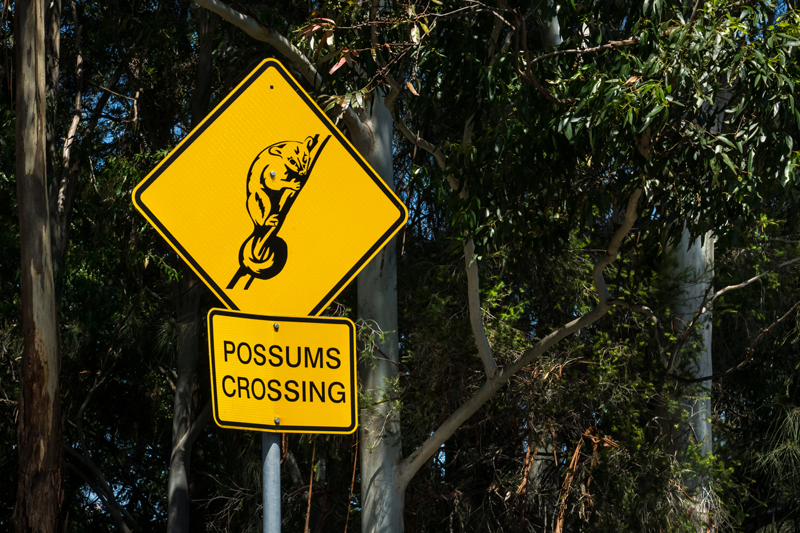
Road sign in suburban Sydney. Possums in our Melbourne suburb use the ‘high way’ to cross the road. After all, what are electricity wires for, if not to allow possums to cross the road safely? (Admittedly, the occasional one does zap him/herself.) One scientist called the suburbs possum heaven. Where else can they get such plentiful food without having to forage?

I’m not the best person to share a room with on a trip, because I snore.  In fact, the general consensus is that if you share a room with me, you need to be super-tired, so you go to sleep first, because otherwise my snoring will keep you awake all night.

I deny this, of course. People do exaggerate, you know.

It just so happens that I haven’t been sleeping well. No reason, just one of those things. You wake up one night at three o’clock and can’t get back to sleep.  Do the same thing next night, and suddenly you’re doing every night.

By Saturday I’m exhausted.  Saturday afternoon I can’t take any more. So tired I don’t even go to bed. I lie down on the bench seat in the kitchen (squeezy, but I’m short) and take a nap.

When I wake, it’s dark.

But I’m not really awake, only semi-awake.  There’s a possum outside the window, making the ‘cthcth’ screeching sound they do when they’re preparing to fight other possums.

We get a lot of territorial fights around here. This area is possum nirvana.  Trees, gardens, lots of fruit ripe for the taking. So there’s overcrowding, which leads to lots, and lots, of fighting.

This possum is really close, probably on the cable that runs from the house to the power pole, and while he’s making fighting noises, there’s no fighting noises being returned.

I lay there in a hazy, half-awake way, listening, trying to work out what on earth he was doing.

I finally realise.  I’m still snoring.

That wakes me up rather more quickly than I planned.

After a final, loud ‘cthcth’, the possum leaves, convinced he’s vanquished the intruder.

Categories
Writing process

Website changes

The website has been super slow recently. Slow as in five minutes to save a page slow, and a full minute to load a page slow.

There’s something wrong, we need to work out what it is. Unfortunately, we haven’t been able to trace it yet. Rather than pull the website down altogether, we’re trying to reset everything in the background, and slowly eliminate any issues.

Over the next week we may revert back to the default website for a time. Pages may go temporarily missing, links not work properly, or images in weird places. Bear with us please. It will better when it’s done. (Even if we have to build a brand new website). More importantly, it will be faster.

Meantime, if any links go missing:

The newsletter is due out this week. If you want to subscribe and are having trouble finding the subscribe button, try this link, instead.

If you’re trying to contact us and aren’t sure if the contact box has worked, drop us a line at skdunstall@optusnet.com.au.

Thanks for your patience.

Categories
Writing process

Two views of the same city

This isn’t Bourke Street. This is Hosier Lane, which is further toward Flinders Street station. And because there were no building works, Hosier Lane had more pedestrian space, and was far less crowded.

Bourke Street, 4pm. East side

The few completed buildings were tucked in amongst the rubble of the rest.  Flat, uniform, narrow grey shopfronts. Featureless and anonymous, and almost as drab as the building sites.

Melbourne was a building site.  Black-painted or raw pine veneer hoardings took up half the footpaths, with huge industrial scaffolds crowding in from the road, making the walkway so narrow that people had to pass each other in single file.  The pedestrians on the path competed for space with the electric bicycles of the food delivery people.

Bourke Street, 8pm. West side

The bike shops were gone.  Instead, the whole street was a row of tiny restaurants.  Tantalising scents wafted out of each.  Here something sesame, there a spicy chilli that got up her nose, over there a spice she didn’t recognise.  Inside patrons crowded together on stools, so close they were almost touching.

Quick, fast food. In one store she saw huge bowls noodle soup.  In another, dumplings.  In a third a rice dish served with something she couldn’t identify.

There were queues outside every tiny shopfront.  Good-natured couples laughing and talking as they waited to be fed.

Categories
Writing process

Going through a stage—thieves in spec fic

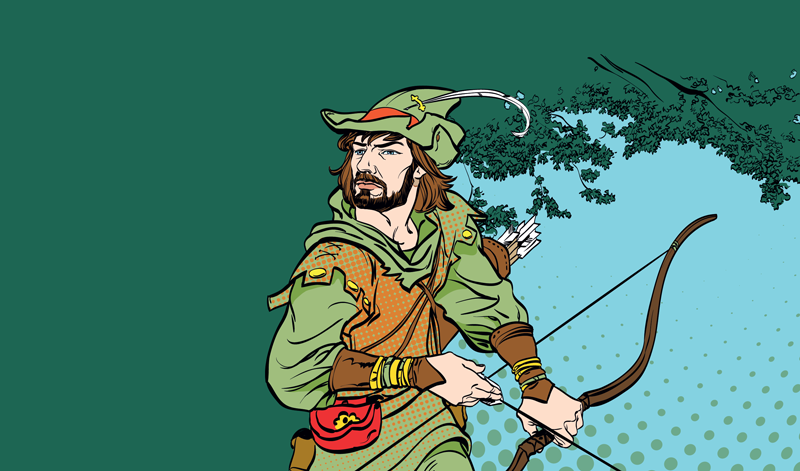
Robin hood
Another famous robber, not quite fantasy, but almost. Robin Hood. This one looks a bit like Alan Rickman when he played the Sheriff of Nottingham, don’t you think.

A book, which shall remain unnamed, had come well recommended.  A thief on a job stumbles into trouble and gets caught up in a plot to save the kingdom.  I read the blurb, and wasn’t sure about it, so I read the blurb out to Sherylyn.  “What do you think?”

“No,” she said.  “I’m over thieves in fiction.”

She’d nailed the problem.  No matter how good the reviews were, it sounded like a fantasy we’d read a hundred times before.  Is it just me, or does every second book you pick up in the spec fiction area nowadays have a thief as the hero?

A week after that, we went and saw Aladdin.  Will Smith as the genie was great.  (Certainly one of my favorite Will Smith roles.) 

The movie was okay (especially the genie), but I found it hard to warm to Aladdin, and came out thinking, ho hum, just another movie about a thief.

Which is totally unfair, because that’s what Aladdin is about.

Categories
Writing process

Security is a full-time business

Image of hacker with PC
When I looked at clip art for this week’s blog nearly all the hacking images were predominantly blue or green. They were also dominated by faceless hooded characters. I went for the hood but chose a little red to go with the mix.

One of the things I find surprising with running a website is how often people try to hack it. I mean, it’s not a big website, you can’t order anything on it, we don’t take money. So why do people bother?

But they do.

The security checker on our website reports how many times people try to log in, but can’t, and the number of times people look for a page that isn’t there.

You wouldn’t think that second one is problematic, but apparently there are known pages with security issues, and the hackers try to see if you have one of these pages on your site. If it’s there, they use it to hack into your system.

As for the log-in attempts. Yesterday, for example, we had eighteen attempts to log into our website. That’s right, eighteen.

This particular batch is multi-national. Some people (or bots, rather, because I expect it’s a program) are hacking in from London, some from the Netherlands, and quite a lot this time from Sydney, Australia. This is unusual, for hack locations seem to come in batches. For example, there’s a region in Ukraine where a lot of hacks come from, a couple in China, one in Argentina, one in Brazil, and one in the Netherlands. You’ll have days of, say, Ukraine-based hacks, then a break (because you’ve locked them out), then maybe days of attempts from Brazil, and so on.

My security program shows me who they are trying to log in as.

They try a lot of standard logins, like ‘admin’ and ‘test’. They also try ones associated with the username posted on the pages. For example, we get a lot of people trying ‘karen’, and ‘sherylyn’, and ‘skdunstall’.

Here’s a tip. Do not, ever, make your login name the same as the sign-off name you use on your posts. You’re handing hackers half the information they need to hack your system. Don’t make it easy for them. Likewise, don’t use ‘admin’. Or ‘test’.

Another thing we do to reduce hacking attempts is block the user on a single invalid login attempt. It’s a little inconvenient when I’m away from the home PC (which has the password stored) and I have to type in the password and get it wrong. There have been times where I’ve locked myself out of my own website for 24 hours. Even so, I wouldn’t change it.

If you don’t stop the hackers, they swarm, so right after this, I’m going to block eighteen IP addresses. My banned IP list is so long, it’s a wonder there’s anyone left to block.

Have a good week.

Categories
Writing process

Bad writing

OMG is the only possible reaction for some deleted scenes

Deleted scenes

We’re searching old manuscripts for deleted scenes for our July newsletter.

Some of these scenes we liked, but we deleted because they didn’t fit the story any more.  Others were deleted simply because they were just bad.

When you’re writing early drafts you allow your writing to be bad.  That’s what editing is for.  But oh, my goodness, they can be embarrassing to re-read.  Especially when you’re planning on putting them into a newsletter.

Some deleted scenes really should stay deleted.

Categories
Writing process

What we’ve been doing

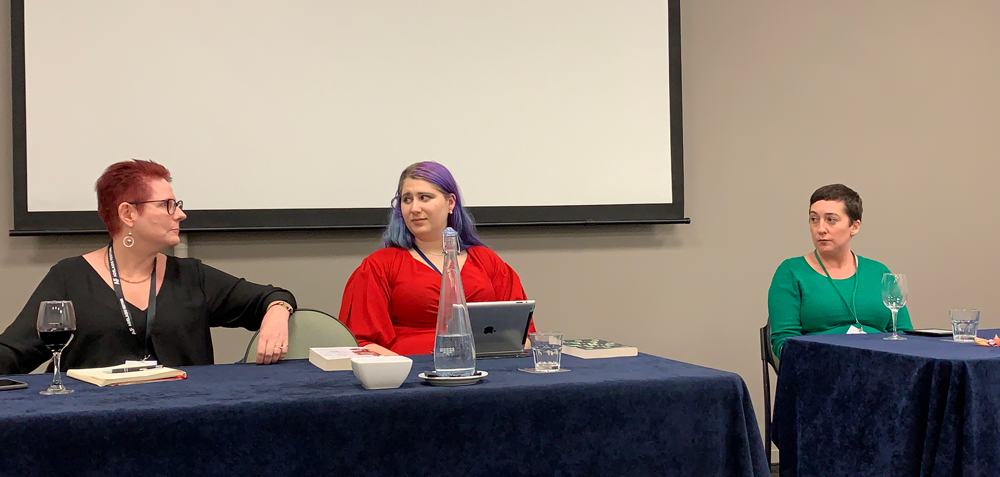
The Handmaid’s Sisters panel. From left to right: Margaret Morgan, Simone Corletto, Melissa Ferguson

Continuum 15

I spent the week before last off work sick. I recovered just in time for our local speculative fiction convention here in Melbourne, Continuum. It was good, and I was over the bug, but everything passed in a haze.

I was so exhausted post-bug, post-convention that I couldn’t even get the energy to post a late blog.

Standouts that I remember include keynote addresses by both guests of honour, Kate Elliot and Ken Tan. Some interesting deep dives—Sherylyn especially liked Stephanie Lai’s deep dive into sand (Yo Ho Ho and a Bottle of Sand).

The Regency SFF panel chaired by Kathleen Jennings was a lot of fun and an affectionate look at Georgette Heyer and her impact on speculative fiction and the whole genre of regency romance. Did you know that once Heyer realised people were imitating her work she started to make up facts for her novels? People imitated that, so she’s one of two people in spec fic (and in romance) who has made up a world. The other is Tolkien.

One panel I enjoyed a lot, which I wasn’t truly expecting to, was The Handmaid’s Sisters, with Melissa Ferguson, Simone Corletto and Margaret Morgan. It was at 9:00pm on Saturday night, and to be honest, I only went because Sherylyn had volunteered to do desk duty then, but I don’t love dystopia, and the Handmaid’s Tale and stories of their ilk are a little too factual right now to be anything but downright scary. There were only four of us in the audience (one left early, but they packed the desk up early so Sherylyn made a second fourth). It was a good panel. Very enjoyable.

Copyedits

We received the copy edits for Stars Beyond on Thursday. We have two weeks to get them back to the publisher.

Sherylyn does this part, so I’m relaxing by writing a new book.

I must say, a copy editor’s style guide is a beautiful thing for a writer. It’s the kind of document you want about two, three, edits before the final one you send off to the editor. So you can make the story consistent. It has a list of words and how they’re spelt, proper nouns, descriptions of characters, and so on. Everything you put in your book is in the copy editor’s style guide. Including, if it’s part of a series, everything you put in the prior books, too.

Love it.

I just wish we could do the same thing about four drafts before.

Worldcon

We booked our tickets for CoNZealand, Worldcon 2020. If any of you are coming, see you there.

Fun fact, did you know Melbourne and Sydney are closer to cities in New Zealand, than they are to Perth, Australia?

Categories
Writing process

This dinosaur has succumbed to the inevitable

Yesterday I bought myself a new phone.

I can’t say I even wanted to upgrade.  I loved my little Microsoft Windows phone.  It’s easy to use, and synched in with my Microsoft account, so that anything on it went back to my laptop and my home PC. Very convenient.  Yes, you can do this with other ecosystems, but we’re Microsoft users, and it was so easy.  Log in with your Microsoft account and things just worked. 

Microsoft stopped supporting Windows phones some years ago. I don’t use many apps, and my phone has served me well for years, so it wasn’t an issue. Or hasn’t been to date.

So why did I change?

Work.

Whiteboards, for example.  Remember when the ultimate in whiteboards was to have one that printed what you wrote on it?  That old heat sensitive paper that faded, so that you had to photocopy it straight away?

Maybe not?  It was a long time ago.

Nowadays, you take a photo of the whiteboard on your mobile phone.  Likewise, draw a diagram on butcher’s paper, or put some Post-It notes around the wall.  How do you share them?  You take a picture on your mobile phone, then you share the image.

It’s all Bluetooth, but Microsoft phones (or my phone, anyway), only shares with other Microsoft phones.  It certainly won’t talk to any of the Macs we use at work.

Or take speakers. We do conference calls.  A lot of big companies do.  But the sound quality is so bad our team invested in a bluetooth speaker. Which works beautifully but guess whose phone didn’t talk to the Bluetooth speaker.  That means when I’m taking the call, I can’t use the speaker.

The deciding factor was when we chose to use What’sApp to communicate within the team.  It was even in the Microsoft store.  I installed it, but do you think it would let me join the work group?

No. 

So, I finally caved in and upgraded my phone. So long, little Microsoft phone.  You were good to me.