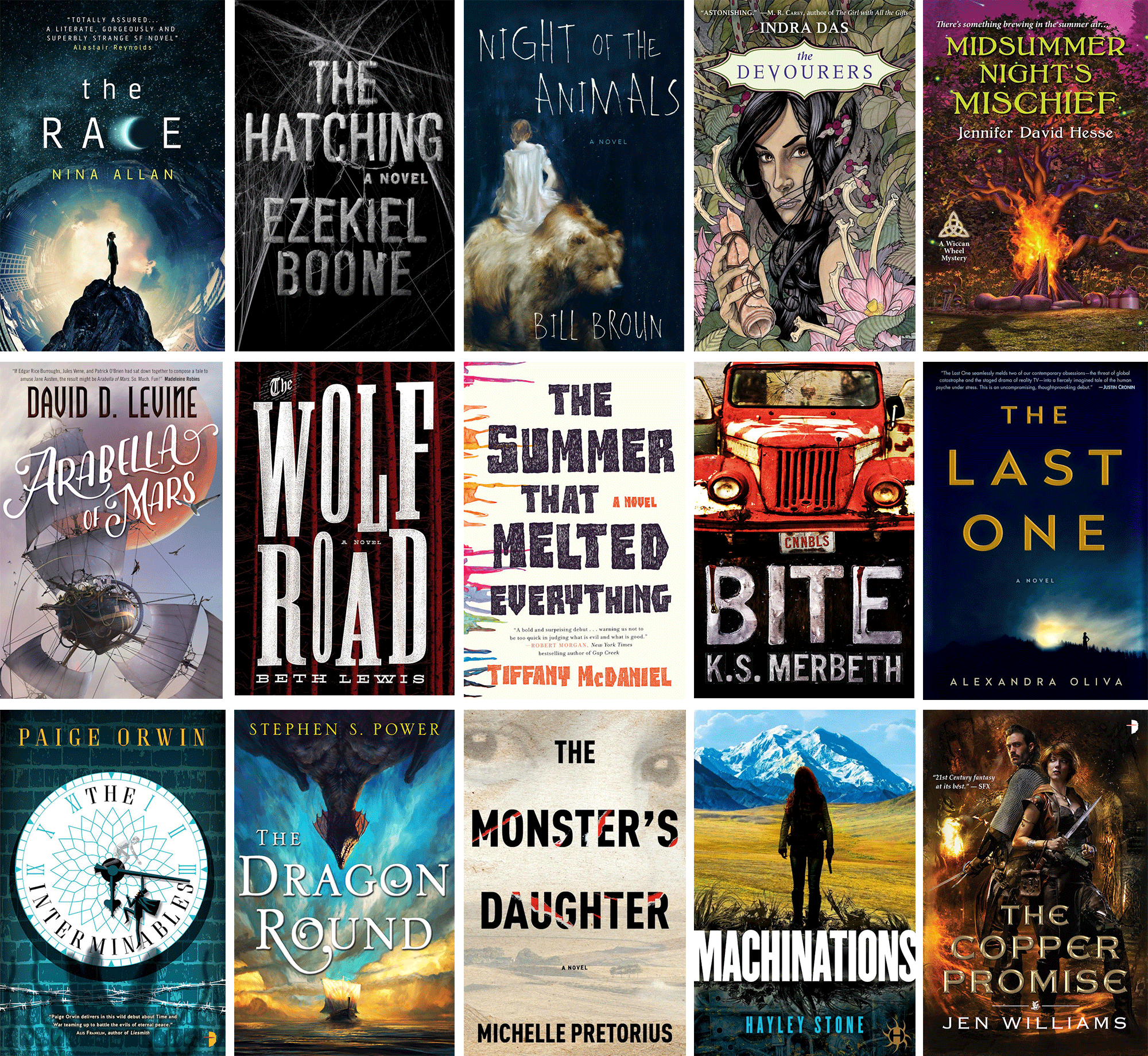
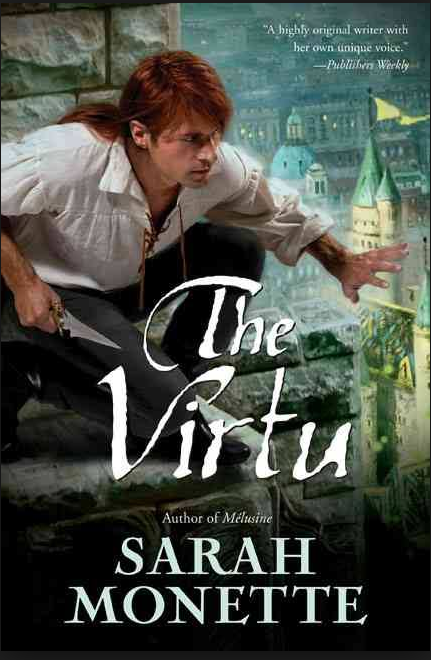
Debut authors for July 2016. (I borrowed the images from the Qwillery site, where they also have a monthly Cover Wars post, where you can vote for your favourite cover.) If I had to guess just by the covers, I’d say a bit of horror, and not too much science fiction.
Write what you know. Write for the market. Don’t write for the market. Write what’s hot right now. Don’t write what’s hot now, for it won’t be hot when you’re ready to sell.
Whether you choose to write for the market or against it, how do you pick what the market is doing?
The best piece of advice I ever got about working out what the market was doing, and it’s true for readers as well as writers, is to
Read debut authors from the last year, maybe two years.
If you’re a writer, it doesn’t help with what to write, but it does give you an idea of what’s happening in the market. If you’re a reader, it gives you a good idea of the way your genre is coming.
Why debut authors?
Because they’re the authors who don’t have any history behind them. They’re the ones the publishing houses are taking a chance on, the ones they think can sell.
So now we’ve established that it’s good to read debut authors, how do you know what’s coming?
Book publishers’ sites. Booksellers’ sites. Bloggers who blog about new and forthcoming books. My personal favourite site is The Qwillery. This lists all the debut releases for the month, and interviews many of the authors as well. I’ve found a lot of books there.
Confluence, Linesman book three, has been with the with the copy editor a while now, and we’ve had time to sit back and reflect on some of the changes over the three books. One of the biggest changes was the time it took to write each book.
We kept a daily word count, so we know roughly how long it was from start to finish.
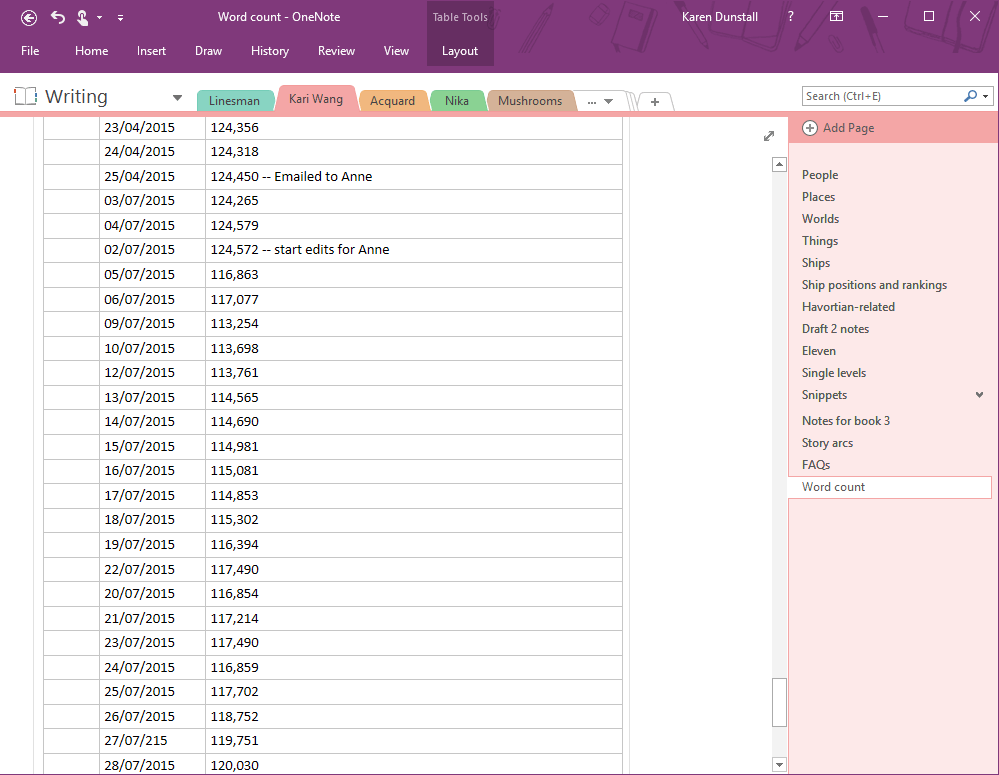
The diagram, below, shows the count for part of book two, Alliance.
We use OneNote to store information about each book as we write it. Note the not-so-fanciful names. Usually named after someone or something in the story.
Book one: Linesman
We had plenty of time to write Linesman, because we didn’t have a contract for it.
We started on 18 July, 2010
Finished the draft we sent to Caitlin, our agent, on 18 December, 2012
Rewrote again, and again, and our last count was on 7 September 2014
Grand total: Four years, one month and 21 days (1513 days)
Book two: Alliance
Alliance was the first book we wrote under contract. We had firm deadlines. But we also had another book to complete first, and in between writing it we went back and did edits on the earlier book.
We started on 16 February 2014
Finished the first draft on 7 December 2014
The last date counted in our calendar was 10 August 2015.
We’re getting faster, but the grand total is still one year, five months and 26 days (541 days)
Book three: Confluence
Book one, Linesman, was published while we were writing book three. And we were doing edits for book two. We also did more rewriting in the first draft of this story, rather than leaving it for later drafts.
We started on 1 February 2015
Finished the first draft on 26 January 2016
Final date counted was 21 May, 2016.
Grand total: One year, three months and 21 days (476 days)
This has been an interesting exercise, because if you’d asked me before I wrote this, I would have said it took us twelve months to write a book.
It used to. What’s changed has been the editing. Twelve months to write a book and get it halfway to decent. But more time to edit it into something that’s publishable.
Britain with their Brexit. The US with their primaries and getting ready for an election later this year. And us, here in Australia. We had an election yesterday.
I vote. Everyone citizen over 18 years old votes in Australia votes. (Or at least, they’re supposed to.) Because, you see, voting in Australia is compulsory.
People from countries where voting is not compulsory think it weird. “What about your rights?” they say. “They’re denying you the democratic freedom to not vote if you choose to.”
I’m a fan of compulsory voting. The majority of Australians are. (Last I heard it was 70% in favour.) Sure, it takes an hour out of your day, but there’s usually a sausage sizzle happening, and the mother’s club at the schools (where most polling booths are) run a sweet stall.
It’s even easy to choose not to vote. Turn up, have your name ticked off, and then don’t fill in any of the boxes before you put the papers into the ballot box.
Democracy as governing body
I’m also a big fan of democracy. I think most of us who live in democratic countries are.
But democracies aren’t generally the first government of any country. They evolve, over time, when people become knowledgeable enough and powerful enough to force the incumbent government to listen to them.
It can go back the other way, too. An elected government can take away civil liberties, effectively removing democracy if it goes too far. Or the military take over.
Governing in space
Who’s going to make money in space?
Government agencies? Probably not. Governing bodies spend money, they don’t make it. They spend it services and infrastructure for their constituents. No matter what type of government they are. (By making money here, I mean actually getting something from space that will net them money.)
Thus the first people to make money in space will probably be companies. It follows, then, that the first peoples in space to be large enough to require any sort of government will be working for those companies.
Suppose a big, multi-national sets itself down on an asteroid and starts mining it. Whose laws are they bound by?
No-one’s but their own. So the first laws on that asteroid will be that company’s code of conduct. It may turn into a democracy eventually, but it’s a lot more likely to stay a ‘company’ for as long as the people are treated well enough and can survive.
The other big group I could see going into space is religious groups. Pilgrims, spreading the word of their god forever on or outward. Or escaping from persecution. For these people, the leaders of their church will become the ruling body.
Again, a fully-fledged democracy will be a long time coming.
He’s switching the the gender of the men and women in passages from various books. Robert Heinlen, Issac Asimov, Piers Anthony, Neal Stevenson and his own Libriomancer.
Interesting stuff.
Those of you who have been reading this blog a while might recall that we initially wrote Crown Princess Michelle, from the Linesman series, as a male. Early on, our agent suggested she would be stronger as a female. She was so right, and we cannot imagine Michelle as anything but a woman now.
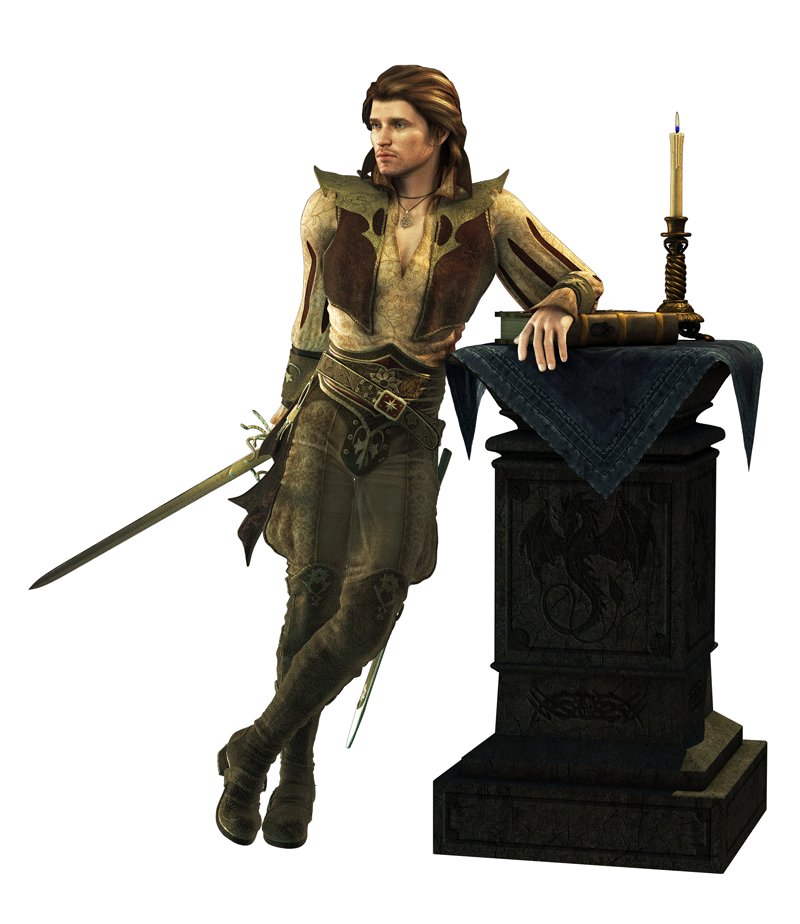
There’s another book, a fantasy, we wrote a while back, where our agent did the same. “Have you considered making Edmund female?”
We’ve put this book aside. It’s fantasy, for a start, and right now we don’t have time to write any fantasy, we’re enjoying the science fiction. It also needs a lot of work. (Another suggestion was that we could turn it into a science fiction. That’s a lot more plausible, actually, because that would open the story massively for us. The world building would make a lot more sense.)
Edmund’s the main character in the book. We’re resisting. But then, I resisted changing Michelle at first. We do refer to the story as Edmunda now. So maybe we’re psyching ourselves into it.
Just for interest, here’s a gender-swapped passage from Edmunda. (This is an early draft, please excuse.)
One of the more obscure movies Alan Rickman was in was a movie called Blow Dry. Not just Alan Rickman, either. It had Josh Hartnett, Natasha Richardson, Bill Nighy, Rachel Griffiths, Warren Clark and others.
It was a nice little comedy about a hairdressing competition. Funny in parts, moving in others. I still stop and watch it every time it comes up on the television.
I almost didn’t watch it at all because of the title. I mean. Blow Dry. What sort of movie does a name like Blow Dry evoke? Not one that I want to see.
Names are important.
Before we sold Linesman we’d heard so much about how writers had no control over the name the publisher chose for your book. Linesman was the working title, and it stayed the title all the way through. I don’t even remember anyone suggesting anything different.
The working title for Alliance was Kari Wang. We couldn’t think if anything that suited it, and by now we knew we wanted one-word titles for all the Linesman series books. I can’t recall now if we sent it away with that name, or if we changed it just before we sent it away to Linesman#2. We were asked if we had any ideas for names. We suggested a few, but it was someone at the publishing house who suggested Alliance.
The working title for Confluence was also named for the secondary point-of-view character. Again the publishing house asked for some suggested names. We supplied a list of six. One of those was Confluence.
Right now, we’re thinking about names for the next book we are working on. I’m not even going to name the working title, because it (and I quote)
Sounds too much like a women’s fiction novel about hairdressers and manicurists set in the 1950s.
Maybe that’s what made me think of Blow Dry in the first place.
You’re sitting on the train, listening to the phone conversation of the girl next to you. (You’re not trying to listen, but it’s that level where you can’t tune it out, and you don’t have a pair of noise cancelling headphones with you. In fact, half the carriage is listening for that very same reason.)
She’s having boyfriend trouble.
“I think he wants to drop me. It’s our anniversary in three weeks. I found this lovely restaurant. But he says he can’t afford it. It’s an excuse. He doesn’t want to go out.”
Noises from the other end of the phone.
“No. He’s like that all the time. And it’s not as if he can’t afford it. We’re going to this expensive steakhouse tonight.”
More noises from the other end of the phone.
“He knows I’m vegetarian. He’s apologetic and all that, but it’s his father’s fiftieth birthday and his dad likes steak. So we’re going to this place tonight—fifty dollars a steak, where I can’t eat anything—and then he says he can’t afford to take us anywhere nice on our anniversary.”
A short reply from the other end of the phone.
“No. It’s just an excuse. He’s looking for an excuse to make me drop him. He’s too cowardly to do it himself.”
You want to lean over and say to her, “Maybe he really can’t afford it.” Half the train probably does too. But this girl wouldn’t believe you, because she’s convinced the boyfriend is looking for an excuse to drop her.
She’s an unreliable narrator, as far as her boyfriend is concerned, because she’s interpreting everything he says and does in a specific way, which is not necessarily how most people would see it. And because she’s interpreting it that way, you, the reader—or in this case the listener—get a very specific idea about this girl and her boyfriend.
What impression do you have of the boyfriend?
He gets on well with his family. He’s careful with his money, although he is prepared to overspend for an occasion. The occasion he’s prepared to overspend for is his father’s birthday, not his girlfriend. So, not sure yet about the relationship with the girlfriend. Maybe she is right that he wants out. Even so, he comes across as a nice, family-oriented guy.
The girlfriend?
She comes across as somewhat selfish, thinking more about herself than her guy. Thoughtless about finance. Unappreciative of a man who puts family first. Whether she’s correct or not about the boyfriend trying to get her to dump him? Don’t know. Don’t suspect so, but that is more a gut reaction to the character than a reasoned is he or isn’t he.
This is a great writing technique. Using a scene/conversation to convey something else entirely. It gives extra layers to your story, making it richer.
In another example, take the film-clip, above. Mr Bean and the two-way mirror. How you perceive this scene totally depends on whose point-of-view you are watching.
As they say in science, it’s all relative to your frame of reference.
“We’ll bring you some books,” we said. “What do you like to read.”
“I don’t like fiction. I like real stuff. True life. Things that can happen. Chopper Read. That was good. And I read another one about a woman who had to escape from her abusive husband.”
“I’m close to a bookshop,” I told Sherylyn. I’ll get the books on the way.”
I confess, we love our fiction. Neither of us read a lot of true life. Sherylyn reads more than me, but given a choice between a novel and a true-life story, we’ll take the novel every time.
But everyone has different tastes, and most of all I wanted to give something that our niece would enjoy. I thought it would be easy. I’d just walk into the bookshop, find the true life stories, pick up three or four, and be out in ten minutes.
It wasn’t like that at all.
There were so many stories about criminals and serial killers. I know she liked Chopper, but I still found it difficult to buy books about serial killers. There were a lot of books about people who’d overcome illness of some kind. While she may have liked them, I wasn’t sure. She was in hospital, after all. It’s a bit like going to see someone who’s sick and saying, “Well, here’s some stories about sick people to make you feel even worse.” So that limited things somewhat.
Worse, I found I couldn’t just pick up books and hope she’d like them. They had to books that I would pick up and read myself.
I spent two hours in the bookshop, and came out with three books. One about a woman who opened an orphanage in Vietnam, one about a man who had been adopted out as a young boy, then years later follows up on his birth parents and discovers his father is a notorious killer. And the third one was about a bikie who travelled.
I don’t know what our niece will think of them. But I like to think that even if she doesn’t like them, and leaves them at the hospital for someone else to read, someone else might enjoy them. 🙂
The other day a workmate who has read Linesman and Alliance asked me, “How do the lines eat?”.
I don’t think fast sometimes. “I don’t know,” I said.
But the fact is, we do know. Sort of. We don’t know right down to the specific detail, but we know roughly what makes the lines tick.
Here’s my attempt to explain it out loud
First up, lines don’t eat as such. They are bands of energy and will take on energy to strengthen their own bands. If you like, you can think of it as adding electricity to a battery, but a better analogy would be amplifying a wave in phase so that the strength of the wave increases.
The extra energy comes mostly from the void. There’s a reason for that, but since we haven’t mentioned that reason in the books yet, I can’t say why.
When the lines aren’t going through the void they can supplement with energy from the Bose engines. Humans think the Bose engines are only required to get them through the void. They’re not. They’re also needed for line health. The engines on the alien line ships provide this energy much better than the human-built Bose engines do, so the lines on a healthy alien ships will always be stronger than those on an equivalent human ship.
But what about sentience?
The sentience of the ship is symbiosis. A line ship’s sentience depends on the people travelling with them, and the emotional strength of their interaction with each other. The lines need sentience around them to become aware.
Awareness comes from interaction with other sentience. The more a ship is around other intelligent beings who interact with it the more aware it becomes.
Note the emphasis here. Human line ships are sentient, but interaction is often one way. Humans don’t think of their ships as sentient (or they never used to, not unil Ean came along), so they didn’t interact with it.
Except the captains, who bond to their ship. In a way they become an extension of the lines and the lines extend them. That’s why ships always sound like the captain.
Repairing the lines
We haven’t touched on repairing the lines. That’s a subject for another blog.
April 25 is Anzac day here in Australia (and in New Zealand). It commemorates servicemen and women killed in war, and honours those who returned.
It’s a big day here, with many thousands getting early up to attend the dawn service.
Nowadays, it’s big, but as a child I remember thinking Anzac day would be a non-event in my lifetime. Back then only the returned servicemen of the two world wars marched, and they got less every year.
What changed?
Two things. One, families started marching with their returned servicemen. Just as importantly, veterans from the later wars, like Vietnam, finally started to march as well.
History has turned about-face in my lifetime
Many of the soldiers who fought in the Vietnam were conscripted. They had two choices. Join the army and fight, or go to jail.
Back when I was a child the people who chose to go to jail were the heroes. Those who actually went to Vietnam and fought were pariahs. When they came home many of them were vilified as murderers.
Yet nowadays, it’s the exact opposite. If you fought in the war you’re a hero, and if you dodged the draft (by going to jail) you’re a pariah.
Our version of history changes according to the times we live in
Our version of history changes according to the times we live.
The Australian involvement in the war lasted from 1962 to 1975. According to Australian Government Vietnam war website:
Vietnam … lasted far longer than previous wars in which Australians had fought and it occurred at a time when societal changes, some brought about by the war, meant that attitudes at the beginning of the war were very different to those at the end. Many of the myths that have arisen about the war are partially attributable to this. Generalisations about one part of the conflict – and the dissent that arose in its final years is one example – do not necessarily apply to another.
My memories of the war are totally about the later years. I remember the dissent. I remember the vilification. I remember the hostility around the veterans. Although, according to the same website:
Associated with misunderstandings about the extent and longevity of opposition to the war is a widespread view that those who had served in Vietnam were denied recognition when they returned to Australia and that many veterans of the conflict were treated with hostility by the public … myths and misunderstandings about Vietnam abound … Acts of hostility against returned soldiers were not isolated, but they were not universal.
The Vietnam war website gives what is probably a balanced overview of the conflict and the treatment of returned veterans. It wasn’t my experience so no matter how balanced the site is, I’m biased. It feels like a whitewash.
It’s a bit like the parable of the blind men touching the elephant. Each one feels a different part. The one who feels the ear says the elephant is like a fan, the one who feels the tusk says it is like a solid pipe, and so on.
My experience of the Vietnam war, as a child watching, is totally different to that of an actual veteran, and each veteran will have his own memories, depending on where he was, when he was deployed and how he was received when he came home.
It’s living history
Memories are memories. They fade over time. Some parts of a memory become more important, other parts fade away.
It’s interesting, watching how changes in attitude and a little bit of time alter our historical interpretation of events.
Australian’s have a distinct way of speaking. Like other nations, our accent is becoming more generic, but it still has a distinctive flat tone.
Back in the mid-1960s, Alistair Ardoch Morrison, writing as Affabeck Lauder (get it*) took our accent to extremes and wrote two books about it, the first of which was Let Stalk Strine.
How much is it became emma chisit, decimal currency became dismal Guernsey, and Sydney became Sinny.
If you want to convey an Australian in your book you wouldn’t write it filled with the over-the-top accents from something like Let’s Stalk Strine. You’d normally try to find a word or two to convey the accent.
One such word used to be ‘mate’. Memo to all you people out there who use it. Yes, some Australians do say, “Mate.” More than most of us realise, in fact, but it’s actually a heavy word, and if you use it more than once or twice it comes across as a parody.
So an occasional, “Look, mate,” might convey an Australian—or equally, someone from the UK—but sprinkle ‘mates’ liberally throughout the book and your Australian is nothing more than a caricature.
Heavy-handedness kills believability dead. When writing characters with accents, or with distinct ways of speaking, we’re often told to go softly on the accent, use one or two words to emphasise. A single word usually suffices. “Rooned”, for Irish Hanrahan, for example, in the John O’Brien poem, Said Hanrahan, works.
The trick is to make that word sound natural. ‘Gonna’ is a word commonly used to do this. Or ‘gunna’ if you’re trying to do it with an Australian accent. I’ve read stories where the author tries to make it sound as if their character is poor and uneducated. They change every ‘going to’ to ‘gonna’ (or ‘gunna’). It doesn’t work because every other word around it is in the author’s voice, and for many writers that’s an educated voice.
I don’t know if this is Mildmay, or if it’s his brother, Felix. But Mildmay was a cat burglar, and this guy is on the roof, so I’m going to assume it’s Mildmay, (even if by this book he’s lame and probably couldn’t do this any more).
The ‘gonna’ jars, because an educated person does not normally contract their ‘going to’s’. Of course, in real life. people do. The vice principal at my old secondary school used to say ‘gunna’. But he spoke well. I bet when he wrote it down, however, he wrote ‘going to’.
And speaking of poorer people, why do so many people try to write them as stupid? (I’ve read a lot of that lately too.) They’re not. People across every socio-economic status have a range of intelligence. Some of them are stupid, some of them are smart.
Actually, if you want to see how someone presents a truly smart person who comes from a disadvantaged background (and sounds like it), try Mildmay from Sarah Monette’s Doctrine of the Labyrinths series. I love Mildmay, he’s one of my favourite characters ever, and he’s a truly smart man.
“You don’t got to come if you don’t want.”
…
The lock was gorgeous, the work of Selenfer and Kidmarsh, who’d been the hot boys in locks back in the Protectorate of Helen. I ain’t much of a cracksman, not for the fancy stuff, but I could handle an old S-and-K combo. I was glad there was nobody standing behind me with their pocket watch, the way Keeper used to, but it wasn’t no trouble.
Melusine, Sarah Monette
Now that’s how you do it.
*Alphabetical order
And Let Stalk Strine translates to ‘Let’s Talk Australian’.