Categories
Writing process

Why Captain Wendell dyes his hair

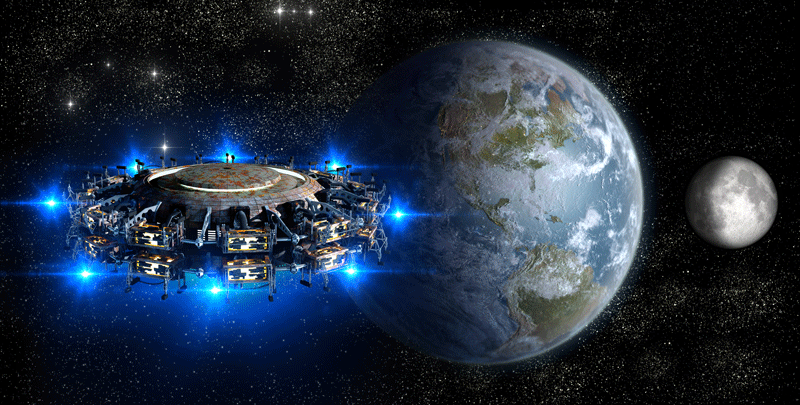
Not Wendell’s ship, or not as we imagine it, but a ship, nonetheless.

Over on Goodreads, a reader asked about Wendell’s age. We answered the question over there, if you want to read it but Wendell is actually a character we have a lot of backstory for. We thought you might be interested in some snippets.

The Cord Gambits

The Cord Gambits were a series of two hundred and four war scenarios proposed by General Cord three hundred years prior to the start of the Linesman novels.

They were supposedly unbeatable, and were given as part of the final exams for students passing out of the Wallacian Fleet Academy.  The idea being to show the newly-trained soldier that sometimes you couldn’t win.

The only person to ever come up with a solution for one of the scenarios was Piers Wendell.  (He actually came up with solutions for two of them.)

How old was he?

Wendell was young when he made captain.  Too young, some people said

A soldier isn’t normally considered for captaincy until his/her late forties, and usually not appointed as one until they were in their fifties. First, because captains need experience. You don’t want a raw soldier in charge of a ship. And second, ship captains stay with their ships, so once they take up that role, that’s as far as they go, career-wise.

Yet Wendell was thirty-two.  (He’s thirty-nine now.)  The youngest captain in any known fleet, ever.  Why didn’t Wallacia wait?

Wendell was a brilliant strategist. He worked his way quickly up through the ranks.  The Wallacian fleet didn’t want to lose him.  Some saw him as a potential future leader of the fleet. But Wendell was getting bored, thinking about leaving the fleet altogether.

There was one sure way to keep him there. Give him his own ship, let him bond with it, and he’d remain in the fleet forever.

Why does Wendell dye his hair?

Wendell has steadily been working through the Cord Gambits ever since.

His crew bet him they could come up with a solution to one of the gambits as well. If they did, he’d have to dye his hair for a year.

It took months, lots of ‘what would the captain do now’, and precision teamwork, but they did it.

The crew chose the hair colour.

In Confluence, that twelve months was just up.  Wendell was growing out the dye, but the crew had spent the last twelve months working on a new gambit and had just come up with a solution.

Save

Save

Save

Save

Save

Save

Categories
On writing

The subconscious writer

Back when I was a newbie writer, before I officially partnered up with Sherylyn and we started writing together, I’d foist my stories on anyone who’d read them.  Friends and family had novels thrust into their hands as soon as they said, “That sounds interesting.”

Back then they were paper copies too, and printers only printed on one side of the paper, so potential readers left holding a ream of paper that they didn’t really want to read, trying to look enthusiastic about something they weren’t.

And of course, you’re the writer, so you expect them to be as enthusiastic as you are. To go home and read it immediately.  And then come back to you the next day and tell you how wonderful it was.

Of course, they never did.

I was handing out first drafts. Raw, unedited fiction.

“Every first draft is perfect because all the first draft has to do is exist. It’s perfect in its existence. The only way it could be imperfect would be to NOT exist.” Jane Smiley

Even back then, some of my ideas were good. But my characters, oh my goodness. They were awful.

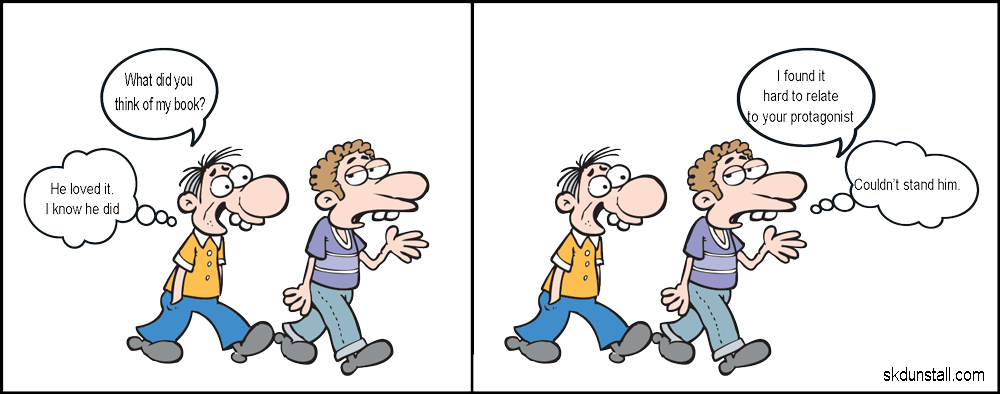
As Sherylyn used to say, “I can’t stand Scott (or whoever this novel’s hero was).  He’s a wimp. He’s full of himself.  He’s unpleasant. I don’t like him, I don’t want to read about him.”

She said it book after book.

She was the only one who gave me honest feedback. Other readers, when they did read my stories, said things like, “It was okay.”

After I teamed up with Sherylyn, the characters improved a lot.

I do wonder what it says about me as a person, though, when I write (wrote) such awful people.

I won’t read books by other authors whose characters are a turn-off, no matter how great the book is. So why do I write them?

For example, I have a lot of sympathy for Jordan Rossi, even though if I met him in real life I wouldn’t stand him.  Luckily for those of you reading the book, Sherylyn wasn’t as enamoured, and made us cut a lot of his scenes.  Nor, later on, were Caitlin and Anne—agent and editor, respectively—who made us take out even more Rossi.

Thank goodness for the drafting process.

“The first draft is just you telling yourself the story.” Terry Pratchett

Save

Save

Save

Save

Save

Save

Categories
Writing process

If you’re new to science fiction, don’t start by reading the classics

You like the music of your time

Nowadays, I enjoy songs like Dean Martin’s That’s Amore, and Johnny Cash’s Ring of Fire, yet as a kid, I didn’t like them.

Growing up, my parents loved the Dean Martin show. I didn’t. I was a puritanical little thing, with no sense of (adult) humour at all and to me Martin was a drunk, and he wasn’t even funny.  (The drunkenness was an act; he drank apple juice stage.)  Worst of all, he sang old-fashioned songs.

My parents also loved Johnny Cash.  Not for me.  He was so old.

I was into pop songs.

None of us—parents or me or anyone else in my family, I think—ever got into the Beatles. Our parents were too old for them, we were too young.

Yet all through the 70s, 80s, and even into the 90s, we were told “the Beatles are the greatest band ever”.  Nowadays, ask anyone under about the age of 30 who the greatest bands is and you’ll more likely get U2 or Coldplay than you will the Beatles.

Classic science fiction

Back when my parents were younger, Dean Martin and Frank Sinatra featured on almost everyone’s list of greatest musicians.  You don’t find them on many lists now, yet if people are reminded about them, they will admit they were good for their time.

I was thinking of this when I popped over to the Worlds without End and started reading James Wallace Harris blog, Falling Off the Classics of Science Fiction List. He was talking about books that had been removed from the Classics of Science Fiction list.

When books fall of the list, it doesn’t mean those books are unworthy of reading anymore, but that readers are forgetting them.

What makes a classic a classic?

I have read most of the books on the Classics of Science Fiction list. I enjoyed (some of) them at the time, but few of them make my own personal classic list.

Really, what makes a classic a classic?

James Wallace Harris, on the Worlds without End blog again but this time in Why do you love the science fiction you love says:

Sometimes I feel there’s no such thing as a great book, at least not in a measurable sense. The books we think are great are merely the ones that reflect our strongest desires. They don’t need to be well written, brilliant, or literary. They just need to trigger emotions.

Yes, and so much yes.  This.

Recommending science fiction to new readers

When people start reading science fiction, they’re often told to go read the classics.

I think that’s the worst thing you can do to a budding science fiction reader.  It’s like telling them, “You must listen to Dean Martin and the Beatles. They’re the only real singers,” when the reader’s taste runs to Lin Manuel Miranda or Taylor Swift.

Harris again (from Why do you love the science fiction you love):

I do love modern science fiction, and often think it better written and more sophisticated than my favorites here. And I do prefer the diversity of modern SF.

Me too.

Later, he says:

My favorite science fiction is 50 years or older… these are the stories burned in my memory. I read most of these stories before I turned 20. It might be our life-time favorites are the books we read in youth. First impressions are often the lasting impressions.

I’m the same. I love the modern stuff, but some of my favorite stories are old ones. And many of my favorites don’t make the classics list.  These stories don’t always age well. They struck a chord at the time, but for someone reading them for the first time in this day and age, they won’t have the same impact.

So next time someone says, “I haven’t read science fiction before, where should I start?” don’t recommend the classics to them.

Recommend something modern. Something written in the last couple of years. Something you think they might like.

The time to read the classics is afterwards, when the new reader is enjoying the genre, and they’re interested in what came before.

Save

Save

Save

Save

Save

Save

Save

Save

Categories
Writing process

What we read this year

90% of the books I read this year (that both of us read, I think), were eBooks.

Here are some that we read in 2016, and liked. Not all of the books are new, they’re just books we read. Some were re-reads.

Michelle Sagara—Chronicles of Elantra

That’s right, we read all thirteen of them. One after the other. Talk about binge reading.

All thirteen books.

A reader on our blog recommended these, so we thought we’d take a look. Thirteen books later … yes, not too bad.

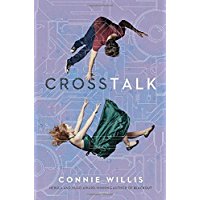
Connie Willis, Crosstalk

My favourite Connie Willis novel is To Say Nothing of the Dog. My favourite short stories of hers are those like All Seated on the Ground. Crosstalk is in the same vein. I enjoyed it a lot.

The first few chapters the writing is so fast paced I almost ran out of breath reading it, but it settled. A good, fun Connie Willis story which also says some pointed things about social media and society.

(Someone described Genevive Cogman’s Invisible Library as Jim C. Hines’ Libriomancer crossed with Willis’ To Say Nothing of the Dog.  Guess what’s on my to-read list this coming year.)

Anne Bishop, Marked in Flesh;
Robin Hobb, Fool’s Quest

Sherylyn read, and loved, both Anne Bishop’s Marked in Flesh and Robin Hobb’s Fool’s Quest.  I haven’t read either, as work was super-busy during those months, and any spare time was for book deadlines. I’ve got them both saved up to read when I take leave in March, now.

Other books

Last year we rediscovered Tanya Huff’s Valor series as eBooks, and re-read them. We’ve always liked this series. Highly recommend it to anyone who’s looking for a light introduction to military fantasy.

Ditto C. J. Cherryh’s Hammerfall and Forge of Heaven.

Note how many of those books were by female authors. Most of them.

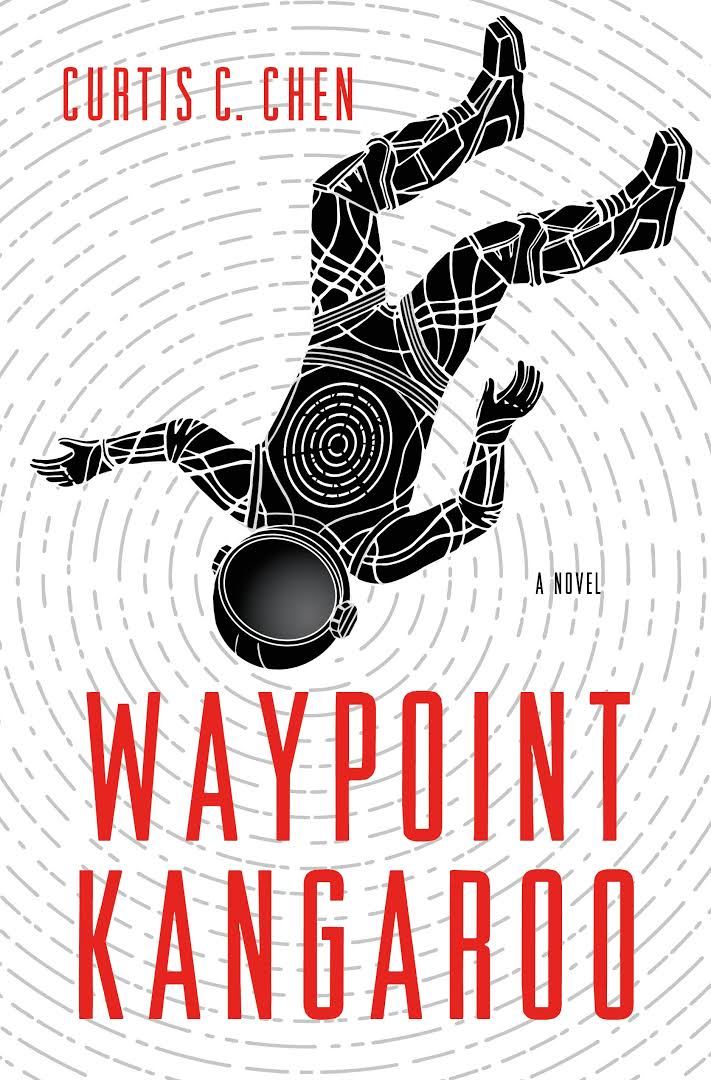
We don’t deliberately go out of our way to read books only by women. In fact, there are a couple of books I’m hanging out for. One of them is Curtis Chen’s Waypoint Kangaroo.  Which has been out in hardcover for six months now. It’s A$35, which is more than I want to pay, given I can buy three, or more, eBooks for the same price.

In the US you can buy Waypoint Kangaroo as an eBook. Here in Australia we can’t yet. In the last twelve months it seems that rights have changed, or DRM has been tightened. Or maybe publishers are changing the rights they buy, and only buying North American rights for electronic books as well.  I’m not sure what, but all I know is I used to be able to buy pretty much anything I wanted as an eBook off Amazon.com (as an Australian, with an Australian ID and address).  Now I can’t.

John Scalzi’s Collapsing Empire (a book I want to read when it comes out) is another book I can only buy in hardcover, not as an eBook. Yet I can see from the Barnes and Noble site that there is an eBook version.  Here in Australia we can’t buy B&N books.

The weird thing is, the books I can buy seem entirely skewed toward female writers.  I can only assume that female writers sell World Rights to their books, while male writers sell North American rights.  Or something.

I’m sure there’s a reason, but it’s frustrating to see all these books you want to read, but can’t get hold of except at very high prices, and only as paper. Especially when you know others can get them electronically.

Looking forward to next year

I’ve already mentioned Robin Hobb.  Her third book will be out.

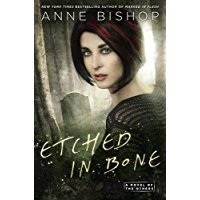
Sherylyn’s waiting for Anne Bishop‘s Etched in Bone. It’s on her must-read list.

Waypoint Kangaroo, if I can ever get a copy. I have wanted to read this book ever since Chen posted his query on Janet Reid’s Query Shark. A long, long time ago.

Revenger, by Alistair Reynolds. I like the idea of this one. Sounds like Forerunner* stuff, which obviously we love, given our own stories.

I also heard that the new Anne Leckie is due out this year. I haven’t seen any confirmation of that, but if it is, I’ll be in line.

A new year book resolution

Every year The Qwillery has a debut author challenge, where they challenge you to read a debut author a month. I find a lot of interesting books here, but I don’t tend to read them until a year or two after they’ve been out.

This year I’m going to improve on that. I’m going to read one debut author a month.


* Forerunner, with a nod to Andre Norton, who came up with the term that means rediscovering the advanced technology of ancient (often alien) civilisations.

Save

Save

Save

Save

Save

Save

Save

Categories
Book news

Confluence audio book now available on Audible

Now available on Audible.com or other sites like Amazon.

Thanks to Pat and to Bernard for letting us know.

Very much appreciated.

Categories
Talking about things

R.I.P. Carrie Fisher

Nothing to say, except that you were a role model. Not just in the characters you played, but in how you showed us all how you can rise above your own problems.

Not only that, you were a great writer.

Categories
Writing process

Wishing you the best of the season

We went for a walk around our neighbourhood last night to see the Christmas lights.

If anything epitomises change, this is it.  The students are moving out, families are moving in. And with the families come the family-like things that we hadn’t even realised people around here didn’t do much—until they started doing them.

Young children in the street. People walking their dogs. Decorating the house at Christmas time.

Change has crept up on us.

So has Christmas, and the end of another year.

We’ve been busy, both at work and with writing. Some specific highlights for us were the release of Alliance and Confluence, selling our first foreign rights (Japanese), and the new book.

We’ve both got the week off, and we’re looking forward to relaxing. Reading a book or two, writing some more, seeing some movies.

Here’s wishing all of you a happy holiday and best wishes for the festive season.

Categories
Progress report

So much to write, so little time

A lot of people have asked when the next Linesman book is coming, and what it will be about.

Here are our writing plans at present. Everything is subject to change, and, also, to contracts, because if we don’t get contracts for the books then we can’t sell them.

We’ll definitely write them, though.

More Ean Lambert

We have another trilogy planned with Ean Lambert as the main character.  These books follow on from Confluence.

I don’t want to give away spoilers, but … The New Alliance is settling into the changes that resulted from the end of that book.  Captain Terrigal is ship captain, trying to believe that his mentor, Admiral Katida, hasn’t betrayed him, while struggling with the knowledge that his ship doesn’t automatically do what he says first.

The lines ships are starting to get personalities.

There’s a new ship being integrated into the Eleven fleet, because Abram wants the new ship, and the Wendell, to go alien hunting.

But before they can do that, the aliens bring their war to human territory.  Along with their ideas on how the lines should be treated.

And those ideas don’t necessarily match with those of Ean’s; or of the ships under his line twelve custodianship.

We haven’t started writing this series at all.

This is about as much of we know of any story plot before we start writing. More than most, because we have backstory we don’t normally have.  What we need now is a better idea of the aliens.  They’re still unformed.

Stars Uncharted

Edit: March 2020. This post was written after we had finished the Linesman books, and while we were writing Stars Uncharted. We’ve kept the post entire, rather than edit it and what we say about the Linesman books are still valid, but both the Stars Uncharted books are published now. 

This is the book we are contracted* to write next.

It is not a Linesman book.

It’s actually the book we started writing while Linesman was doing the rounds. Back when we thought Linesman wasn’t going to sell and we’d have to start something completely fresh.  We stopped about a quarter of the way in, to rewrite Linesman.  But it was the first story we went back to when we were done with Confluence.

We love it. We’re enjoying it.  It’s a space opera adventure with a bit of fun, characters we both love, and lots of things happening.  (Less politics, for those of you who found there was too much politics in the Linesman books.)

It’s set in a totally different universe.

*Normally we wouldn’t even say we have the contract yet, but it has been announced in Publisher’s Lunch and in Locus, and we’ve been told we can mention it.  Even so, we feel a bit superstitious about even saying this until we get the paper in our hand.  Contracts take a long time, and can fall through.  We’ll give you more details once we have that paper.

Fact, for all the writers out there. We got our contract to sign for the Linesman books around the same time we submitted the finished Linesman to our editor.

Other books in the Linesman universe

While our agent was first trying to sell Linesman, and before we began Stars Uncharted, we wrote two other stories in the Linesman series. Back then, we weren’t planning to write three books about Ean Lambert.  We planned books set in the same universe, but with different protagonists. The first of these was Acquard’s War.  (Readers of this blog who remember us talking about Acquard, we’ve recently added the ‘War’, because we now we want to do a second book, Acquard’s Revenge as well.)

This is the story of a retired Balian covert ops team who get tangled up with space pirates, which drags them into the war between the New Alliance and Gate Union/Redmond.  It’s set at the end of Linesman, just after the New Alliance is created, but before they move to permanent headquarters on Haladea III.

We don’t know if there’s a market for non-Ean Lambert stories.  It’s one of three ideas we offered to Caitlin, our agent, when she asked what we were writing next.  She liked Stars Uncharted better, so that’s the one we worked on.

We love the ideas in this story.  We adore the characters.  And therein lies the problem.

People soup.

Both our agent and our editor (and also some of our readers) think we include too many characters in our stories.  (And they’re right.) .  The first thing both of them ask us to do in any edit is to reduce the number of characters.

Most times we can.  But we’re struggling with Acquard’s crew. She has a crew of seven, and there’s a lot happening in the rest of the book as well.  If we don’t fix it, this story has to become a trunk novel.

We’re going to fix it.

When we get the time.
Categories
On writing

Renovating a kitchen is a lot like writing a novel

Our kitchen will not be like this. Our kitchen is tiny. We don’t have the room to to put anything in the middle of the kitchen.

As you can see from the title, we’re in the middle of renovating our kitchen.  We’re also in the middle of writing a novel.  The process has similarities.

What a great idea

You go in with nothing but your imagination.  You have this great idea, and because nothing is real yet, you know this is going to be the best book/kitchen ever.

The reality of the synopsis

Because we’re writing to contract now, the synopsis comes before the book.  It sells the book.

Likewise, the design sells the kitchen.

Even so, what’s on the page is only an outline of what’s to come.

Signing the contract

We’ve agreed to this. It’s real. Have we done the right thing?

Day one

The first chapter.  It’s basic. It’s rough, but it’s done.  The novel shows promise.

Day one of a kitchen renovation is demolition. The bones of the kitchen look old and grotty, but it’s going to look better.  You know it will.

The first draft

The cabinets go in. It looks … ordinary. Not much different from what you had before. You wonder if you did the right thing.

The first draft of your novel is rough. It’s the bare outline.  It’s a mess in places. You wonder how you’ll be able to pull it together.

Subsequent drafts

In the kitchen the doors of the cabinets go on. The stove goes in. The sink.  A plumber arrives and you have a sink and a working dishwasher. An electrician arrives and you have lights that work. A plasterer comes and adds architraves. A painter comes.

It’s starting to show promise.

Each draft of the novel improves it. You submit your novel.  Your editor and agent get help you to improve it.

The wow factor

The novel is edited. It gets a cover. It turns into a book.  Wow.

Our kitchen hasn’t got its wow factor yet, but we already know it will be the splashback.  (Either that or it will be an epic fail.)

It’s like a book. We won’t know the end product until we get there.

Save

Save

Save

Save

Categories
Writing process

Exhausted

We are exhausted. Can't stop yawning. It's been a weird week, with so much non-book stuff happening. It was surreal to launch the book in the same week.
We are exhausted. Can’t stop yawning. It’s been a weird week, with so much non-book stuff happening. It was surreal to launch the book in the same week.

Confluence has been out nearly a week now.

Thank you, all of you, you said some great things about the book.

Lots of you have asked about the next book. We will blog about this later, but we do touch on it in an interview with DJ on MyLifeMyBooksMyEscape which does touch briefly on what we’re doing next.

Again, thank you, for your response to the book.

Save

Save