Categories
On writing

Reflections on writing series books – part 2

The series arc

Now that we’ve gotten the ‘why’ of writing a series out of the way, let’s talk about some of the things you need to consider when writing it. The first is the series arc.

You can write an open-ended series where each story is standalone. Or you can write an ongoing story that ties everything up in the last book. Then there’s the combination of these two—standalone books that have an overall arc that ties up nicely by the end of the third book.

Everyone has their own likes and dislikes about series. As readers we love the third type ourselves. Stories that finish at the end of a book—it’s so frustrating when you get to the end of a book and the story stops, with nothing resolved—but that work to a bigger picture that becomes clearer as the story unfolds.

As readers, too, we don’t like a series that goes on seemingly forever without important issues being resolved.  Wheel of Time, I’m looking at you here.

I confess that I get tired of a series after about four or five books. As a reader, and as a writer.

I’d rather (we’d both rather) write series’ the way Robin Hobb does.

Three books about Fitz (the Farseer Trilogy). “I’m done. His story is finished.” Or words to that effect. So she goes off and writes Liveship Traders, set in the Rain Wilds, a different part of the same world. With a guest appearance by my absolute favourite character out of the Assassin books. Meantime, she’s been thinking about Fitz and the Fool. “Maybe I do have another story I can tell.”

Yes, please.

And she gives us the Tawny Man series. “I’m done with them now,” and she writes the Soldier Son trilogy, and then another Rain Wilds series (four books this time). And now … another Fitz and Fool series.

As a reader, I love it. She tells the story, she finishes, she moves on to something else.

As a writer I love it too. Imagine if Robin Hobb had written all nine Fitz and Fool books one after the other. She’d be getting awfully tired of her characters, I think, and it would show. Instead, when she has a story she is ready to tell about them, she tells it. And when she doesn’t, she gets to tell other stories.

This keeps the writer fresh, and also means that the story has to finish within the original three book arc. Nowadays, a series usually means three books. We can all point to exceptions, but unless you have an outstanding proposal, it will be three books.

The fourth arc

That means the writer must provide four story arcs. The story arc for each individual book and one for the whole series. And they must keep that overall arc unresolved without leaving too many loose ends.

Writers do it with varying degrees of efficiency. Some writers plan one big story and then seem to chop it into three parts almost arbitrarily. So you really only have one arc, not four.

Me, I find it frustrating to get to the end of a book with nothing resolved. It’s even worse when the story ends on a cliff-hanger. As a reader I like some sort of closure to each book. I also lose a tiny bit of faith with the writer when he/she does that.

If they do too often I tend to stop reading them.

Pantsing it

It’s a smart thing to know the story arc you’re working toward when you write your series.

We’re pantsers, not plotters, but even we see the benefits of knowing the story arcs that we’re working to. Particularly the overall story arc.

It doesn’t have to be set in concrete. It doesn’t need to be long. And you don’t even require it for the first book, especially if you wrote it as a stand-alone.

You need to know it as you work through book 2, though. Otherwise you may end up doing far more rewriting than you planned.

We have a one sentence overall story arc for LINESMAN—which we’re not telling, for obvious reasons—but it’s enough. By the end of book 2 you may not even realise what we’re working to.

You’ll definitely know in book 3 though, because the overall story arc has to tie in closely with the smaller arc of the third book.
Part 3.

Categories
On writing

Reflections on writing series books – part 1

You’re a newbie author, trying to work out what to write. Should you write a series, because if you sell the book, chances are you’ll be asked to write two more books, all about the same character? Or do you write standalone books, to give yourself a better range of options when you’re looking for an agent and a publisher?

There’s no one answer to this. What works for some authors won’t necessarily work for others. In the end it comes down to how it works best for you.

We started by writing standalone novels. That suited us. We had lots of stories we wanted to tell, and they were in mixed genres. Fantasy, young-adult, science fiction, and at least one science fiction mystery cross.

Our agent took us on for a science fiction novel. Naturally, we mentioned our other work, and even sent her a fantasy novel we’d written, but she told us very early that she would prefer initially to establish us as science fiction authors.

We were fine with that, especially as the science fiction we had sent her was the science fiction we loved to write.

TakeAway_1Be sure that you love the genre and style you are submitting in, because if you get an agent or sell your book, they’ll likely want more of the same.


TakeAway_bonusEnsure that you and your agent have the same business vision for your writing.


Having said all the above, if you write genre there is a good chance your publisher will want a series. That’s usually, but not always, three books.

TakeAway_2If you don’t think you can write three books in the series, be honest about it up front.


This was another thing we discussed with our agent. We chose to write another two loosely-related books. That is, two more books set in the same universe but with different main protagonists. We loved the setting and we had lots more stories to tell.

When our agent sold the book, however, the editor wanted three books about the same character.

We had spent considerable time and discussion on the other stories, but the main character was only a secondary character in the new stories.

TakeAway_3Be prepared. Be flexible. Understand that what you offer may not be what the editor wants. Don’t say, “Yes,” just to get published. Think about whether you can deliver it. If you don’t think you can, be honest up front.

Because, after all …

TakeAway_4You have to deliver what you agree to.


We talked about it, and decided we could write three books about Ean Lambert, and came up with some ideas. We came up with them in a hurry, maybe not the best idea on reflection, but we got our three book contract.

Now, we’re authors who normally sit on a book idea for months, keeping it in the back of our mind, gradually adding other ideas to it as we go. We’d already written book one, we were ready to start on book two. And we hadn’t really thought much about the plot of the second book yet.

TakeAway_5Know how you write. Understand the limitations, accept them, and work around them.


I don’t think we could have done it differently to the way we did, but it definitely made book two more difficult to write than book three, which we’re working on now. Book three has had six months to germinate, and as a result it’s a better, cleaner story. We think it will be easier to write too.

The writing itself comes with its own challenges. Keeping track of names, remembering who did what, and trying to give backstory in books two and three without dragging the story down, all the while remaining true to the characters and how they behaved in the earlier books.

But that’s for another post. But first, we have to talk about the series story arc.

Categories
On writing

The benefits of co-authoring

We finished revising a major draft of LINESMAN Book 2 recently.

There’s a lot more work to do on it, but this version is essentially complete. We’re at the stage where we’d normally put the book aside while we write the first draft of the next book.

Except this time we don’t have time to do that, because the book is to be delivered on the 1st May. That doesn’t mean we’re not going to write the next book, because we’re starting on that today. It does mean we won’t get Book 3 finished before we have to go back to Book 2.

We’ll give it a month if we can.

But we also did what any sensible writer would do in the meantime, and sent it off to our agent for her to have a look at. (She offered.) Then last night at dinner we sat down over a glass of red wine and talked about the problems we thought she would come back with.

It’s an early draft. We wouldn’t normally show it to anyone yet, but there was something cathartic about sending it away. Just like that, relaxing and talking it over, we were free to analyse the issues we knew were there but hadn’t been able to fix.

We even came up with solutions to two major scenes that had been bugging us for a while. Good solutions. We were tempted to recall the email, rewrite and resend, but that may have been the wine talking.

Getting deeply into the story like this. It’s between you and your co-author, and it’s one of the best parts about writing.

Categories
Writing tools

Reading aloud in Microsoft Word

We read our stories aloud, and can’t recommend it enough to other writers.

No matter how many times you read something on the screen, you will always pick up extra problems reading aloud. Awkward sentence construction, words that don’t fit, repetitive sentences and other issues. Even so, we still read what we expect to read, so sometimes we miss glaringly obvious bloopers, particularly words that don’t belong.

For example, until the second edit, the first sentence above was (my emphasis):

We read the our stories aloud

That’s why we love it when our mother comes visiting and takes part in the read-throughs, for she reads every word.

Alas, she’s gone home now and we’re looking for alternatives.

One such alternative is the ‘Speak selected text’ function in Microsoft Word.

‘Speak selected text’ works well for finding words that shouldn’t be there, and really well to show pacing.

How it works

Use Andrew Gordon’s You Tube video How to enable Text To Speech in Microsoft Word 2010 to add the ‘speak selected text’ button to your Quick Access toolbar. You only have to do this once. Once it’s on the toolbar, it stays there.

Then, highlight the text you want read aloud, and click on the ‘speak selected text’ button. Voila, spoken words.

Some things we have learned

It works better in Windows 8 than it does in Windows 7. Our desktop PCs are Windows 7 and some words are spoken normally but some are spoken really fast. It’s quite strange. Windows 8.1 is lovely. Both our laptops are Windows 8.1.

Speak selected text has helped identify out-of-place words, but it also helps with misplaced commas. The narrator pauses at every comma.

The only weirdness you have to accept is the way the names are pronounced. I’ve gotten used to Ean being ‘Een’, but I can’t wait to hear what the narrator is going to do with Tinatin.

Categories
On writing

So, what does your character look like

We’re 80% of the way through our second major draft of LINESMAN 2, which has the working title of KARI WANG, named for the secondary point-of-view character.

“What does Kari Wang look like?” I ask Sherylyn.

She thinks for a moment, before she admits, “I don’t know.”

Either do I.

Some writers would shudder to be so far into the story without having a complete view of such an important character in the book. Some writers can’t start if they don’t know what their character looks like.

Not us. We know the important things that make her who she is. Like how she insists on walking even though her legs are too weak to hold her up. That she’s a captain in a military fleet, so she stands straight (when her legs will let her). That her arms are muscled and strong, because she works out on the bars. Not so her legs, which are pale and weak, because they’ve just given her a new pair. That her body is scarred from all the operations she’s had. That she’s good at her job.

We know what uniform she wears, for she’s part of the Nova Tahiti fleet.

But as to the colour of her eyes, or the shape of her chin, or how she cuts her hair. It’s not important to the story yet. It’s not important to anyone in the story. As a result, it’s not important to us yet.

We know she is 20mm too tall to fit comfortably under the bulkheads because that’s something we need to know.

By the time we’ve worked through another couple of drafts we’ll have a good idea of what Kari Wang looks like. We may even put some of that into the book.

We may not, either.

Categories
Talking about things

Talking to a linesman

Lots of fun at our house last night. Power surges, lights flickering, and blue sparks coming from seemingly everywhere.

One set of lights went out, but the rest of the power stayed on. A fuse, we thought. Then everything flickered again. And again. Another set of lights went out. But some lights were still on, as was the power. Things were starting to look bad.

Another surge. You could hear the hiss of the electricity. This time the power on the computers went out, and we could see blue sparks coming from everywhere. And we mean literally everywhere. Under the house, even from the garage, which is timber, and half of which has been converted to guest quarters. Not only that, our mother is visiting.

We run outside where Mum has just got to sleep, and drag her inside to sleep in the front room.

We’ve just got her settled in bed when two fire engines turn up and block off the street. Red and blue flashing lights, shining right into the room where she’s sleeping, and there’s no way she can block them out.

That lasts for two hours while the firemen work out what the problem is, and work with the electricity company to make the area safe. The firemen leave, and we’re left with the flashing orange light of the electricity company van as they fix the power lines.

At 2:00am in the morning all the lights come back on, and there’s someone with a torch at the front door.

I stagger out of bed to see what he wants.

He’s at the meter box, which is just outside the door. “Nothing,” he says. “I’m just turning your electricity back on, and checking to be sure everything is working.”

“I’ll leave you to it then.” I go back to bed, turning off the lights as I go.

Just before I drift off to sleep I realise. I’ve just been talking to a man whose job title is ‘linesman’.

Categories
On writing

I like it when an author takes a story in a different direction, but …

On a scale of 1 to 10, how would you rate your pain?

I enjoyed Big Hero 6, but there was a moment in the movie—where Hiro is turning everyone into superheroes—where I went, “What, get out of my movie. You’re spoiling it.”

The first part of the movie was everything I wanted it to be. Heartwarming, with smart, entertaining characters and a good story.

And then … Hiro takes all these great characters out of the lab and turns them into common, garden-variety superheroes.

Nooo. Disney, you didn’t need to. Couldn’t they have worked out of their lab? Couldn’t they have simply used their brains instead of putting on klutzy costumes and gimmicky weapons?

I know, of course, that was the whole point of Big Hero 6. It’s a Marvel comic. They’re superheroes. This is their origin story. But still.

That same week I received a novel I’d had on pre-order for months. I’d read the initial excerpt of the book, loved both the story and the protagonist, and was looking forward to reading more. I dived in, only to discover that a quarter of the way in the book turned into a run-of-the-mill ‘lost heir will save the kingdom’ story.

Normally, I love it when an author takes a story in a direction I’m not expecting. And half-way through a story you’ll follow where the author takes you. Most times you enjoy the ride, too.

There will be some people who adore the novel I put down three-quarters read. There will be some people for whom creating the superheroes was the best part of Big Hero 6.

I think that for me, both of these stories were going well until the writers got to where they ‘had’ to be, and then the story fell apart. “Plotline says we turn them into superheroes here. Let’s do it.” Or, “My plotline says he discovers he’s the heir to the kingdom now. Make it happen.”

To be fair to both stories, I don’t think either of them were badly done. It was more that the stories were chugging along nicely, entertaining and refreshing. Then suddenly they seemed to be pulled back into the mundane.

This particular reader/viewer found it jarring.

Categories
Books and movies

Things I wish I’d written in 2014

My annual shameless plug of other authors’ work, and why. These are things I read in 2014. Note that the books weren’t necessarily published this year, I just read them for the first time in 2014.

There are minor spoilers below.

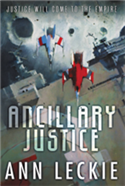
AncillaryJustice
Best cover

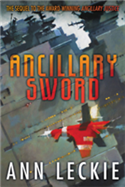
Ancillary Justice, Anne Leckie

I loved the cover. Interestingly, it’s not Sherylyn’s favourite, and while we were looking at covers in bookstores around the time our own was being designed, most of the booksellers here in Australia said it didn’t attract attention at all.

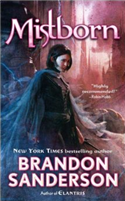
MistbornBest creature

I wanted to choose ancillaries, from Anne Leckie’s Imperial Radch series. They’re dead(ish) humans, thawed out and controlled by an AI.

But no-one could call Breq anything but human.

My second-favourite creatures were the mistwraiths in Mistborn. And the ‘grown-up’ mistwraiths, the kandra.


The story that makes you think long after you’ve finished the book

No surprises here. This book made a lot of people think.

Ancillary Justice, Anne Leckie.

I know a lot of the talk around this book was how Leckie dealt with gender, which was refreshing and well done, but I got used to that very early. For me, the thing I loved about the book was how she took a truly repulsive regime and turned it into something sympathetic. I mean, the Radch destroyed whole races, they took people and effectively killed them, storing their bodies in deep freeze, then thawing them out and plugging them into a computer brain as required.

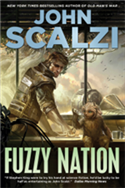
FuzzyNation
Biggest surprise book (most unexpected)

Fuzzy Nation, John Scalzi

I like John Scalzi’s books. They’re clever, they’re fun, they’re easy reads. But for some reason, Fuzzy Nation particularly resonated. It’s good, old-fashioned science fiction with a modern twist.

And I still can’t work out if Jack Holloway was just a bad guy who did good deeds, or a good guy I didn’t really like much. Either way, it was excellent characterisation.

Books re-read

There are some books you love so much that you pick them up again and re-read them. Often more than once. Often, not long after you’re read them the first time.

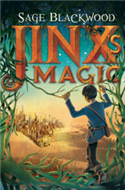
JinxsMagic

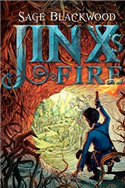
Sage Blackwood’s Jinx’s Magic

I love the repartee between Simon and Jinx in the Jinx books, and the way you know, without being told, that Simon cares for Jinx. Any author who wants to study up on ‘show, don’t tell’ should check out how Blackwood does it.

AncillarySword

Anne Leckie’s Ancillary Sword.

We both re-read Ancillary Sword. Not Ancillary Justice, which was surprising.

Looking forward to next year

Based on the above, I think you can tell that the two books I’m looking forward to most next year are

Anne Leckie’s Ancillary Mercy

JinxsFire
and

Sage Blackwood’s Jinx’s Fire.

Honorable mention

Last year, the book I was looking forward to most was

Katherine Addison’s The Goblin Emperor

It lived up to expectations.

Categories
Talking about things

Clothes for writing in

The first time we attempted NaNoWriMo both Sherylyn and I went out and bought ‘writing pants’. Sherylyn bought a pair of soft, cotton jersey trousers with an elasticised waist. They were grey, with a pink pattern, and they’ll double as spare pyjama pants any time. Me, I was more practical (I thought). I bought a pair of light, three-quarter length cotton trousers.

They were cheap, and the idea was to wear them over November while we did our writing sprints.

Mine lasted about three days. They had a zip and a button at the front and were not at all comfortable for sitting in for long periods. As for Sherylyn’s, she still puts them on occasionally when she’s writing because they are so, so comfortable.

We call them her Jorry pants, because that year she wrote Hero’s Apprentice, and the point-of-view character was a boy called Jorry.

Today, I got my own pair of Jorry pants.

These pants are not flattering. But Jorry pants aren’t meant to be. The trousers come just above the ankles. They’re patterned and they have an elasticised waist. When I put them on it’s like looking in one of those fun-fair mirrors that squash you up and make you look fatter than you are, and I’m not exactly svelte in the first place.

But, oh, so comfortable.

I’m ready to write.

Categories
Book news Progress report

Linesman cover

We’re delighted to finally be able to show off our cover for LINESMAN, the first book in our brand new science fiction series. We are delighted with it. Doesn’t it look great.

The artist is Bruce Jensen.

Release date: 30 June 2015


And … it’s appearing on book sites, And … it’s available for pre-order. Six months out. Yay!