Categories
On writing

Writers in the garden

Writers and gardens 1 — “In the garden”

Back when we were doing our first NaNoWriMo, Sherylyn’s first scene was a policeman sitting in his neighbour’s garden, talking to the neighbour. That’s all they were doing, sitting and talking.

Each night she would tell me, “They’re still in the garden.”

This went on for a week, but because it was a NaNo, she couldn’t go back and rewrite, she didn’t have the time. So she just kept writing, and finally wrote her way out of the scene, 10,000 words in.

When we got to read each other’s story at the end of the month, it was exactly as you’d expect. 10,000 words of two people telling, not showing.

Ever since, our shorthand for a long passage where characters sit around talking to each other, giving out information, has been known as ‘in the garden’.

Right now there’s an important scene in Linesman III that’s in the garden. Well, they’re not actually in the garden, they’re in an office, but the characters are telling each other things that the reader should learn otherwise.

It’s 4,000 words. I know I have to change it, but I’m not like Sherylyn, who can cut 10,000 words with one click. (“Save it, save it, you might be able to use it elsewhere.” But you never do. Reuse it, I mean.) I anguish over cutting big chunks like that. I know it has to go, but it will be there for a couple of days before I can finally bring myself to wield the knife that gets our protagonists out of the garden.

Writers and gardens 2 — Architects and gardeners

It was George R. R. Martin who first described writers as either gardeners or architects. I came across the term when watching the videos of Brandon Sanderson’s 2012 creative writing class at Brigham Young University.

It’s a variation on plotters and pantsers. Martin describes the architects as writers who:

Plan everything ahead of time, like an architect building a house. They know how many rooms are going to be in the house, what kind of roof they’re going to have, where the wires are going to run, what kind of plumbing there’s going to be. They have the whole thing designed and blueprinted out before they even nail the first board up.

While the gardeners:

Dig a hole, drop in a seed and water it. They kind of know what seed it is, they know if planted a fantasy seed or mystery seed or whatever. But as the plant comes up and they water it, they don’t know how many branches it’s going to have, they find out as it grows.

I like the gardeners/architects description better than plotters/pantsers, because for me, the way we write is a lot like gardening. Plant something here, watch it grow. Do a bit of weeding. If something dies, plant something else. Tidy up that section of the garden. Keep working on it, and so on, all around, until one day you stop to observe, smell the flowers, and realise that this truly is a beautiful garden, and it’s magic.
Categories
Talking about things

The stupidity factor

I enjoyed the movie Frozen. (It was a three-tissue movie for me. I cried every time big sister Elsa appeared, except for the very first and last times we saw her, but that’s not what this post is about.)

Anna, the main protagonist of the story, is feisty and strong. I liked that. But she did do some stupid things sometimes—like race off into the snow to rescue her sister in nothing but a bare-sleeved dress and a cloak. (Lovely dress, incidentally, and I loved the way it twirled as she danced.)

Yes, it’s only a cartoon. Yes, changing into warmer clothes would have slowed the story down. Yes, it would have spoiled the scene where she meets Kristoff. But all the same, couldn’t she have been more sensible about it?

On a scale of 1–10, running off half-prepared like this is pretty low in the fiction stupidity scale. To be honest, Anna’s character was drawn well enough that I could almost believe she would go out into the snow like that. Despite the fact that she would almost certainly be dead from hypothermia before the story really got going.

Plus, like I said, it’s a cartoon. There’s a lot that happens in your average cartoon that couldn’t happen in real life.

The stupidity factor is not confined to cartoons, of course. How many stories have you read, how many films have you seen, where you go, “He/she was stupid to do that/go there.”? Why did the hero race after the heroine without calling the police? Why did the good guy throw away a perfectly usable gun so he could fight the bad-guy barehanded and nearly get himself killed in the process?

Fiction (books and movies) stupidity scale:

  • 10—Barney Ross throwing away his gun in Expendables 2
  • 4–Princess Anna in bare sleeves and a cloak racing off through the snow to rescue her sister
  • 0—Indiana Jones shooting the swordsman with his gun in Raiders of the Lost Ark
Categories
Books and movies

Things I wish I’d written in 2013

A shameless plug of other authors’ work, and why. These are things I read in 2013. They weren’t necessarily published in that year.

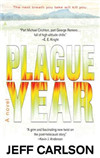
Plague YearOpening line

“They ate Jorgensen first.”

Jeff Carlson, Plague Year

I mean, what can you say to a story that starts like this?

Best cover

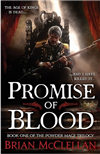
Brian McClellan’s Promise of Blood.

Promise of BloodAwesome cover, and I don’t normally notice covers on books. The tagline isn’t bad either.

“The Age of Kings is dead . . . and I have killed it.”

Best creature

Brandon Sanderson’s thunderclasts.

“The enormous stone beast lay on its side, riblike protrustions from its chest broken and cracked. … vaguely skeletal in shape, with unnaturally long limbs that sprouted from granite shoulders. The eyes were deep red spots on the arrowhead face … the beasts’s hand was as long as a man was tall.”

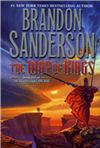
Way of the KingsThe story that makes you think long after you’ve finished the book

Brandon Sanderson, The Way of the Kings.

Awesome world building

Surprise, surprise.

Brandon Sanderson again, The Way of the Kings.

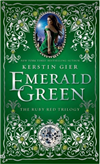
Emerald GreenThe book I waited for with the most anticipation

Emerald Green, by Kirstin Gier (translated by Anthea Bell).

Nowadays, I normally wait until books are out before I buy them, but I pre-ordered book two (Sappire Blue) and three (Emerald Green) in Gier’s Ruby Red series. I haven’t done that since Diana Wynne Jones’ House of Glass .

Best line I wish I’d written

Is actually one we did write.

Not saying which, because it doesn’t work out of context, but I like it. They do say, if you love your work like that, get rid of it. Not going to happen, not in this draft.

Goblin EmperorThe book I’m most looking forward to next year

Katherine Addison’s The Goblin Emperor

Sarah Monette’s Mildmay—from the Melusine, The Mirador, Virtu and Corambis—is one of my favourite characters ever. (Felix, not so much.) I was disappointed when Monette’s publishers decided to not continue to publish her. But now she’s back, as Katherine Addison, with the Goblin Emperor. It feels like it’s been coming forever, but it’s out in 2014.

Categories
On writing

Writing goals for the next 12 months

One of the things I love about the new year is the chance to put the past behind you and start afresh.

I used to have an exercise book where I wrote down my goals for the coming year. They were a mix of personal, professional and writing goals. The following year, before I wrote new ones, I’d check out which of the past year’s goals I’d managed to achieve. Sometimes it was nothing, other times a lot, but never all of them.

I didn’t mind that I never got all of them done. It wasn’t so much the goals themselves, but the chance to sit back and reflect on where you’re going and how you plan to get there.

That old exercise book is still sitting in a shoe-box somewhere in my cupboard. I don’t use it nowadays, and I don’t make professional or personal goals that often any more.

But I still make writing goals.

I’m already thinking about my goals for 2014.

Categories
On writing

The X-Factor

I’ve been having fun this year entering the Romance Writers of Australia (RWA) competitions.

So far, I have entered Ripping Start and Selling Synopsis. While it would be nice to win, that’s not my primary goal.

I want perfect x-factor scores.

What is the x-factor?

The x-factor for the Ripping Start, which is for the first 1,500 words of your manuscript, is scored thus:

To mark this item, ignore the errors, and look for the potential. Did this entry have something special, either in plot, style or characterisation?

How do you rate the potential of this entry? Please mark out of 10.
10 = Brilliant; 1 = needs extensive work (Max. 10 marks)

The x-factor for the Selling Synopis is scored thus:

Submission to an editor is only one step on the road to publication. An editor may require corrections or rewrites, but there are qualities that will make them consider putting time into and working with a writer to bring them to publication. Publishers may reject a manuscript, but will also ask the writer to try again. To mark this item, ignore the errors, and look for the potential.

Give a score from 1 to 10, where 1 = ‘very poor’ and 10 = ‘if I were an editor, I’d want to see this novel’.

So the x-factor is that indefinable something that makes someone read the story, no matter how badly written it is, no matter whether they like it or not.

How we’re tracking so far

The results for Ripping Start came back early October. My x-factor scores garnered two nines and a five, which was respectable, but obviously can be improved on.

You can’t appeal to all of the people all of the time, and it’s obvious from the scores above that my Ripping Start entry worked well for two of the judges, but failed to engage the last judge at all.

That’s real life, but you know your book is a winner when everyone who reads it finds a spark of something they think works.

I don’t know how many people got perfect x-factor scores in this contest, but at least three of them did, because three writers got perfect scores. That means three different judges read their words and each gave them an x-factor of ten.

Now that’s something to aspire to.

Categories
On writing

Analysis of book-discovering behaviour this month

Once upon a time I religiously read every single Fiction Affliction over at Tor Books, along with other sites that list new SFF books coming out.

Today I noticed myself skimming past the listed books, interested only in the titles. If a title appealed, I’d read more, otherwise I’d skip it. I also skipped books that were second or more in a series.

I didn’t find any titles that appealed, so I went back and started reading more. I got through a couple of lines of each book at most before I moved on.

I think it’s seasonal. As the weather turns hotter I tend to read less at the computer.

But it did make me think about where I’m getting my book recommendations currently. I’m getting them from:

  • Locus magazine—skimming some of the reviews in my December issue of Locus
  • The Big Idea over at John Scalzi’s blog
  • Plus the occasional author site that I run across as a link

And that’s about it.

Categories
Writing tools

What authors need to know to use Word effectively

The first in a series of occasional posts about things writers who use Microsoft Word should know about the software if they want to get the most out of it.

Learn the basics

If you want to write novels in Word, you need to know something about:

  • Templates
  • Styles
  • Revisions (tracking and comments)
  • Navigation pane
  • Word count

You don’t need to know them in-depth, just enough to use them properly.

Look and feel

The look and feel of your Word document is controlled by templates, themes and styles. The Microsoft Office site explains how the three fit together.

For an author:

  • Template—sets your page size, margins, double spacing, font, headers and footers and page numbers
  • Theme—we don’t use theme for a standard novel template
  • Styles—controls chapter headings and breaks.

Most authors do all of this manually. My recommendation is don’t. Just don’t. It makes formatting your novel much so much harder.

Editing

Whether you track changes before you send your novel out is up to you (just make sure you clear them before you do send). I track mine, but that’s because I write with a co-author, and she needs to know what I have changed and vice-versa. Once you have an agent or an editor, however, you’re going to have to do it.

You should be able to use:

  • Track changes—how to actually track the changes, and the different ways to see what you have marked up; also accepting and rejecting said changes
  • Comments—alpha/beta readers, editors and agents will all make comments. You need to know how to see the comments, how to add your own, and how to delete them
  • Compare documents—great for when you want to show your agent/editor what’s actually changed since the last time they saw the novel
  • Navigation pane—since you’re now using styles you can use the navigation pane to move chapters around quickly. Or you can do a similar thing in Outline view.

Proofing and language and other tools

There are a couple of other things you should/can use as an author.

  • Word count—it’s is a simple thing, but it’s important
  • Document properties—in particular the user name and initials
  • Spelling and grammar—do I even need to mention these?
  • Language—even if your only language is English, it’s useful to know how to set the dictionary

In the next post we’ll set up a manuscript template.

Categories
On writing

How many POV characters are too many?

I overestimated the tolerance readers would have for an obnoxious protagonist.
David Tallerman, talking about his Tales of Damasco series

I enjoyed The Way of the Kings but I only read a quarter of the book

Sherylyn has just finished reading Brandon Sanderson’s The Way of the Kings.

The main protagonist in The Way of the Kings is Kaladin, while it also has secondary characters Shallan, Szeth, Dalinar plus a couple of other more minor viewpoints as well.

Like me, early in the book Sherylyn started skipping some character threads, until eventually (like me) the only plot-line she read was Kaladin, and only Kaladin in the current time, not his early life. She skimmed the other point-of-view characters when they interacted with Kaladin—as Dalinar does toward the end of the story—but otherwise skipped them all.

You may think that because we only read one character line that we didn’t like the book. Not at all. We both enjoyed it and would recommend it to other SFF readers. It’s a great story, full of ideas and great world-building, the sort of book that you think about afterwards for a long time. We both know we’ll go back one day and re-read it, because there’s a lot we missed.

Like me, Sherylyn didn’t care enough for the other characters to read about them.

No-one reads Rossi

In Linesman, the story we have with our agent at present, we have two point-of-view (POV) characters. Ean Lambert who most people like a lot. The secondary POV character is Jordan Rossi. Luckily for us he gets nowhere near as much air-time as Ean, because a lot of first-time readers skip the Rossi bits until he joins up with Ean.

They can’t stand him.

You skip characters you don’t like

Initially, with The Way of the Kings, I thought one of the reasons I skimmed was that there were too many storylines to follow.

Sherylyn and I discussed the book once she had finished it. We’re writers, and we pull stories apart to see what works and what doesn’t. Especially one like this which we agreed was a good book, and the characters were necessary for the storyline, but we still both skipped so much of it.

We decided that it wasn’t so much too many people to follow but more that we didn’t like the people we were reading about.

How many characters are too many?

We’re thinking a lot about this right now because Linesman II, which we’re about to start editing, contains five points-of-view.

Acquard, the main protagonist, is a no-brainer. If you don’t like her then you’re not going to read the book at all, especially given she gets half the book-space. As for the others, plot-wise it makes sense to include them, but should we include them all? Especially the last one, Ricaro Onetree, who makes a brief appearance toward the end of the book.

Will our readers put up with all five of them or do we have move the story around so that a lot more happens while Acquard’s around?

Five point-of-view characters is probably too many. How many we cut depends on how easily we can rearrange scenes.

We do know one thing from reading stories like The Way of the Kings. The more a reader likes the character(s), the more characters we can include.

Categories
On writing

What is ‘hard’ science fiction

Over on io9 Linda Nagata talks about hard science fiction. In it, she asks what makes a story ‘hard’. As Nagata says, everyone involved has an opinion. Her definition is:

Hard SF is science fiction that extrapolates future technologies while trying to adhere to rules of known or plausible science.

Linda Nagata, It’s time to start reading hard science fiction again

The audience came up with some good definitions too.  SamuraiMujuru’s was pretty close to Linda’s

I’ve always interpreted “Hard Science Fiction” as Sci-Fi that just tends to actually stick closer to science fact, or at least semi-logical progressions thereof. Not harder to read or from any particular perspective, just more grounded in “reality”.

while Aplacere said

I always thought “hard science fiction” was sci-fi you couldn’t take the science element out of without the story completely falling apart.

As some of the readers commented, hard science fiction can be more difficult to read, and often the story takes second place to the science. That is, the author spends so much time on the science that their characters suffer.

That doesn’t have to happen. There is some excellent hard SF out there, with some truly great characters. One of my all-time favourites is Vernor Vinge’s Marooned in Real Time (1987). This is one of those stories as defined by Aplacere, which wouldn’t exist if you took the science out of it.

It’s a wonderful book. I highly recommend it.

Categories
Writing process

Not happy, Microsoft

Microsoft and their ‘cloud’ have managed to overwrite my work with old files two days this week.

Not happy, Jan.

It’s like the Longfellow poem. When it’s good it’s very good indeed, but when it’s bad it’s horrid.

When it works Sherylyn and I can work on the same document at the same time and it’s very nice. But if you open the wrong document first, or fail to save in the right order, or you are connected to the internet on one PC and not the other (or the stars aren’t aligned, or maybe your karma is bad, or maybe the computer has no idea) you’re stuffed.

Like I said, not happy.


Update 24 November:
Thank you, Richard Gailey, from TechFleece – How to recover deleted or overwritten files or folders in your skydrive account.

You saved my sanity, and a lot of work.