Categories
On writing

The same old themes crop up again and again — even when you don’t plan on it

I find that many of our favorite writers have themes, or story ideas, which they carry across from series to series.  I don’t know if themes are conscious or not.

For example, the female protagonists written by one author are always in formerly abusive relationships.

Our stories?  Well, we didn’t think they were alike, but then we thought about Alliance, where people are trying to kidnap Ean, and Confluence, where—even though it happens late in the book—Yu’s people sort of try to kidnap Ean too.

Or even with Stars Uncharted, which most of you haven’t read yet, where hopefully we’re not giving too much away by saying that one of our protagonists is on the run and that some of our antagonists want her to do something for them.  It gets even worse in Stars Beyond, the book we’ve just handed in to the editor, where they really are after her.  (A bit cryptic, but I’m trying not to give plotlines away.)

Hmm.  Pot calling kettle black?  Definitely.

At the moment we’re tossing up over which stories to send to our agent next.

There’s Acquard, of course, but series books aren’t flavour-of-the-month right now and while Acquard’s not an Ean Lambert story, everyone’s favorite(?) other linesman, Jordan Rossi, does get gig, so that may be a hard sell.  (There’s no guarantee she’ll like Acquard anyway, but we’ll see). We’re considering what else we can send her as well.

She wants space opera. So do we.  And we do write ahead a little.  Not much, but enough that we know whether it’s a story we can write or not.  Which means we need to have written ten or twenty thousand words, minimum, and know how the story is going to finish.  Enough to send samples and a synopsis.

“What about Arrax?” I suggest.  “It needs a major rewrite, but it’ll be a good space opera, and the science behind the story is neat.”

Except … as we propose it, Arrax starts off with someone being captured, and fairly early in the book someone else gets kidnapped.

Sounds a bit familiar, doesn’t it.

Not only that, the basic story is about some people going to a planet to look for some MacGuffin. Well, it’s not really a MacGuffin, but people will call it that.  A chase—in space and on planet—looking for some kind of treasure, fighting bad guys to get their prize, and so on.  Lots of fun.

Sound familiar?

Maybe not, but let me reproduce the Goodreads blurb for Stars Uncharted.  (My emphasis on the last paragraph.)

Three people who are not who they claim to be:

Nika Rik Terri, body modder extraordinaire, has devoted her life to redesigning people’s bodies right down to the molecular level. Give her a living body and a genemod machine, and she will turn out a work of art.

Josune Arriola is crew on the famous explorer ship the Hassim, whose memory banks contain records of unexplored worlds worth a fortune. But Josune and the rest of the crew are united in their single-minded pursuit of the most famous lost planet of all.

Hammond Roystan, the captain of the rival explorer ship, The Road, has many secrets. Some believe one of them is the key to finding the lost world.

Josune’s captain sends her to infiltrate Roystan’s ship, promising to follow. But when the Hassim exits nullspace close to Roystan’s ship, it’s out of control, the crew are dead, and unknown Company operatives are trying to take over. Narrowly escaping and wounded, Roystan and Josune come to Nika for treatment–and with problems of her own, she flees with them after the next Company attack.

Now they’re in a race to find the lost world…and stay alive long enough to claim the biggest prize in the galaxy.

Now does it sound familiar?

Yes, well.  Time for a rethink.  Let’s bring out another book we have on the back-burner.  Fergus Burns, with the best bad guy (girl) we’ve written to date.  Alis Mack Carroll.

Meantime, back to the drawing board to rethink why we have so much kidnapping and chasing people in our own stories.
Categories
Writing process

How do you write ‘good’ characters versus ‘bad’ characters?

One thing writers try to do is ‘show’ a character by his or her actions. That is, rather than say,

Bob Jenkins was a bad man.

You show it by

Bob Jenkins pulled into the petrol station one midnight, just after Granny Stevens had closed up, and demanded she unlock one of the bowsers so he could fill up. Granny refused, so he punched her in the face, knocked her to the ground, and drove off. Granny spent three months in hospital, recovering.

It’s not so common now, but simple way authors were taught to show a protagonist’s character was to show how he treated animals.

Does he kick the dog, or does he pat it?  Does he, like Jack Holloway in John Scalzi’s Fuzzy Nation, allow his dog to detonate explosives. (This works better than it sounds here, Jack’s relationship with his dog saves him, in my opinion.)  Or does he, like Riggs in Lethal Weapon, rescue a dog that’s being tortured by some low-lifes?

That last may or may not be true, but I’m sure I’ve seen the start of Lethal Weapon where some people are sitting around a fire in a drum, and they’re torturing a dog. Riggs is uber crazy, out of his mind with grief and depression, probably blind drunk, and he goes in and tears these people apart.  (Not literally, but he roughs them up.)  It sets the scene for the whole movie.  People I’ve spoken to can’t remember the scene, so I don’t know if I imagined it or not.  But to me, it’s part of the Lethal Weapon canon, and it shows Riggs’ character perfectly. He’ll go in to prevent injustice, but he’s badass with it.

Like I say, they don’t use animals as much to show character now, although it’s still around.

Another common technique was to show how the character treated children.

Nowadays, good guys can be a lot more ambiguous, but they have to have morals. Morals that we agree with.

Even if they’re half-way bad, our ‘good guy’ has a good reason for doing something.  Something that we as a reader think is a good thing.  For example, our protagonist may be determined to destroy a pharmaceutical company, and does unpleasant things to achieve it, but it always turns out that the company he (or she) is trying to destroy is worse. For example, they covered up the test results of a drug they sell, and even though they know the drug causes people to die screaming in agony they still sell it, because it makes them money.  Enough money to buy and sell governments.

I love bad guys who aren’t truly bad, just doing what they feel is right, and that’s different to what the protagonist wants.  They’re the best type of ‘bad’ characters to read about.

Even so, my gut feel is that with the world in the turmoil it is today, many writers will start making their antagonists a little more obviously bad in the future.  It’s a way of coping.

Categories
On writing

An exercise in editing—from first draft to second

Please, bear with us. The first example is bad. It’s meant to be. The second isn’t much better. This is designed to show the drafting process. Two drafts is never enough. At least, not for us.

Email, me to Sherylyn:  What do you think? Unlikeable?


Eliud Frank was building a stark arrangement of human bones when Alaric finally got to his office.

“You’re late.”

He’d got the message at lunch time.  It had taken three hours—two public buses and a maglev ride—to get here.  “No one gave me a time.”

Eliud placed a bone carefully at cross angles to another, stepped back to view the result.

“It’s off-centre,” Alaric said.

“When I want your opinion, I’ll ask for it.”

Alaric shrugged, and watched in silence as his boss’s boss’s boss finished the arrangement.  The pieces had the creamy-white porous brittleness of real bone.  He thought they might be real.

Eliud placed the final piece.  “What do you think?”

It was still off-centre, but Alaric shrugged.  “Can’t say I’d like a bunch of bones in my office.”

“You don’t have an office.”

“Rub it in.” Not that he wanted an office, and he shouldn’t be talking to his boss’s boss’s boss like this anyway, given it was the first time they’d met, but there was something about the man that felt as if Eliud was deliberately provoking him.  Alaric was contrary enough to poke right back.

Where was Tina, anyway?  You didn’t meet with superiors this high up the tree without your own boss in attendance.

She’d probably gone back to their branch office, disgusted with him for being so late.  If that was the case, she should have offered him a lift.

“Survive or fail,” his grandmother had told him, “But don’t think that I’m going to interfere for you.”

So far, he’d been just treading water.

Eliud cracked a smile.  His teeth were the same colour as the bones.  “Hurts a bit, does it.”

No, it didn’t.  What hurt more was being plucked out of a life he’d enjoyed and forced to take a shite job like this because his grandmother had ordered it.

“Konrad Deens,” Eliud said.

That little shite.  “What about him?  I hear he took over his uncle’s business.  Been quite successful.”

“Somewhat of an understatement.  While you’ve been saving the worlds and making music, he’s become the de-facto ruler of three worlds.”

That sounded like Deens.  He’d always been ambitious.

“You went to school with him.”

“He was a bully.  We clashed.”

“Nevertheless, you went to school with him.”


Note by the question I ask in the email I’m pretty sure Sherylyn won’t like him.  Sherylyn has final say on characters. If she doesn’t like them they’re either out, or we work on them until she does.

Email reply, Sherylyn to me: Very confusing.

Another email reply, Sherylyn to me: And maybe not so likeable.


So we discuss this little piece over dinner.

“I like the bones,” Sherylyn says.  “Otherwise, there’s too many people, I have no idea what’s going on. I don’t even like the swearing.  Who’s Tina? What’s his grandmother got to do with it? He didn’t have an office.”

“I know he didn’t have an office.”

“Well you make it sound like he did.  In the first paragraph.  Also, would he call him Eliud or Frank?”


Okay. It needs a lot of work. Sometimes Sherylyn does the edits. But not this time. Partly because it’s only the first page, and partly because she doesn’t have any feel for Alaric yet.

What does she like?

The bones.

So, our next draft becomes:


Eliud Frank was building a stark arrangement of human bones when Alaric finally arrived at Frank’s office.

“You’re late.”  The Chief Superintendant placed a bone carefully at cross angles to another, stepped back to view the result.

“It’s off-centre,” came out before Alaric could stop it.

“When I want your opinion, I’ll ask for it.”

Alaric watched in silence as Frank finished the arrangement.  The pieces had the creamy-white porous brittleness of real bone.  He didn’t know why he’d been called here, and that fact that his own boss—Tina—wasn’t here, worried him.  You didn’t see someone three ranks removed on a social call.

Frank placed the final piece.  “What do you think?”

It was still off-centre, but Alaric shrugged.  “Can’t say I’d like a bunch of bones in my office.”

“Konrad Deens,” Frank said.

“I hear he took over his uncle’s business.  Been quite successful.”

“Somewhat of an understatement.  While you’ve been saving the worlds and getting your face in the tabloids, he’s become the de-facto ruler of three worlds.”

That sounded like Deens.  He’d always been ambitious.

“You went to school with him.”

“He was a bully.  We clashed.”

“Nevertheless, you went to school with him.”


Email, me to Sherylyn: What do you think?

Email reply, Sherylyn to me: Better. Still needs more work. Good to see you fixed the office. I like the bones, but are they important? Or are they symbolic? What happened to the maglev?


Ready for round three.

Categories
Fun stuff

What bot is that – answers to last week’s quiz

Last week,I gave you six bots and asked if you knew which books they were from.

Bot 1

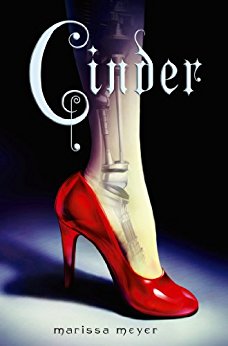
Once upon a time there was a cyborg. That’s me.  You might think my life is a fairy tale. I can tell you it’s not.  I live in New Beijing with my stepmother—who hates me—and my two stepsisters. The stepsister I adore is dying of the plague.

Who is it?

Cinder, from Marissa Meyer’s Lunar Chronicles series. More specifically, the first book, which was called Cinder. This is a retelling of fairy stories as science fiction.  Including an evil queen (the ruler of the moon).  Book one was Cinderella’s story.  She had an artificial foot.

In the Lunar Chronicles anyone with artificial appendages (like the foot) is a cyborg, and considered sub-human.


Bot 2

We’re here to solve a murder.  The New York detective I’ve been partnered with doesn’t trust Spacers. Or robots.

He’s from overcrowded Earth, where they hate robots because Earth people believe robots take jobs humans could do.

Who is it?

This was R. Daneel Olivaw from Isaac Asimov’s Caves of Steel. It’s probably the first robot book I ever read, and Elijah Bailey and Daneel Olivaw were probably my two favourite Asimov characters ever.

Bot 3

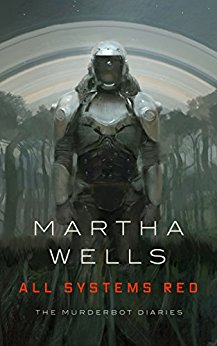
I could have become a mass murderer after I hacked my governor module, but then I realized I could access the combined feed of entertainment channels carried on the company satellites. It had been well over 35,000 hours or so since then, with still not much murdering, but probably, I don’t know, a little under 35,000 hours of movies, serials, books, plays, and music consumed. As a heartless killing machine, I was a terrible failure.

This one is a direct quote, which I will attribute next week, but I love it so much I’m quoting it verbatim. This is also a really great start to a novel.

Who is it?

Everyone’s favorite murderbot. Ranks up there with bonus bot (below) as one of my two favorite artificial intelligences of all time.

The SecUnit from Martha Wells’ Murderbot Diaries.  Book one, All Systems Red, won a Nebula for best novella this year, and it’s a Hugo finalist as well. I, personally, am voting for this on the hugos. I love Murderbot.

Bot 4

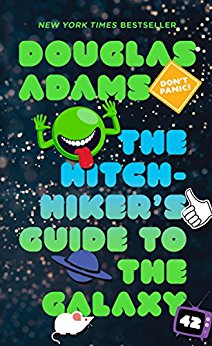
I am 50,000 times more intelligent than a human, and have a “brain the size of a planet” which I seldom get a chance to use. I was built originally as one of the (many) failed prototypes of Sirius Cybernetics Corporation’s GPP (Genuine People Personalities) technology.  I’m bored. Maybe a little depressed.  People have called me paranoid, and manically depressed. I’m just stoic, patient even.

“The first ten million years were the worst. And the second ten million. They were the worst, too. The third ten million I didn’t enjoy at all. After that, I went into a bit of a decline.”

“Do you want me to sit in a corner and rust, or just fall apart where I’m standing?”

Who is it?

Marvin the paranoid android from Douglas Adams’ The Hitch-hiker’s Guide to the Galaxy.

Alan Rickman played Marvin in the 2005 movie of the book.  We didn’t see it, for some reason, but I can imagine Alan playing him. He’d do it so well.

Bot 5

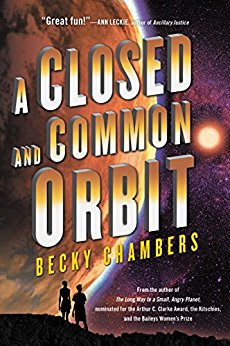
I used to be a ship AI, but things went wrong and I had to do a hard reboot. Now I’m in a body. That takes a bit of getting used to. It feels cramped, and tiny. I can’t remember what happened before.

Who is it?

I thought some people might have chosen Breq (bonus bot) for this one, but they didn’t. This bot is Lovelace, aka Sidra, from Becky Chambers’ A Closed and Common Orbit.

For a bonus point

I used to be a ship. I controlled thousands of human bodies. My ship was destroyed. All that’s left of me is the one human body I am in now. This body sings. Badly.

Who is it?

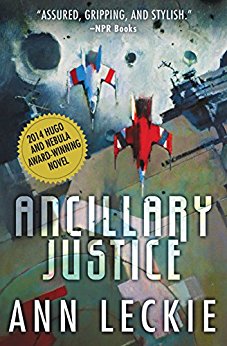
My other all-time favourite AI. Breq, from Anne Leckie’s Ancillary Justice.

Categories
Fun stuff

What bot is that?

Our book is done. This draft, anyway. Due date was the 1 June.

We delivered, although of course we’d love to have another round of editing right now. Books are like that. Every time you look at your writing you see something else you want to change.

I have to clean my desk ready for the next one. It’s becoming a tradition—clean your desk ready for the next book. I just don’t understand how a desk can get so messy, but it does.

We have ideas for the next story, but nothing planned. We’ll take it easy for a couple of days, and then talk to our agent about what we should do next.

Meanwhile, it’s time for a quiz.

It was initially going to be a quiz totally about humanoid robots, but in the end I’ve stretched it out to full robots, AI, cyborgs, augmented humans and everything between.  So it’s not really just bots in the sense that most science fiction people know them. (There’s a very big hint here, people.)

How many can you get?

Bot 1

Once upon a time there was a cyborg. That’s me.  You might think my life is a fairy tale. I can tell you it’s not.  I live in New Beijing with my stepmother—who hates me—and my two stepsisters. The stepsister I adore is dying of the plague.

Bot 2

We’re here to solve a murder.  The New York detective I’ve been partnered with doesn’t trust Spacers. Or robots.

He’s from overcrowded Earth, where they hate robots because Earth people believe robots take jobs humans could do.

Bot 3

I could have become a mass murderer after I hacked my governor module, but then I realized I could access the combined feed of entertainment channels carried on the company satellites. It had been well over 35,000 hours or so since then, with still not much murdering, but probably, I don’t know, a little under 35,000 hours of movies, serials, books, plays, and music consumed. As a heartless killing machine, I was a terrible failure.

This one is a direct quote, which I will attribute next week, but I love it so much I’m quoting it verbatim. This is also a really great start to a novel.

Bot 4

I am 50,000 times more intelligent than a human, and have a “brain the size of a planet” which I seldom get a chance to use. I was built originally as one of the (many) failed prototypes of Sirius Cybernetics Corporation’s GPP (Genuine People Personalities) technology.  I’m bored. Maybe a little depressed.  People have called me paranoid, and manically depressed. I’m just stoic, patient even.

“The first ten million years were the worst. And the second ten million. They were the worst, too. The third ten million I didn’t enjoy at all. After that, I went into a bit of a decline.”

“Do you want me to sit in a corner and rust, or just fall apart where I’m standing?”

Bot 5

I used to be a ship AI, but things went wrong and I had to do a hard reboot. Now I’m in a body. That takes a bit of getting used to. It feels cramped, and tiny. I can’t remember what happened before.

For a bonus point

I asked Sherylyn to do the quiz before I put it on line.

“I know who one of them will be,” she said, and told me.

No. I didn’t put that one in there. Why not? Because I forgot it. I’m not sure how, because it’s my favorite AI in a human body story ever, and I rave about it all the time.

So here it is.

I used to be a ship. I controlled thousands of human bodies. My ship was destroyed. All that’s left of me is the one human body I am in now. This body sings. Badly.


How many did you get?

Categories
Talking about things

Voting for the Hugos

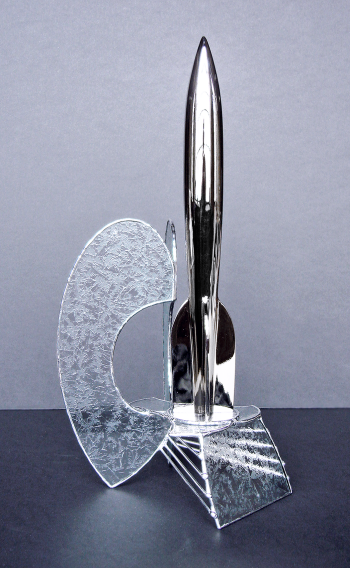
2012 Hugo. Designed by: Deb Kosiba; Photo: Deb Kosiba.

In which I attempt to explain how Hugo voting works, and why I like the system*.

Compulsory voting

Here in Australia we have compulsory voting in elections.

I have to confess that in politics, I’m a huge fan of compulsory voting. If you live in a country where voting isn’t compulsory, you probably think I’m crazy, but I like it. To me, it changes the onus on choosing to have a say in your country’s politics from ‘opt-in’ to ‘opt-out’.

That may seem a small distinction, but it’s not.

With non-compulsory voting you have to opt-in, and you need to do it twice. First, you opt-in to register to vote. Then you opt-in to vote on the day. Maybe you don’t feel like voting that day. The weather’s bad. You don’t feel well. Some bully is threatening you while you stand in the voting line.  Maybe you missed the date to register.  Or all the candidates are equally bad, and you don’t want to vote for any of them.

With compulsory voting you have to opt-in, too, by registering to vote.  By choosing to not do this you are already making a choice. Theoretically you have chosen to be fined rather than vote.

Likewise, on polling day. Don’t turn up.  You have chosen to be fined, rather than vote.

Even if you do turn up, you don’t have to actually vote if you don’t want to.  Get your name marked off, take your papers, put them in the box without nominating anyone.

It’s not a perfect system, by any means, and there’s a whole stack of issues that come with it, but I still like it a lot better than the alternative.

Hugo voting isn’t compulsory

Despite the fact that I like my politics compulsory, voting for the Hugo isn’t compulsory, and I don’t think it should be.

You opt-in initially by purchasing a WorldCon ticket. You opt-in a second time by nominating various works/persons for the ballot. And then you opt-in a third time by actually voting on the shortlist.

So what’s this got to do with the Hugos, then?

Because that brings me to the other thing I like about the Australian voting system.

Preference voting

Hugo voting uses a variation of the Australian preferential voting system for voting on the shortlist.

(I’m not going to talk about voting to put items onto the ballot in the first place, that’s more of a straight count.  I’m also not going to talk about how parties can totally distort things in Australia politics by setting their own preferences, sometimes purely to spite other parties. You don’t have to vote along party lines.)

Voting on the Hugo shortlist is done using what they call runoff voting.

It works like this.

Suppose we have four books on the Hugo Best Novel.  (I know there’s more, but how long do you want this post to run for?  Let’s keep it simple. I’m also not going to use real names. I got these from the Fantasy Name Generators site.)

  • An Argument of Water
  • Bakker’s Butcher
  • Solar Flare
  • Life in the Vacuum

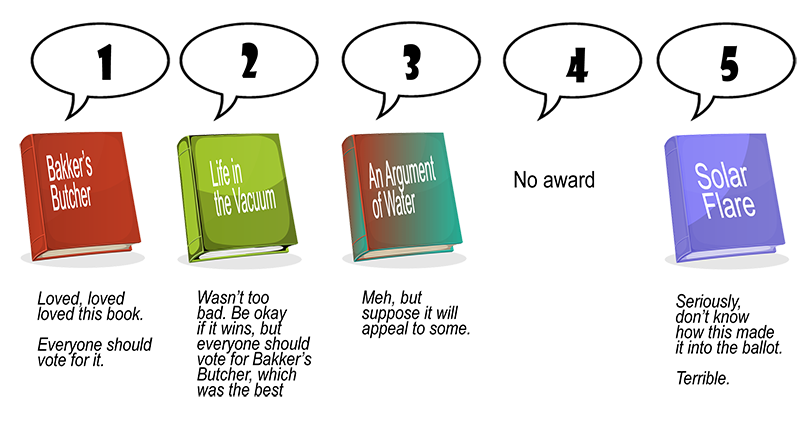
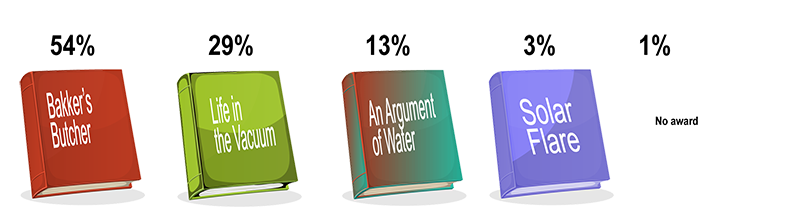
You go in and vote. Four books, five options, because not awarding the prize rather than voting for a book you don’t like is a valid option. Let’s say you vote as follows.

There can be two results.

An outright winner.

There’s no question here. Bakker’s Butcher got over 50% of the votes. It’s an outright winner.

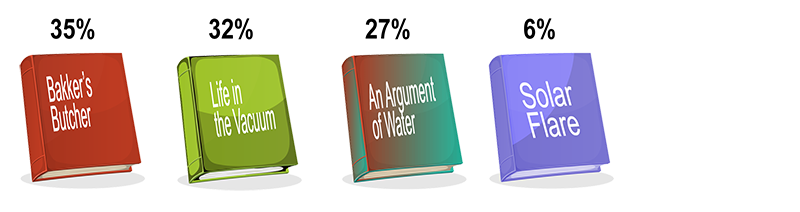
But suppose the results are a lot closer? There’s no outright winner between a novel that gets 35% of the vote, and one that gets 32%.  (From now on I’ll leave out ‘no awards’ as I’m trying to keep this simple. Read the Hugo page for more detail on how No Award works.)

We then look at preferences.  Solar Flare only got 6% of the votes. So we take all the second choice votes for Solar Flare and distribute them amongst the other candidates.  Let’s say half the people who voted for Solar Flare voted Bakker’s Butcher second, and the other half voted for Life in the Vacuum second.

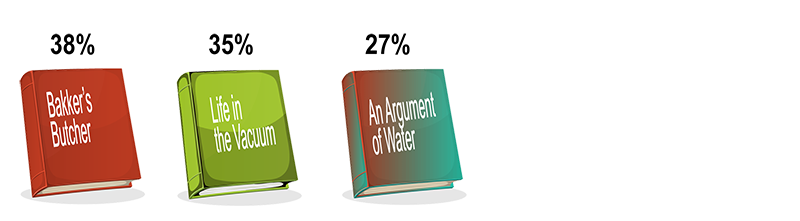
We still don’t have anyone with 50% of the votes. So we take the next lowest.

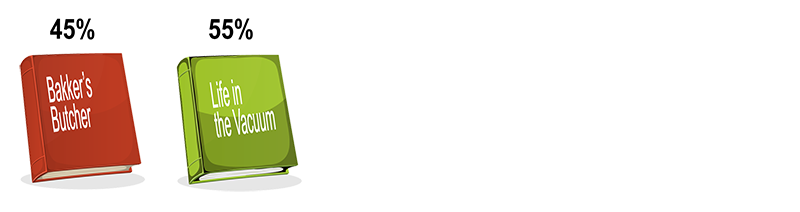
20% of the people who liked An Argument of Water voted for Life in the Vacuum as their second choice.

We have a winner.  Life in the Vacuum.  It’s not necessarily the winner you wanted, but there’s a good probability that more half the people voting put it in their top one or two books. Chances are it was also in your top 2-3.

It’s important, when you vote for the Hugos, to give serious consideration to not just what you think should come out on top, but also to how you rank the others. And to where you place No Award, if you choose to use it.

“But, you say, Bakker’s Butcher should have won. It got more votes first time around.”

Should it? It got less than half the votes, which means that half the voters didn’t think it was the best novel. And more voters put Life in the Vacuum in second place.

It’s not a perfect result by any means, but it does mean that when there is no clear-cut winner, the winner is the one deemed most popular overall.


* A couple of caveats.

This explanation is a rough approximation of how it works. I’ve left out a lot. If you want the full details, check it out on the Hugo website.

Also, it’s not perfect—politically or for the Hugos. It can be gamed. No Award is valuable in these cases.

Categories
Writing process

Two weeks to deadline

With two weeks to go before we send Stars book two to our editor, I’m sitting back and relaxing while Sherylyn works on final cleaning up of the story.

In fact, I’ve started editing another story that Sherylyn had worked on mid-last year while I was working on an earlier draft of Stars book two.  It’s fun, and fresh, because after you’ve been working on the same book for the last year it’s always nice to start on something new.

Oh, and I’m catching up on some reading.

Then, out of the blue, Sherylyn says, “I don’t think we’ve given [name redacted] enough reason to do what she does [also redacted, for spoiler reasons].

Noooo!

She’s right, of course. But two weeks.  And this is basically the inciting incident for the whole story.

I go into denial first.  Of course. I mean, who wants to change a major plot point two weeks away from submission? Then we talk it out. I come around. We talk some more. How might we fix it?

Okay, we can do that, and that, and that.  Three small changes to the story will fix it.

Phew.

It’s funny how often you don’t need to make big changes to a story to make a big impact. Just a tweak, here and there.

Disaster averted.

I go back to working on the other book.

Until the next bombshell. 🙂

Categories
Writing process

Eurovision 2018

This is the tag line for Catherynne M. Valente’s new novel, Space Opera. This is from the front cover.


Catherynne M. Valente has introduced a lot of people to the Eurovision this year with her new novel, Space Opera, which is effectively Eurovision in Space.

By the time you read this the Eurovision Song Contest 2018 will probably be over.  The final will be held Sunday morning, Australian time.

Here in Australia we see the contest on Sunday night.  Sherylyn and I try to avoid spoilers throughout the day, then sit down at night and score each entry. We seldom pick the winner. In fact, the ones we like often score very low.

Normally I go through the songs and pick out the power ballads. I’m a sucker for power ballads. This year there weren’t many. The closest I could find was Azerbaijan.

I rather liked the Azerbaijan entry (singer, Aisel). It’s one of those songs you like better every time you hear it.


Unfortunately, they didn’t make it past the first semi-final. A pity.

The other song I really like is Estonia’s entry (singer Elina Nechayeva). I don’t think it has a chance of winning, but listen to Elina’s voice.

Plus, she deserves extra points for that dress.

Categories
Writing process

Paper newspapers and magazines help generate stories

I’ve three old, screwed-up paper serviettes in my bag. I can’t throw them out, because I’ve written on them, and because I come home from work and dump my bag and don’t look into it until the next day. As a result these little notes remain until I remember them. After which they stay on my desk for a few weeks until I finally get around to putting them onto the computer.

They’re my story ideas.

They’re the ideas that I have while I’m out, where I snatch the nearest thing to hand and scribble down the fragment that comes to mind.

The thing is, I often have these ideas while I’m out, at breakfast, reading the newspaper.

I get most of my news online now. I read the news online, have a number of news sites that I visit, but that only gives you the news you choose to read. Printed newspapers are, and always have been, a major source of ideas for me.  For both of us.

That and printed magazines.  I used to regularly buy the New Scientist and Scientific American magazines, just for the ideas. Now I look at that online too.

Nowadays, the only time I look at newspapers is when I’m out. Cafes, at breakfast time, are the main places I read on paper now.

There’s something about reading a printed news source. Your eye catches an article—something you wouldn’t even think to read normally. Eye-brain triggers something. An idea pops into your head.

Quick, where’s the notepad? Haven’t got it? Anything will do. What about a spare paper napkin?

Which is how I come to have so many scribbled notes in my bag, waiting to be transferred to the computer.

Of course, my handwriting is so bad, by the time I come to transfer them, there are always a couple of words I have to guess, because I have no idea what I wrote.  But sometimes that simply adds to the idea.

Categories
On writing Talking about things

Speculate 18

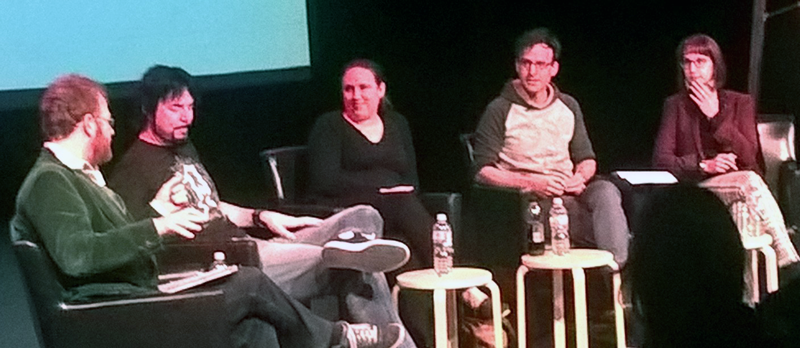
From the Dungeons & Development: Character Under Pressure panel
From left to right: Ben McKenzie (moderator) and dungeon master (and dragon), Jay Kristoff, Amie Kaufman, Andrew McDonald and Brooke Maggs.
I didn’t get a picture of the band, there were too many heads in the way. The band leader was Maize Wallin (maizewallin.com). Unfortunately, I didn’t write down the names of the band members, either. (I didn’t write anything, to be honest, but I took a photo of the intro slide, so at least I can name the speakers.) Music and effects were great.

Yesterday I went to the Speculate 18, which is a speculative writers’ festival, held here in Melbourne.

It was pretty good.

As festivals go, it was small. One stream, five sessions. But they were good sessions. Three in the morning, two in the afternoon.

The most fun session was the first one after lunch.  Dungeons & Development: Character Under Pressure where our four panel members and the moderator did a D&D role play live on stage, with a band to add sound effects on the side.

It was lots of fun, and the dynamic between everyone worked really well.

I couldn’t pick a standout session in the more serious topics.  They were all uniformly good, and I liked bits from all of them.

Two of my personal favourite bits were from Science Fiction: The Past, the Present, and What’s to Come.  One was Dirk Strasser’s summary of the current state of science fiction.  The most popular trends at present, he says, are climate fiction, generation ships, space opera, and gender themes.  Plus Laura Goodin’s point that back in the Victorian era, genre didn’t exist. Writers like Dickens happily wrote across genres.

The audience questions from this session led to some really thought-provoking answers, too.  One audience member asked whether the pace of scientific change would make science fiction irrelevant. No, Laura Goodin says, science fiction is a lens by which we see ourselves through fiction.

I have to agree with her.

A lot of people get this idea that science fiction is only about the science, and that somehow there’s no science left to discover.

I think most of us would agree that’s not true. Sure the mobile phones, artificial intelligence and self-driving cars and other things dreamed about in the forties, fifties and sixties are finally here, or nearly here, and the rate of change of some of these things has increased almost exponentially, but what about genetics? What about climate control? What about massive ocean farms?

Plus, science fiction isn’t really about science. It’s about people.  As Laura said, it’s a way to see ourselves. Fahrenheit 451 is still just as relevant today as it was when Ray Bradbury wrote it, even if instead of burning books they’re burning data stores. The Handmaid’s Tale shows us a bleak, dystopian future.

Science fiction is still doing what it set out to do. Entertain us, but also make us think.

The audience questions on all panels were good. (Kudos, too, to how they kept the questioners on track. No statements, just questions.) A question on an earlier panel sparked a discussion about the things writers take out of their books.  (What Sherylyn and I call our pet words.) Sadly, that got cut off because we’d run out of time.

Now, we just have to go back to our own manuscript and check for ‘somehow’. Which is, as was pointed out, a lazy way of having something happen without the author having to explain it.

Sherylyn (who came along, too), pulled her notebook out at the start of the first session. She started writing, and kept writing through the whole of session one.

“You took some comprehensive notes there,” I said, while they set up for the next session.

“Not notes,” she said. “The first thing they said, about describing the woman walking down the street. This whole idea popped into my head. I had to write it down.”

All in all, it was a good day.  I was exhausted by the end, I admit. Five sessions were enough.