Categories
Writing process

There’s always one error left

Book news first

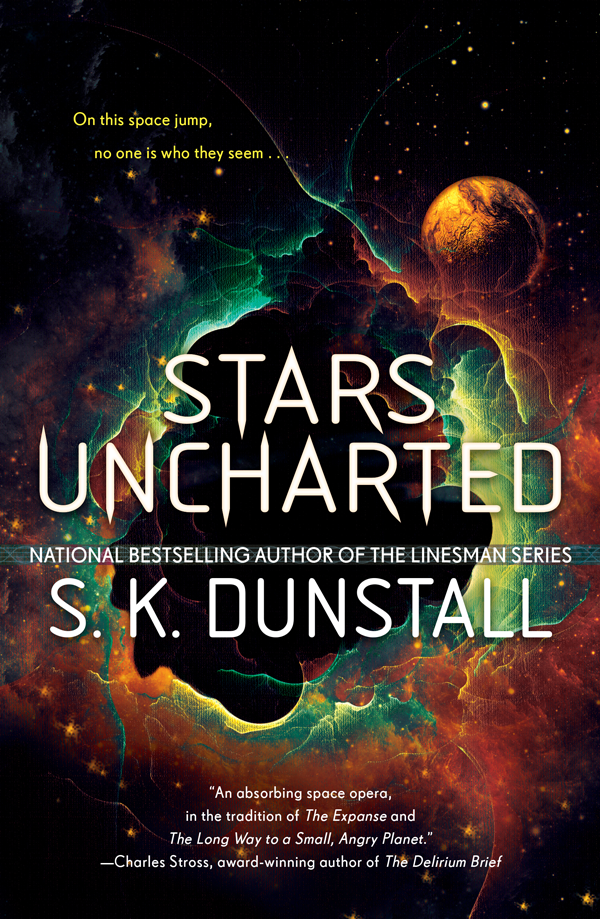
We have one more interview online for Stars Uncharted, if you’re interested. It’s over at PaulSemel.com.  In the interview we talk about who we’d like to play Nika and Josune if they ever made a movie out of Stars Uncharted, and we talk about how the show Firefly didn’t influence the writing of the book. No, we go way back further than that, to Star Trek, Doctor Who and Blake’s Seven.

Now, back to the main post

I did a presentation at work the other day, myself and two others. It was a good presentation. At the end we did a demo.  After the demo we answered questions for around fifteen minutes. 

Up on screen, the final page was left up while we talked. And all I could see was the typo I should have fixed.

“What we dont’ …”

All in big, dark letters because it was a sub-heading.

The first thing I did when I got back to my desk was fix it.

The fact is, when you’re writing, you make a lot of typos. Errors you don’t pick up, even when you read a piece of writing again and again. One of the advantages of co-writing is that another person is reading your work all the time.  They pick up things you don’t see.

I know that when I’m writing, I’ll often change a sentence, but not go back and delete words that made sense in the context of the original text, but don’t any more. And the funny thing is, even when I reread the sentence, I don’t pick up all the errors.

No matter how often you read your own work, you miss things.

Right at the end of a story we like to read our novels aloud. This is after more than twenty rounds of edits on the book. Even so, it’s amazing how much we change in that last round.

And we still miss things.  There are the typos which mostly get picked up by the editor and the copy editor, thank goodness.  (Although, there were five thousand copy editor corrections on Linesman. Admittedly half those were serial comma issues, and many of the rest were Australian/US spelling, but that still left a lot of basic typos.)

Less often, there are basic logic errors.  For example, as one of our readers pointed out in Stars Uncharted (Thanks, Ian) that a measurement is tiny.

Alejandro’s meddling had taught her early that she had to build in safeties. Especially after they had started using the exchanger and she’d come back to her own body once to find that while he’d been in her body he’d redesigned it to add twenty millimetres to her bust and to remove the same from her waist.

Yes, well. Twenty millimetres.  That’s 0.8 of an inch.  Just a bit over three quarters of an inch. Not quite what we had had in mind.

We originally had it two inches. (For those of you who have read the book, Alejandro would have tried a small amount first, to see how far he could go, which is why we chose two inches.) Everything else in the book was in SI units (metric), so we changed it.  Except, two inches is 51 millimetres, not twenty. We should have made it fifty.

Ouch.

Categories
Book news Writing process

We survived pub day

Amazing nature

Let no one tell you that the internet is a waste of time.  You learn things on the internet. The other day on Twitter @rainbow1973 posted an image of a rainbow eucalyptus tree.

Rainbow eucalyptus?  Australia is the land of the eucalypt, but I had never heard of them.

It turns out that they’re not native to Australia. Here’s me thinking all eucalypts originated here.  I was wrong.

Rainbow eucalyptus, also known as Mindanao gum or the rainbow gum (I wonder where they got that name) grow in warm, tropical climates and can be found in places like New Guinea, Indonesia and the Philippines.  They’re the only eucalyptus that grows natively in the northern hemisphere. The image above is of a tree in Hawaii.

Stars Uncharted is finally out

Publication day has come and gone. It seemed to go well, and we had wonderful marketing for it. Things are quieting down now. We hope those of you who bought the book enjoy it. This has been the most nerve-wracking release since Linesman, in a way, because it’s not a Linesman book.

As promised, we said we’d put interviews up for you. Here are the first few.

Over at SyFy Wire we talk about writing together, world building, and media that influenced us when writing Stars Uncharted.

On Jean Book Nerd we talk about inspirations for developing Nika and Josune, and some influences/turning points in our lives.

One thing I did notice, my IT background crossed over and I didn’t even realise.  Before ‘publication’ day I kept calling it release day, and I have trained Sherylyn to say ‘release’ as well.  I have learned.  Next time I’ll do better.

Categories
Writing process

Release day – Stars Uncharted

Stars Uncharted is now officially available.

Our thanks to the team who helped us create it. Our beta readers, our agent, our editor, the artists and designers, the copy-editors, marketing, all the assistants and everyone else along the way who was part of it. Thank you. We didn’t do this alone.

Enjoy.

Categories
Book news

Email interviews coming soon

If you want to know the answer to who do we think should play Nika and Josune in a movie or television adaption of our latest book, we answer the question in an upcoming interview.

Tuesday is book release day.  It’s coming fast.

We spent the last week answering interview questions. We’ll let you know where to find the interviews (if you’re interested, that is), once we know the links.

To date, they’ve mostly been email interviews. That is, the interviewer sends us a list of questions and we answer them.  This type of interview suits us, because of the time difference between Australia and the US.  We can answer in our own time.  It’s especially handy when you both work full-time.

I once had a job once where I was the English-speaking liaison for a software product, so when someone from the US wanted to know about that product they’d call me.  Or I’d call them.  Only we’re GMT+10, and New York is GMT-4, so office hours in the US are night time for us.  I can tell you, it wasn’t fun.  So I really like the luxury of being able to email our answers back.

As we worked through the last interview, I realised that we work on them exactly the way we work on stories.

We start with the idea.  In this case, the interview questions.  We talk about our answers.  One of us goes away and writes down, roughly, what we said.  She sends it to the other one, who edits the answers and adds extra bits.  We discuss it again, to see if we have answered the questions.  One of us fine-tunes the words.  We read the answers aloud.  Finally, back it goes to Alexis, in the Publicity department at the Publisher’s.

Which is pretty much how we write our books nowadays, too.

Categories
On writing Writing process

Deleted scenes

Sometimes, the scenes we delete are simply that, scenes. Other times we rub out a whole character.

We don’t know about other writers, but when we write novels, we delete as much as we write. Sometimes we delete more.

The problem is, some of these deleted scenes are great. We like them, anyway.

Some of them aren’t so great, either. Back when we first started writing Linesman we deleted a lot of Rossi scenes. Looking at those scenes now, they had to go. They were boring, and didn’t add to the story at all.

But there are other scenes we delete because the story turns in a direction different to that in which it was going.  Or you write yourself into a hole, realise something can’t happen. Or you write a scene that happened way too early for the book.  Those sorts of things.

We do keep deleted scenes. We have massive OneNote file with pages and pages of deleted scenes in there.

We like some of these scenes. Sometimes we were sorry we couldn’t do anything with them.

Earlier this year we started a newsletter.  Newsletters are good for letting readers know what we’re doing without them having to look for that information, but what’s the point in a newsletter if it doesn’t give you something you can’t get elsewhere?

We considered writing short stories about the characters in our books, but neither of us are great short story writers. And having to write four a year.  Nope.

If we can write any short stories we might still put them into the newsletter.  Meantime, what a perfect place to put up our deleted scenes.

They’re not great, because most of them are little more than a first draft, but they are a look into our writing life. Particularly if we can continue to show the deleted scenes of characters we really like. You never know, they might turn up in a later book in a different guise.

Categories
On writing

Speech tags and other stuff

Today’s blog comes to you a little late, as we were traveling this weekend. We used to travel a lot, but since Mum died, not so much. As a result, we find we’re no longer in the habit of it.  It’s more exhausting, and we can’t to do a 500km (300mile) round-trip in one day now.

Especially not this weekend, where it took us six hours to go one way, because of roadworks. The car gives a ‘take a break’ warning when you’re been driving for two hours without stopping.  We hadn’t even made it a hundred kilometres from home by the time the warning light came on.

We’re out of the habit of traveling.  Took our bags into the motel, settled down to wash and freshen up.  “Where are the toothbrushes?”

“Ah.  Forgot them.”  It was my job to pack the travel toiletries.

“Okay.  We’ll sort that out later.  Where’d you put the hairbrush?”

“Ah.  Forgot that, too.”

And that was just the start, which culminated in the realization, as I got ready for bed last night, that I had also omitted to pack any nightwear.

I was so totally disorganized.

But, I digress.

What I really planned to talk about today was speech tags.  “She said, he mumbled, Jacob yelled.”

Over the years there’s been a real trend away from using any attribution other than said.

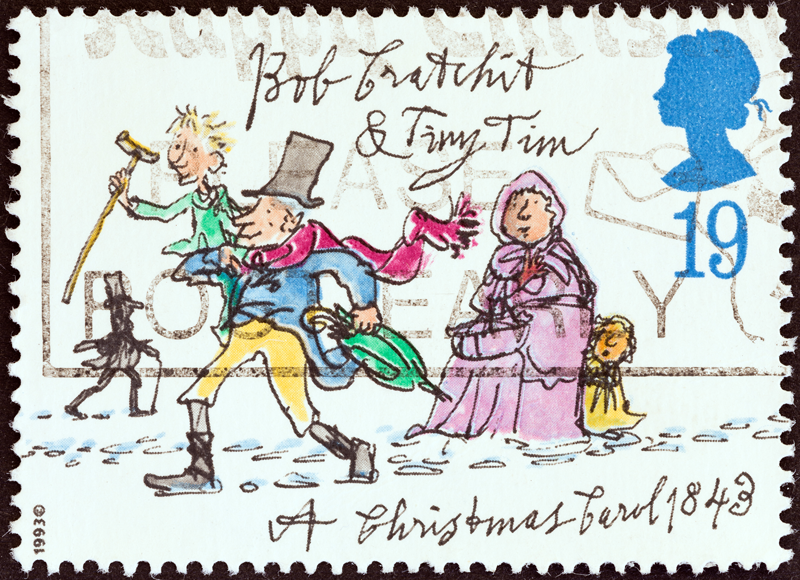
But that wasn’t always the case. Charles Dickens, for example, used a lot of saids, but he also used a lot of other attributions as well.  Take A Christmas Carol.


“A merry Christmas, uncle, may God save you,” cried a cheerful voice …

… “If I could work my will,” said Scrooge, indignantly, “every idiot who goes about with ‘Merry Christmas,’ on his lips, should be boiled in his own pudding, and buried with a stake of holly through his heart. He should!”

“Uncle!” pleaded the nephew.

“Nephew,” returned his uncle, sternly …

… “What else can I be?” returned the uncle …

… “Because you fell in love,” growled Scrooge.

From A Christmas Carol, Charles Dickens


Dickens wrote such beautiful, evocative language, and he described how people said things. Uttered, growled, observed, returned, replied as well as said. He also used adverbs a lot—sternly, gaily—which are less popular nowadays, as they’re considered ‘telling’ rather than showing

Nowadays the commonly accepted attribution is ‘said’. If you use anything else, you’re likely to have a reviewer come back and say, “Do you need to use this word? Why don’t you just say ‘said’, it doesn’t jump out as much.  That same reviewer might also say, “You have a lot of ‘ly’ words, are they all necessary?”

There was an interesting thread on twitter the other night about the use of said, which summed it up well, I thought. Scott Pack (@meandybigmouth) said:

“Most of the time, just putting ‘she said’ after some speech will do the job.  When you are constantly mixing it up—she murmured, she argued, she added—it stands out, and not in a good way.”

Scott Pack, 27 July 2018.

Interestingly, a later tweet in the same thread by John Scalzi (@scalzi), pointed out that reading is not the same as listening, and that ‘he said’ stands out in audiobook narration. That while for a reader ‘he said’ blends into the background, it stands out when hearing the story narrated.

I agree.

That’s why it’s so helpful to read your novel aloud before you send it to the editor. It’s amazing how some things that are fine as read, really jar when read aloud.

As a general trend, though, as the audiobook audience grows as a percentage of total audience, I think we’ll see even less ‘he/she saids’ in stories and more working the dialogue around what else is happening in that paragraph, and the unique voice of that particular character.

Which can only be a good thing. Isn’t that what most writers aspire to? A story with characters so unique that you know immediately who is speaking just by how they say it.

Categories
Fun stuff

A musical interlude

I love Pachelbel’s Canon. We even have a CD at home, called Pachelbel’s Greatest Hit: Canon in D, which we play on occasion.  Although I do admit, while I can listen to soundtracks over and over again, the Canon album is usually a one-listen. Enough is enough.

Some of my favourite Canon pieces, though, are those where comedians get to do a take on it. I believe it can be quite boring if you are a cellist.

Rob Paravonian’s Pachelbel rant was back in 2006, but I’ve always enjoyed it.


Or the Piano Guys ‘Rockelbel’s Canon’ (around 2013). You will need to click through to YouTube to see this one.


https://youtu.be/xV1mZ1BjKa8


And now we also Pachelbel’s Chicken.


The chickens are by an Australian classical duo known as Two Set Violins — Brett Yang and Eddy Chen—a classical comedy duo whose aim is (and I quote from their web site):

“Making Classical music relevant to the modern generation through fun, humor and simplicity.”


All these images are originally from YouTube.

Categories
Book news

Read chapter one of Stars Uncharted

Only four weeks until Stars Uncharted is published.  Eek. It feels like only yesterday that we tentatively sent off three sample novels to our agent to say, “Which one do you think we should work with?”

Her answer, “Well, that was easy.”

And that’s how Stars Uncharted came about.  If you’re interested, you can read the first chapter now on our website.

Categories
Progress report Writing process

A ragtag band of explorers …

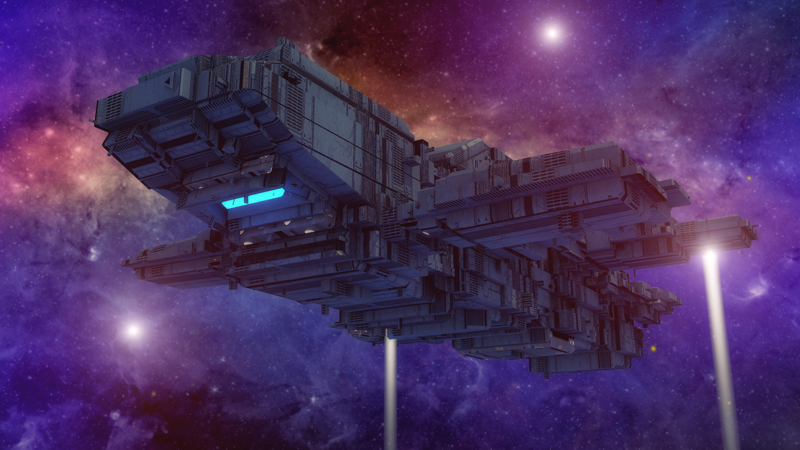
My kind of spaceship. Not too many windows to space. Windows make a ship more vulnerable, and a lot more expensive to heat.
This is the sort of ship a ragtag band of explorers like Hammond Roystan and his crew might use. Image: Miguel Aguirre

Status today:  Ow.

I’ve had a lazy week, reading lots of books.  I’m a fast reader, I tend to open a book and read through to the end, stopping only for work, dinner and bed.  Maybe bed, if the book’s too good I’ll read through the night to finish. Bad me.  (The only day I ever took off work for reading happened because I stayed up till 6:00am reading Robin Hobb’s Fool’s Fate. I thought I’d snatch an hour’s sleep. Ahem.  By the time I woke up it was way, way past getting-to-work time.)

Anyway, I read three books yesterday, straight through, stopping only for lunch and dinner.  (I’m not going to name them, because the first book was so good I went and bought the second two, and by the end of book two I was going, ‘Huh’, and book three I just skimmed. In my skimming I thought I missed something important because the end I felt as the author had left a major plot-hole. I spent a couple of hours rereading book three, trying to work out if they had, or if in my skimming I couldn’t find where they covered it.  I still couldn’t find it.)

I sat in the same place all day. I’m getting old. My body can’t take that sort of punishment any more. Today I am sore.


There’s one month to go for the release of Stars Uncharted.  Release date is Tuesday, 14 August.

It’s funny how when you write a book you think it’s so unique, but it turns out that it’s not.

We’ve learned that a ‘ragtag’ crew is a thing. There are lots of books about people who join up as a team (a little bit of the found family we talked about last week), but I wasn’t aware that there was a word to describe them. It doesn’t feel that common in Australia—maybe it is, maybe we never noticed it—but since it was used in the blurb on Stars Uncharted we’ve noticed it everywhere.

Categories
Writing process

What are some things you like in stories?

A couple of days ago, on Twitter, Isabel Yap (@visyap) started a thread that asked,

“What are some things you like in stories (not tropes, necessarily), that you are always down for?”

I read all the comments, agree with a lot of them, and came up with my own list of things I particularly enjoy.

Deep platonic friendships

Friends who are there for each other. People enjoy each other’s company, can be honest to each other, tell them their thoughts and hopes and dreams. And of course, in the stories we like to read and write, can also trust that their friend will save them if they get into trouble, and knows that they will do likewise if their friend gets into trouble.

Found families

My family life was practically idyllic, so far as I can tell. Loved Mum and Dad, still get on well with my siblings.  I have no idea why I love found families so much, but I do. This is where a group of disparate people—usually lonely, often without family of their own—come together in a family group.  In fact, right now we’re toying with a story just like that.  An alien, a human down on his luck, and a kid whose own father was violent, so he ran away from home.

People have mentioned Stars Uncharted is a found family, too.

Happy endings

When I finish a book I like to finish feeling satisfied. That usually means a happy ending.

Bad guys who aren’t pure evil

I hate it when the bad guys are purely evil, with no redeeming features at all. The thugs are just thugs, the evil company is evil all the way through, and so on.

It’s easy to make people and organisations purely bad. The enemy in Stars Uncharted is a lot more simplistic than the enemies in the Linesman books.

Banter

Love the quick back and forth repartee between characters. It makes a story fun, shows that they’re friends (usually), and demonstrates character.  When we were younger, Ivan Southall’s Simon Black series was our favorite duo who talked back to each other.  (They’re kids’ SF books, love them still, but they haven’t aged well, except the first one, which wasn’t science fictional at all, but about World War II.)

I have, however, read books—which shall remain unnamed—where the banter didn’t work, so it’s not as easy to write as it looks.

Strong sentiment, lots of emotion

Laugh out loud moments, moments that make you cry, no matter whether you’re in public or not, even those lovely little bits of romance that thrill (not the sex, just the pieces where you go, ‘ooh’ and go back and reread all the time).

Happy endings

The world is depressing enough sometimes, particularly if you listen to the news, nowadays.  Of course there are good bits, but it’s nice to know when you escape to a book that you’re going to feel good at the end of it.

Strong women

I don’t need kick-ass women all the time, but I really don’t want women who have no control over their own lives.

Then again, I don’t like books where men have no control over their own lives, either, and I’ve read a few of them lately. There’s one author I love, but I refuse to read any more of her books because she’s done that to her main character (male) in two series now.

No, characters have to have some control over what they do and how they live their lives.

Science fiction and fantasy with gender and race equality

Which leads on to the next thing, which drives me crazy, particularly in fantasy. Books where the author has built an amazing world, plus an awesome magic system, and then they base a woman’s role on a quasi-medieval western Europe role, and a non-white person’s role on the same.  Women are chattels, owned by their husbands or fathers, colored people are slaves, or semi-human.

You’ve built a whole world, and you stop right there. It doesn’t have to be that way.

Non-perfect characters

Given that we wrote about Ean, who is a classic ‘special person’, you can see that we have no objection to a story about a chosen one, or a (technical or strategic) genius, or any of the—can I call them—tropes that are used in science fiction and fantasy. No, the real issue is when they’re perfect people with it.

They have to have some failings.  Because no one is perfect, and perfect people are difficult to like.

Stories with big ideas

Anne Leckie’s Ancillary Justice with a ship, the ancillaries and a single person all as one entity. Vernor Vinge—how to murder someone by leaving them to die in real time in Marooned in Real Time, or how not to pay call centre staff, in The Cookie Monster. Big ideas, science fiction that makes you think.

Fantasy, too. You can’t go past the bridge builders in Brandon Sanderson’s The Way of the Kings, or even the magic in Robin Hobb’s Soldier Son series. (Miserable books, those, but the last story ended on a high note. I reread the end quite a few times.)

Not-so-alpha males

I like to know how my male characters feel, and what they think, not just what they do. In many stories, that makes them less-than-alpha. So be it.  They’re the best.

And let’s face it, in real life, a true alpha male is not generally a really nice person. They tend to be arrogant, take-charge, think they know everything and refuse to listen to anyone else.

Strong family relationships

I know I said earlier that I like found families, but I do like books where people who are part of a blood family actually get on with each other, and love each other, and have contact with each other. So many characters in fantasy and science fiction seem to have no families at all.

Children’s books are often the same. Parents and siblings are totally out of the picture. Yet for some reason, when we get to young adult, the family is around all the time, causing the main character grief. (And isn’t it nice when you find a young-adult novel where the hero or heroine has a good relationship with both parents?)

Fun in a story

I love stories with a dash of humor. They don’t have to be laugh-out-loud funny, just make me smile.


So that’s my list. What’s yours?


(p.s. Today’s blog is a total mix of US and UK spelling, not even one or the other. Sorry. I just went with what worked for me, today.)