Categories
Book news Progress report

Getting close to a book

Look, it's a typeset book, with crop marks and all. Just fyi, for Alliance, this is also the version we used to create the copy to read online. We'll probably do the same for Confluence. Just need to get an okay to put it up.
Look, it’s a typeset book, with crop marks and all. Just fyi, for Alliance, this is also the version we used to create the copy to read online. We’ll probably do the same for Confluence. Just need to get an okay to put it up.

The digital proofs for Confluence arrived the other day.  This is a PDF of the typeset book.

It looks like a book.  It’s the last stage before the books are actually printed.  From this we get the green galleys—uncorrected proofs—that we can start sending out to people to read.

We do one final read.  (Optional, according to the publisher, for they have someone doing the final read as well.)  In our case, Sherylyn does the final read.  She does nearly all the editing from the copy edits on.  (It’s great to have two people with different skill-sets working on a book.)

You can’t change anything at this stage, only pick up errors.

Meantime, we have moved onto the next book, and there has been time between our last copy edit and this typeset document arriving, so this is the first read in a long time that we actually have some objectivity reading the book.  Beforehand, we have been so immersed in the story we have no objectivity at all.

There are a few things we’d change. Clunky paragraphs here and there, repeated information. But overall, Sherylyn’s enjoying the read.

Which is nice.

Categories
On writing

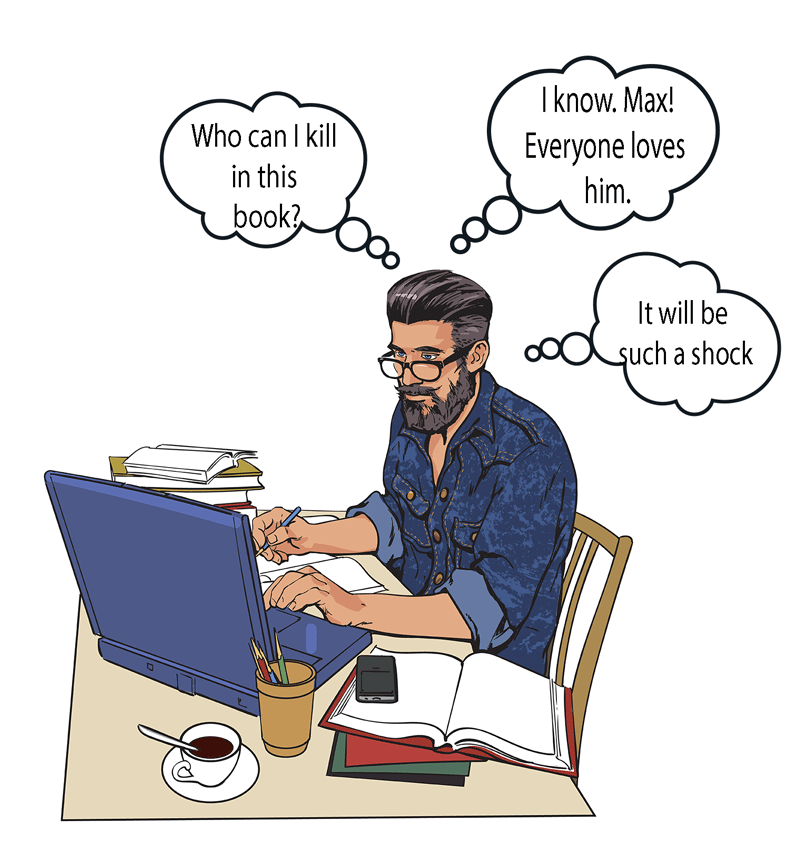
Author, I can’t take it any more


KillingOffCharactersDear Author

I love your books.  You are a great writer, and you have a book coming out soon. It’s part of a series I love.

Except … I’m not going to read it.

I know. I know.  But you kill off too many of my favourite characters.

You even admit that you do it to wring emotion out of your readers.

But I’m over it. The last three books of yours I haven’t enjoyed. Instead of reading the story, I’ve been waiting for someone to die. Last book, I read the end first, to find out who you killed off this time. If the two characters you killed had been favourites of mine, I wouldn’t have read the book.

I know people die in real life, but books aren’t real life, and I read to escape, not get dragged through the emotional wringer every single time.

I know we’ve killed characters in our own books. But mostly we kill them early, and you don’t get to love them for a hundred thousand words—or in your case, over several hundred thousand words—before we bump them off.

Besides, I don’t mind the occasional death. Well, I do, but I accept that’s fictional life. And I cry buckets when it happens. But you create big books with ensemble casts, who I grow to love over the series (those who survive the first couple of books, anyway). Then you kill them off, one (or more) in each book.  If you didn’t keep adding new people, you’d have run out of characters by now.

So I wish you all the best for the new release. But I’ll be over here in the other corner, reading a book that takes me away from the crazy world we live in for a while. Something that makes me feel better after I’ve finished. Not worse.

Regards


p.s. Did you know there’s a WikiHow article on getting over the death of a fictional character?

Categories
Writing process

How do you pick trends in publishing?

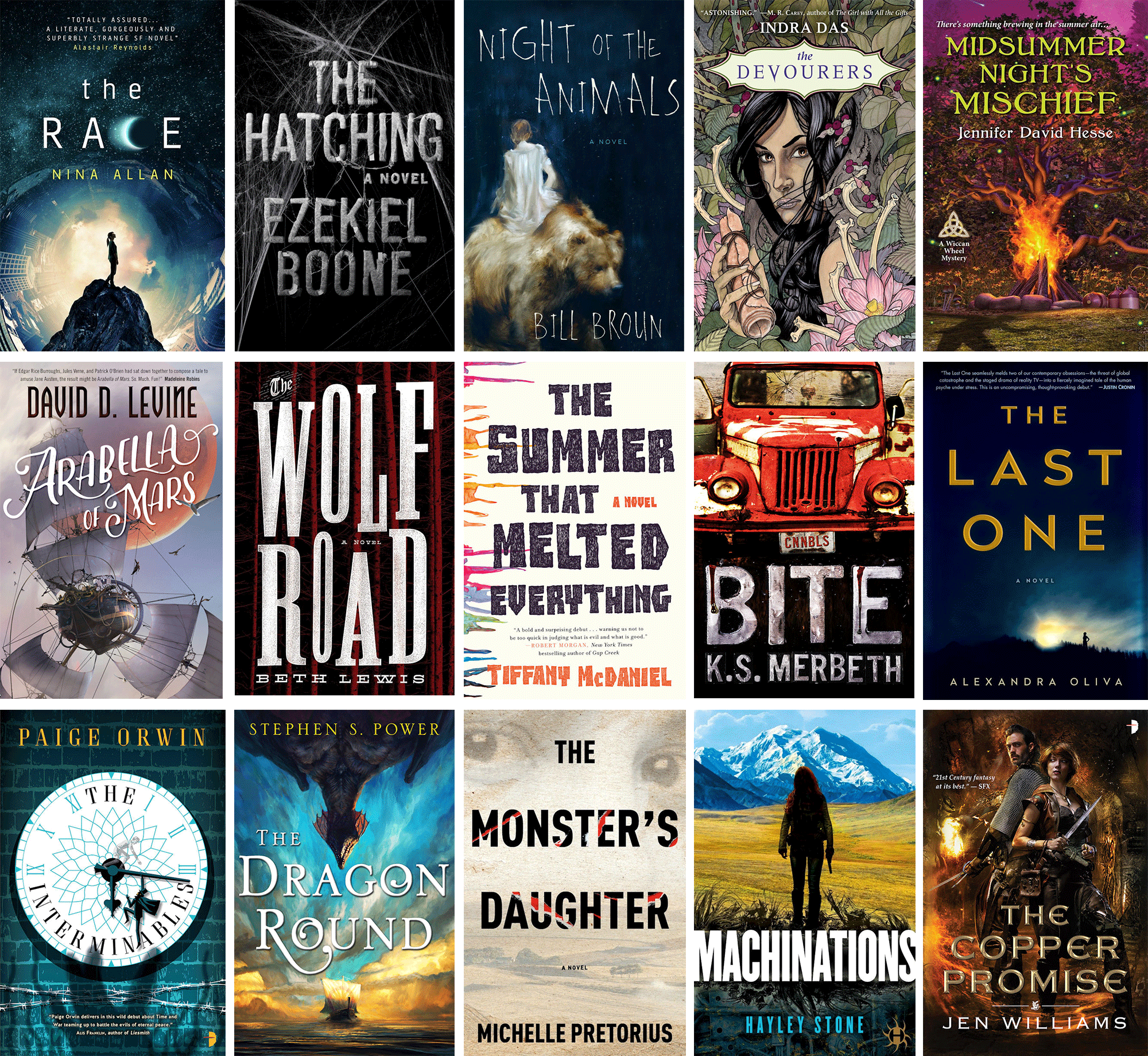
Debut authors for July 2016. (I borrowed the images from the Qwillery site, where they also have a monthly Cover Wars post, where you can vote for your favourite cover.) If I had to guess just by the covers, I'd say a bit of horror, and not too much science fiction.
Debut authors for July 2016. (I borrowed the images from the Qwillery site, where they also have a monthly Cover Wars post, where you can vote for your favourite cover.) If I had to guess just by the covers, I’d say a bit of horror, and not too much science fiction.

Write what you know. Write for the market.  Don’t write for the market.  Write what’s hot right now. Don’t write what’s hot now, for it won’t be hot when you’re ready to sell.

Whether you choose to write for the market or against it, how do you pick what the market is doing?

The best piece of advice I ever got about working out what the market was doing, and it’s true for readers as well as writers, is to

Read debut authors from the last year, maybe two years.

If you’re a writer, it doesn’t help with what to write, but it does give you an idea of what’s happening in the market.  If you’re a reader, it gives you a good idea of the way your genre is coming.

Why debut authors?

Because they’re the authors who don’t have any history behind them. They’re the ones the publishing houses are taking a chance on, the ones they think can sell.

So now we’ve established that it’s good to read debut authors, how do you know what’s coming?

Book publishers’ sites.  Booksellers’ sites.  Bloggers who blog about new and forthcoming books.  My personal favourite site is The Qwillery.  This lists all the debut releases for the month, and interviews many of the authors as well.  I’ve found a lot of books there.

Categories
Writing process

How long did it take to write Linesman?

Confluence, Linesman book three, has been with the with the copy editor a while now, and we’ve had time to sit back and reflect on some of the changes over the three books.  One of the biggest changes was the time it took to write each book.

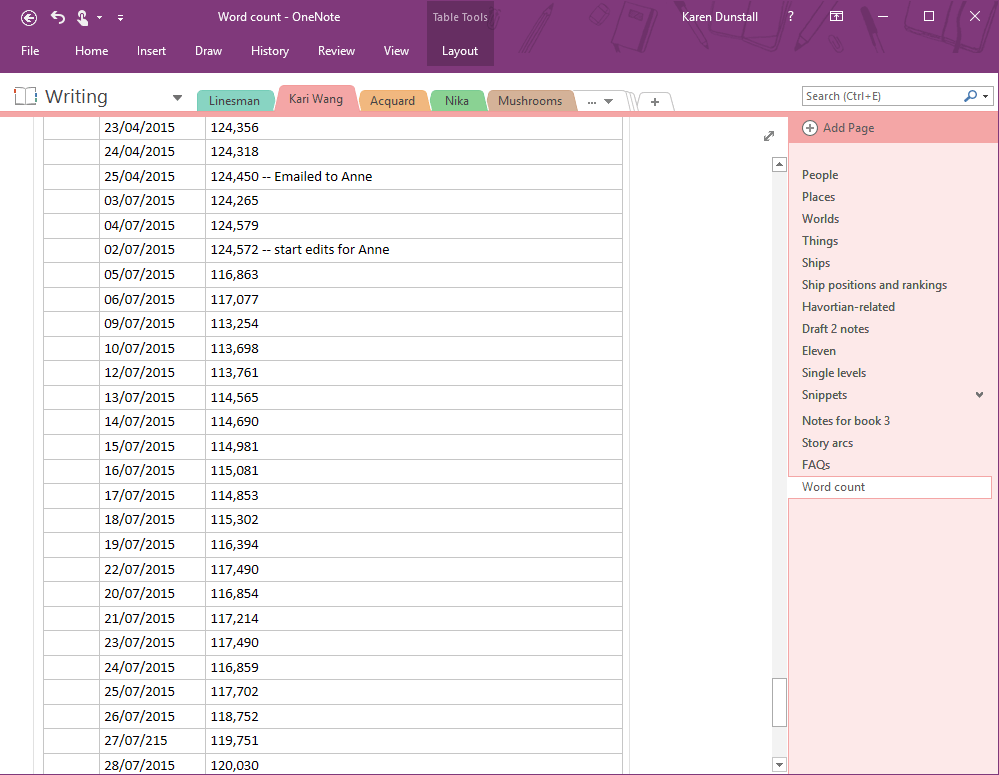
We kept a daily word count, so we know roughly how long it was from start to finish.

The diagram, below, shows the count for part of book two, Alliance.

We use OneNote to store information about each book as we write it. Note the not-so-fanciful names. Usually named after someone or something in the story.

Book one: Linesman

We had plenty of time to write Linesman, because we didn’t have a contract for it.

  • We started on 18 July, 2010
  • Finished the draft we sent to Caitlin, our agent, on 18 December, 2012WordCount_1
  • Rewrote again, and again, and our last count was on 7 September 2014
  • Grand total: Four years, one month and 21 days (1513 days)


Book two: Alliance

Alliance was the first book we wrote under contract. We had firm deadlines. But we also had another book to complete first, and in between writing it we went back and did edits on the earlier book.

  • We started on 16 February 2014WordCount_2
  • Finished the first draft on 7 December 2014
  • The last date counted in our calendar was 10 August 2015.
  • We’re getting faster, but the grand total is still one year, five months and 26 days (541 days)


Book three: Confluence

Book one, Linesman, was published while we were writing book three. And we were doing edits for book two. We also did more rewriting in the first draft of this story, rather than leaving it for later drafts.

  • We started on 1 February 2015WordCount_3
  • Finished the first draft on 26 January 2016
  • Final date counted was 21 May, 2016.
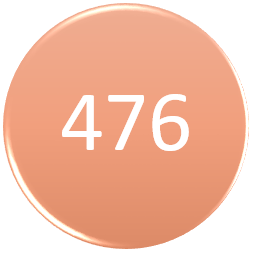
  • Grand total: One year, three months and 21 days (476 days)


This has been an interesting exercise, because if you’d asked me before I wrote this, I would have said it took us twelve months to write a book.

It used to. What’s changed has been the editing. Twelve months to write a book and get it halfway to decent. But more time to edit it into something that’s publishable.

Categories
Writing process

Democracy in space

DemocracyInSpace

Compulsory voting

It seems that everyone is voting at the moment.

Britain with their Brexit. The US with their primaries and getting ready for an election later this year. And us, here in Australia. We had an election yesterday.

I vote. Everyone citizen over 18 years old votes in Australia votes. (Or at least, they’re supposed to.) Because, you see, voting in Australia is compulsory.

People from countries where voting is not compulsory think it weird. “What about your rights?” they say. “They’re denying you the democratic freedom to not vote if you choose to.”

I’m a fan of compulsory voting. The majority of Australians are. (Last I heard it was 70% in favour.) Sure, it takes an hour out of your day, but there’s usually a sausage sizzle happening, and the mother’s club at the schools (where most polling booths are) run a sweet stall.

It’s even easy to choose not to vote. Turn up, have your name ticked off, and then don’t fill in any of the boxes before you put the papers into the ballot box.

Democracy as governing body

I’m also a big fan of democracy. I think most of us who live in democratic countries are.

But democracies aren’t generally the first government of any country. They evolve, over time, when people become knowledgeable enough and powerful enough to force the incumbent government to listen to them.

It can go back the other way, too. An elected government can take away civil liberties, effectively removing democracy if it goes too far. Or the military take over.

Governing in space

Who’s going to make money in space?

Government agencies? Probably not. Governing bodies spend money, they don’t make it. They spend it services and infrastructure for their constituents. No matter what type of government they are. (By making money here, I mean actually getting something from space that will net them money.)

Thus the first people to make money in space will probably be companies. It follows, then, that the first peoples in space to be large enough to require any sort of government will be working for those companies.

Suppose a big, multi-national sets itself down on an asteroid and starts mining it. Whose laws are they bound by?

No-one’s but their own. So the first laws on that asteroid will be that company’s code of conduct. It may turn into a democracy eventually, but it’s a lot more likely to stay a ‘company’ for as long as the people are treated well enough and can survive.

The other big group I could see going into space is religious groups. Pilgrims, spreading the word of their god forever on or outward. Or escaping from persecution. For these people, the leaders of their church will become the ruling body.

Again, a fully-fledged democracy will be a long time coming.
Categories
Writing process

A gender-swapped example

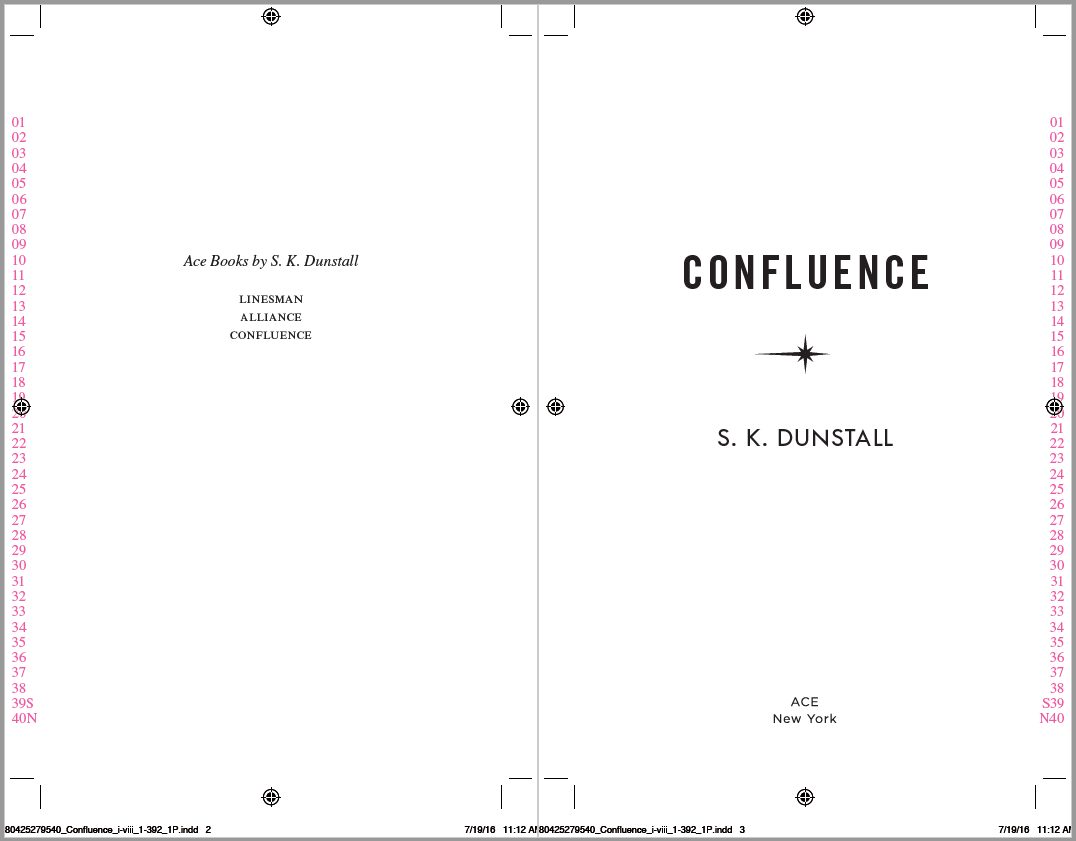
FantasyFigureI’ve been reading if We Wrote Men Like We Write Women and If We Wrote Men Like We Write Women Part II over at Jim C. Hines’ site.

He’s switching the the gender of the men and women in passages from various books.  Robert Heinlen, Issac Asimov, Piers Anthony, Neal Stevenson and his own Libriomancer.

Interesting stuff.

Those of you who have been reading this blog a while might recall that we initially wrote Crown Princess Michelle, from the Linesman series, as a male.  Early on, our agent suggested she would be stronger as a female. She was so right, and we cannot imagine Michelle as anything but a woman now.

There’s another book, a fantasy, we wrote a while back, where our agent did the same.  “Have you considered making Edmund female?”

We’ve put this book aside.  It’s fantasy, for a start, and right now we don’t have time to write any fantasy, we’re enjoying the science fiction. It also needs a lot of work.  (Another suggestion was that we could turn it into a science fiction. That’s a lot more plausible, actually, because that would open the story massively for us. The world building would make a lot more sense.)

Edmund’s the main character in the book.  We’re resisting.  But then, I resisted changing Michelle at first.  We do refer to the story as Edmunda now.  So maybe we’re psyching ourselves into it.

Just for interest, here’s a gender-swapped passage from Edmunda. (This is an early draft, please excuse.)

Categories
Talking about things

Winter is here

Wnter is here
It’s not that cold here in Melbourne, but sometimes it feels like it. I can’t recall how many years ago it has snowed in Melbourne. It’s rare that it does, and the snow melts quickly.


We received the copy edits for Confluence on Friday.  3,397 revisions.  It sounds bad, but we’re getting better.  A good half of those seem to be comma-related.  Add commas, remove commas.  You’d think we’d know them by now, wouldn’t you?  There are a few places we had hyphens where our copy editor took them out, and vice versa.  (I nearly put a hyphen in there, but looked it up. It doesn’t need one.)

Around 3,000 of the changes are doubles. For example, add a comma, the whole word gets deleted and a new word with a comma is added.  So there are technically under 2,000 changes all up.

Meantime, it’s freezing here in Melbourne.  (Freezing for us is getting down to single digits Celsius. Not cold by many people’s standards, but it is by ours.)  I confess to staying inside a lot. Reading lots of books.

My long woollen coat has been getting a lot of wear.  Last year I wore it around ten days in total.

I’ve been on reading binge, catching up on things I haven’t had time to read while we’ve been writing.

I’ve churned through a lot of series books.  Interestingly, I have noticed that I have no trouble reading books one and two in a series, but the series has to really grab my attention for me to pick up book three.

(Chews fingernails, for Confluence is book three.)

I have friends who don’t like to read a series until the series is finished because they want to read them all at the same time.  Yet, if I have to wait for a third book, with the break in between, I think I’m more likely to read it.

Or maybe we should just write duologies in future.  🙂

Categories
Writing process

Naming your book

One of the more obscure movies Alan Rickman was in was a movie called Blow Dry.  Not just Alan Rickman, either.  It had Josh Hartnett, Natasha Richardson, Bill Nighy, Rachel Griffiths, Warren Clark and others.

It was a nice little comedy about a hairdressing competition. Funny in parts, moving in others.  I still stop and watch it every time it comes up on the television.

I almost didn’t watch it at all because of the title.  I mean.  Blow Dry.  What sort of movie does a name like Blow Dry evoke?  Not one that I want to see.

Names are important.

Before we sold Linesman we’d heard so much about how writers had no control over the name the publisher chose for your book.  Linesman was the working title, and it stayed the title all the way through.  I don’t even remember anyone suggesting anything different.

The working title for Alliance was Kari Wang.  We couldn’t think if anything that suited it, and by now we knew we wanted one-word titles for all the Linesman series books.  I can’t recall now if we sent it away with that name, or if we changed it just before we sent it away to Linesman#2.  We were asked if we had any ideas for names. We suggested a few, but it was someone at the publishing house who suggested Alliance.

The working title for Confluence was also named for the secondary point-of-view character.  Again the publishing house asked for some suggested names. We supplied a list of six. One of those was Confluence.

Right now, we’re thinking about names for the next book we are working on.  I’m not even going to name the working title, because it (and I quote)

Sounds too much like a women’s fiction novel about hairdressers and manicurists set in the 1950s.

Maybe that’s what made me think of Blow Dry in the first place.

Categories
Book news

Book news

This is just a quick update.  We haven’t given a progress report for a while.

  • Alliance, book two of the Linesman series, has been out in the wild since late February. It’s been well received so far
  • Linesman has gone back for reprints, which is nice
  • Confluence, book three of the Linesman series, has been accepted for publication*. We’re expecting copy edits back in a month
  • We got the final artwork for Confluence early last month, so we’ve been spreading the cover picture around a bit

This means we’ve finished the trilogy we were contracted to do. We don’t know what happens next. That’s with our agent.

Until that decision we’re happily writing a new story about [can’t tell, spoilers]. It’s space opera. Lots of action. A little bit of fun [we hope].  Characters we love.

We’ll see.


* You get three payments for a book. The first is on signing, the last is on publication, and the middle one is what they call delivery and acceptance. This means your editor has finished with any edits she wants for the book and deems it ready to pass on for publication. There’s another round of edits after that, copy edits, where the copy editor checks spelling and grammar, and whether what you wrote works in with the earlier books.

Categories
Writing process

It’s all relative to your frame of reference

You’re sitting on the train, listening to the phone conversation of the girl next to you. (You’re not trying to listen, but it’s that level where you can’t tune it out, and you don’t have a pair of noise cancelling headphones with you.  In fact, half the carriage is listening for that very same reason.)

She’s having boyfriend trouble.

“I think he wants to drop me.  It’s our anniversary in three weeks.  I found this lovely restaurant.  But he says he can’t afford it.  It’s an excuse.  He doesn’t want to go out.”

Noises from the other end of the phone.

“No.  He’s like that all the time.  And it’s not as if he can’t afford it.  We’re going to this expensive steakhouse tonight.”

More noises from the other end of the phone.

“He knows I’m vegetarian. He’s apologetic and all that, but it’s his father’s fiftieth birthday and his dad likes steak.  So we’re going to this place tonight—fifty dollars a steak, where I can’t eat anything—and then he says he can’t afford to take us anywhere nice on our anniversary.”

A short reply from the other end of the phone.

“No.  It’s just an excuse. He’s looking for an excuse to make me drop him.  He’s too cowardly to do it himself.”

You want to lean over and say to her, “Maybe he really can’t afford it.”  Half the train probably does too.  But this girl wouldn’t believe you, because she’s convinced the boyfriend is looking for an excuse to drop her.

She’s an unreliable narrator, as far as her boyfriend is concerned, because she’s interpreting everything he says and does in a specific way, which is not necessarily how most people would see it.  And because she’s interpreting it that way, you, the reader—or in this case the listener—get a very specific idea about this girl and her boyfriend.

What impression do you have of the boyfriend?

He gets on well with his family. He’s careful with his money, although he is prepared to overspend for an occasion.  The occasion he’s prepared to overspend for is his father’s birthday, not his girlfriend. So, not sure yet about the relationship with the girlfriend. Maybe she is right that he wants out. Even so, he comes across as a nice, family-oriented guy.

The girlfriend?

She comes across as somewhat selfish, thinking more about herself than her guy. Thoughtless about finance.  Unappreciative of a man who puts family first.  Whether she’s correct or not about the boyfriend trying to get her to dump him? Don’t know.  Don’t suspect so, but that is more a gut reaction to the character than a reasoned is he or isn’t he.


This is a great writing technique. Using a scene/conversation to convey something else entirely.  It gives extra layers to your story, making it richer.

In another example, take the film-clip, above. Mr Bean and the two-way mirror. How you perceive this scene totally depends on whose point-of-view you are watching.

As they say in science, it’s all relative to your frame of reference.