Categories
Writing process

Maybe I should read more widely

Hospital

Our niece is in hospital.

“We’ll bring you some books,” we said.  “What do you like to read.”

“I don’t like fiction.  I like real stuff.  True life. Things that can happen. Chopper Read. That was good.  And I read another one about a woman who had to escape from her abusive husband.”

“I’m close to a bookshop,” I told Sherylyn.  I’ll get the books on the way.”

I confess, we love our fiction.  Neither of us read a lot of true life. Sherylyn reads more than me, but given a choice between a novel and a true-life story, we’ll take the novel every time.

But everyone has different tastes, and most of all I wanted to give something that our niece would enjoy.  I thought it would be easy. I’d just walk into the bookshop, find the true life stories, pick up three or four, and be out in ten minutes.

It wasn’t like that at all.

There were so many stories about criminals and serial killers.  I know she liked Chopper, but I still found it difficult to buy books about serial killers.  There were a lot of books about people who’d overcome illness of some kind.  While she may have liked them, I wasn’t sure. She was in hospital, after all.  It’s a bit like going to see someone who’s sick and saying, “Well, here’s some stories about sick people to make you feel even worse.”   So that limited things somewhat.

Worse, I found I couldn’t just pick up books and hope she’d like them.  They had to books that I would pick up and read myself.

I spent two hours in the bookshop, and came out with three books. One about a woman who opened an orphanage in Vietnam, one about a man who had been adopted out as a young boy, then years later follows up on his birth parents and discovers his father is a notorious killer.  And the third one was about a bikie who travelled.

I don’t know what our niece will think of them. But I like to think that even if she doesn’t like them, and leaves them at the hospital for someone else to read, someone else might enjoy them.  🙂
Categories
On writing Progress report

Working hard on Confluence edits

Well, Sherylyn is, anyway.

Our editor sent back further edits for Confluence.  They’re due  on Monday.

Around this time in the editing process Sherylyn does most of the work.  I get to relax (mostly), and every so often follow along to see what the edits are and whether I agree with them.

“Yes, yes, yes, yes. Sure. That sounds good.  Hmmm. Not sure about this one. I’m going to change it. Are you okay with this change?  Yes, yes, yes, yes.”

The book is off to the copy editor on Monday.

We’re far enough removed from Confluence now to see some things we’d like to improve, but we don’t have the time.  I think every writer does that, can’t let the story go.  What is the definition of done?

This final tidy up has cleaned the book up nicely, though.  It’s good.

Last night over dinner we had a long chat about what we learned writing these three books, what we’d do again, and what we’d do differently next time.

I might put it into a blog one day.

Categories
Fun stuff

It’s Eurovision again … already

This year has gone so fast.  it’s May already, and that means Eurovision time.

Like many Australians, we have watched the Eurovision for many years. Back then we took the British telecast and Terry Wogan’s droll comments were part of the entertainment.  (Not sure he’d be allowed to comment that way any more, and I think that’s a good thing.)

So Australia has a long history of watching the Eurovision, but how on earth we ever got to compete …  it is the ‘Euro’ vision.

I have no idea what we would do if we won.

Still, I like the Australian song entry. It’s one of my favourites. But then, I’m a sucker for a power ballad.

Categories
Book news On writing

Cover reveal – Confluence

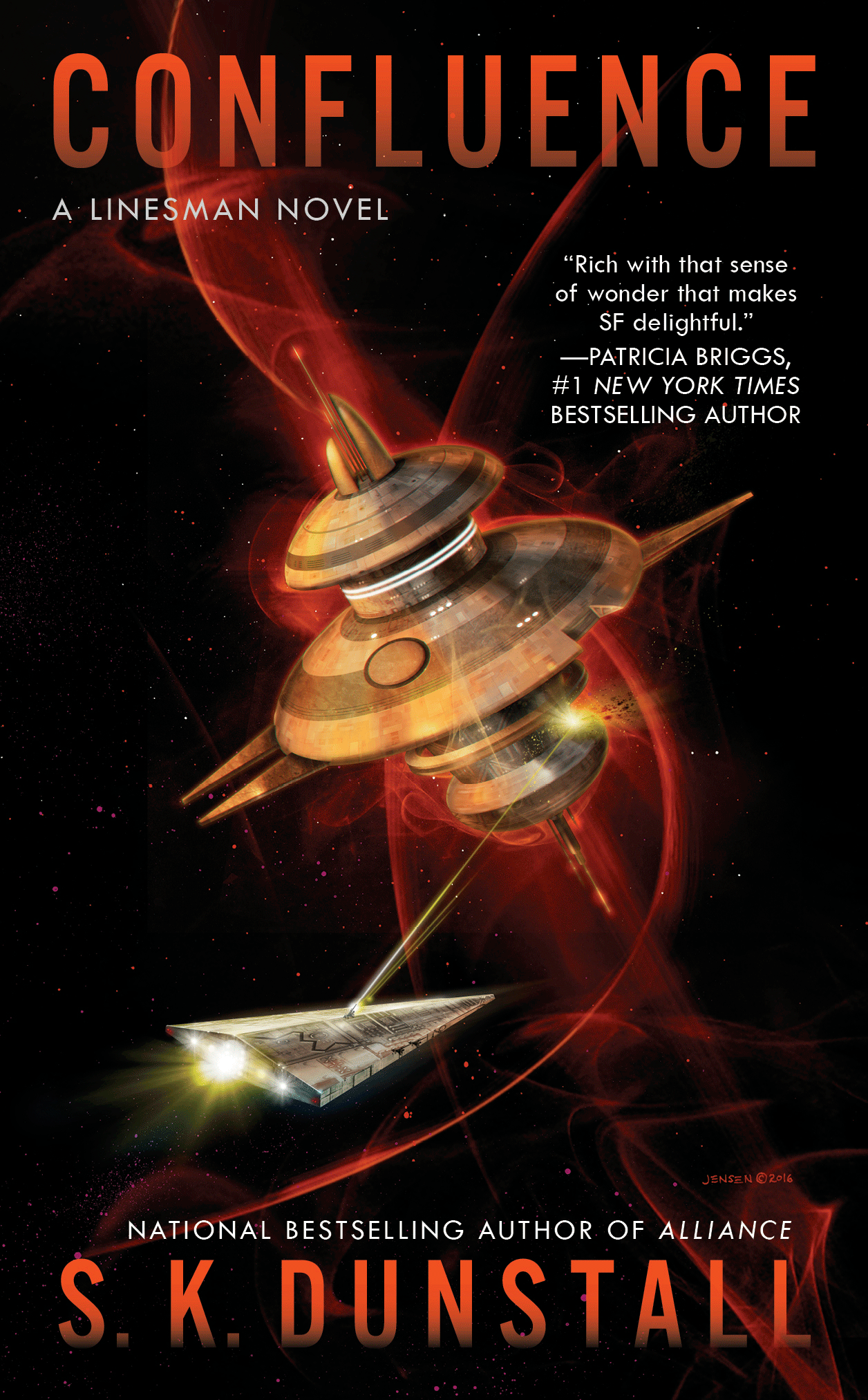
Our editor sent us the cover for Confluence a few days ago, but we haven’t been able to reveal it until now.

Look!

The cover for Confluence. Linesman book three. The book is coming in November.

Isn’t it awesome.

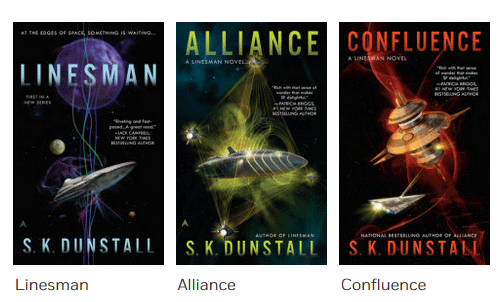
The artist is Bruce Jensen, who did the first two covers. What a trifecta.

LinesmanTrifecta

Categories
Writing process

Tell me more about the lines

WomanAndStarsReadingBookSome technical detail about lines

The other day a workmate who has read Linesman and Alliance asked me, “How do the lines eat?”.

I don’t think fast sometimes. “I don’t know,” I said.

But the fact is, we do know. Sort of.  We don’t know right down to the specific detail, but we know roughly what makes the lines tick.

Here’s my attempt to explain it out loud

First up, lines don’t eat as such. They are bands of energy and will take on energy to strengthen their own bands.  If you like, you can think of it as adding electricity to a battery, but a better analogy would be amplifying a wave in phase so that the strength of the wave increases.

The extra energy comes mostly from the void.  There’s a reason for that, but since we haven’t mentioned that reason in the books yet, I can’t say why.

When the lines aren’t going through the void they can supplement with energy from the Bose engines.  Humans think the Bose engines are only required to get them through the void. They’re not.  They’re also needed for line health. The engines on the alien line ships provide this energy much better than the human-built Bose engines do, so the lines on a healthy alien ships will always be stronger than those on an equivalent human ship.

But what about sentience?

The sentience of the ship is symbiosis.  A line ship’s sentience depends on the people travelling with them, and the emotional strength of their interaction with each other.  The lines need sentience around them to become aware.

Awareness comes from interaction with other sentience.  The more a ship is around other intelligent beings who interact with it the more aware it becomes.

Note the emphasis here.  Human line ships are sentient, but interaction is often one way.  Humans don’t think of their ships as sentient (or they never used to, not unil Ean came along), so they didn’t interact with it.

Except the captains, who bond to their ship.  In a way they become an extension of the lines and the lines extend them. That’s why ships always sound like the captain.

Repairing the lines

We haven’t touched on repairing the lines. That’s a subject for another blog.

Categories
Writing process

Living history

VietnamRiceField

Anzac day

April 25 is Anzac day here in Australia (and in New Zealand). It commemorates servicemen and women killed in war, and honours those who returned.

It’s a big day here, with many thousands getting early up to attend the dawn service.

Nowadays, it’s big, but as a child I remember thinking Anzac day would be a non-event in my lifetime.  Back then only the returned servicemen of the two world wars marched, and they got less every year.

What changed?

Two things.  One, families started marching with their returned servicemen. Just as importantly, veterans from the later wars, like Vietnam, finally started to march as well.

History has turned about-face in my lifetime

Many of the soldiers who fought in the Vietnam were conscripted. They had two choices. Join the army and fight, or go to jail.

Back when I was a child the people who chose to go to jail were the heroes. Those who actually went to Vietnam and fought were pariahs. When they came home many of them were vilified as murderers.

Yet nowadays, it’s the exact opposite.  If you fought in the war you’re a hero, and if you dodged the draft (by going to jail) you’re a pariah.

Our version of history changes according to the times we live in

Our version of history changes according to the times we live.

The Australian involvement in the war lasted from 1962 to 1975. According to Australian Government Vietnam war website:

Vietnam … lasted far longer than previous wars in which Australians had fought and it occurred at a time when societal changes, some brought about by the war, meant that attitudes at the beginning of the war were very different to those at the end. Many of the myths that have arisen about the war are partially attributable to this. Generalisations about one part of the conflict – and the dissent that arose in its final years is one example – do not necessarily apply to another.

Vietnam war myths, Australia and the Vietnam War

My memories of the war are totally about the later years.  I remember the dissent. I remember the vilification. I remember the hostility around the veterans.  Although, according to the same website:

Associated with misunderstandings about the extent and longevity of opposition to the war is a widespread view that those who had served in Vietnam were denied recognition when they returned to Australia and that many veterans of the conflict were treated with hostility by the public … myths and misunderstandings about Vietnam abound … Acts of hostility against returned soldiers were not isolated, but they were not universal.

Vietnam war myths, Australia and the Vietnam War

It also changes according to your own experience

The Vietnam war website gives what is probably a balanced overview of the conflict and the treatment of returned veterans. It wasn’t my experience so no matter how balanced the site is, I’m biased.  It feels like a whitewash.

It’s a bit like the parable of the blind men touching the elephant. Each one feels a different part. The one who feels the ear says the elephant is like a fan, the one who feels the tusk says it is like a solid pipe, and so on.

My experience of the Vietnam war, as a child watching, is totally different to that of an actual veteran, and each veteran will have his own memories, depending on where he was, when he was deployed and how he was received when he came home.

It’s living history

Memories are memories. They fade over time. Some parts of a memory become more important, other parts fade away.

It’s interesting, watching how changes in attitude and a little bit of time alter our historical interpretation of events.

Even in a single lifetime.

Categories
Writing process

Keeping your characters in character

We’ll all be rooned,” said Hanrahan,

“Before the year is out.”

John O’Brien, from the poem Said Hanrahan

Australian’s have a distinct way of speaking.  Like other nations, our accent is becoming more generic, but it still has a distinctive flat tone.

Back in the mid-1960s, Alistair Ardoch Morrison, writing as Affabeck Lauder (get it*) took our accent to extremes and wrote two books about it, the first of which was Let Stalk Strine.

How much is it became emma chisit, decimal currency became dismal Guernsey, and Sydney became Sinny.

If you want to convey an Australian in your book you wouldn’t write it filled with the over-the-top accents from something like Let’s Stalk Strine.  You’d normally try to find a word or two to convey the accent.

One such word used to be ‘mate’. Memo to all you people out there who use it.  Yes, some Australians do say, “Mate.”  More than most of us realise, in fact, but it’s actually a heavy word, and if you use it more than once or twice it comes across as a parody.

So an occasional, “Look, mate,” might convey an Australian—or equally, someone from the UK—but sprinkle ‘mates’ liberally throughout the book and your Australian is nothing more than a caricature.

Heavy-handedness kills believability dead.  When writing characters with accents, or with distinct ways of speaking, we’re often told to go softly on the accent, use one or two words to emphasise. A single word usually suffices.  “Rooned”, for Irish Hanrahan, for example, in the John O’Brien poem, Said Hanrahan, works.

The trick is to make that word sound natural. ‘Gonna’ is a word commonly used to do this.  Or ‘gunna’ if you’re trying to do it with an Australian accent.  I’ve read stories where the author tries to make it sound as if their character is poor and uneducated.  They change every ‘going to’ to ‘gonna’ (or ‘gunna’).  It doesn’t work because every other word around it is in the author’s voice, and for many writers that’s an educated voice.

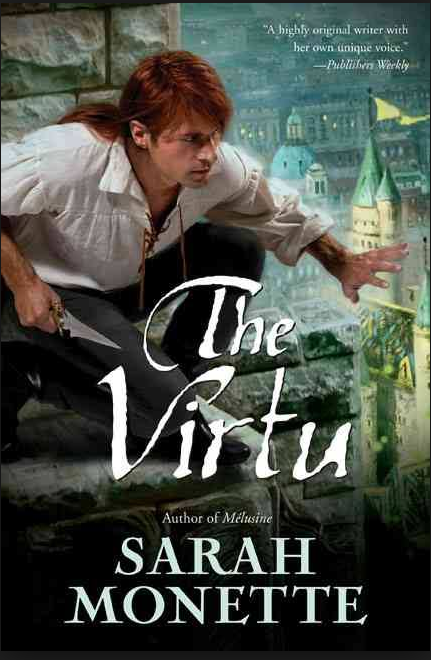
I don't know if this is Mildmay, or if it's his brother, Felix. But Mildmay was a cat burglar, and he is on the roof, so I'm going to assume it's Mildmay, (even if by this book he's lame and probably couldn't do this any more.)
I don’t know if this is Mildmay, or if it’s his brother, Felix. But Mildmay was a cat burglar, and this guy is on the roof, so I’m going to assume it’s Mildmay, (even if by this book he’s lame and probably couldn’t do this any more).

The ‘gonna’ jars, because an educated person does not normally contract their ‘going to’s’.  Of course, in real life. people do. The vice principal at my old secondary school used to say ‘gunna’.  But he spoke well.  I bet when he wrote it down, however, he wrote ‘going to’.

And speaking of poorer people, why do so many people try to write them as stupid? (I’ve read a lot of that lately too.) They’re not. People across every socio-economic status have a range of intelligence. Some of them are stupid, some of them are smart.

Actually, if you want to see how someone presents a truly smart person who comes from a disadvantaged background (and sounds like it), try Mildmay from Sarah Monette’s Doctrine of the Labyrinths series.  I love Mildmay, he’s one of my favourite characters ever, and he’s a truly smart man.

“You don’t got to come if you don’t want.”

The lock was gorgeous, the work of Selenfer and Kidmarsh, who’d been the hot boys in locks back in the Protectorate of Helen.  I ain’t much of a cracksman, not for the fancy stuff, but I could handle an old S-and-K combo. I was glad there was nobody standing behind me with their pocket watch, the way Keeper used to, but it wasn’t no trouble.

Melusine, Sarah Monette

Now that’s how you do it.


*Alphabetical order
And Let Stalk Strine translates to ‘Let’s Talk Australian’.

Categories
Books and movies

The Huntsman

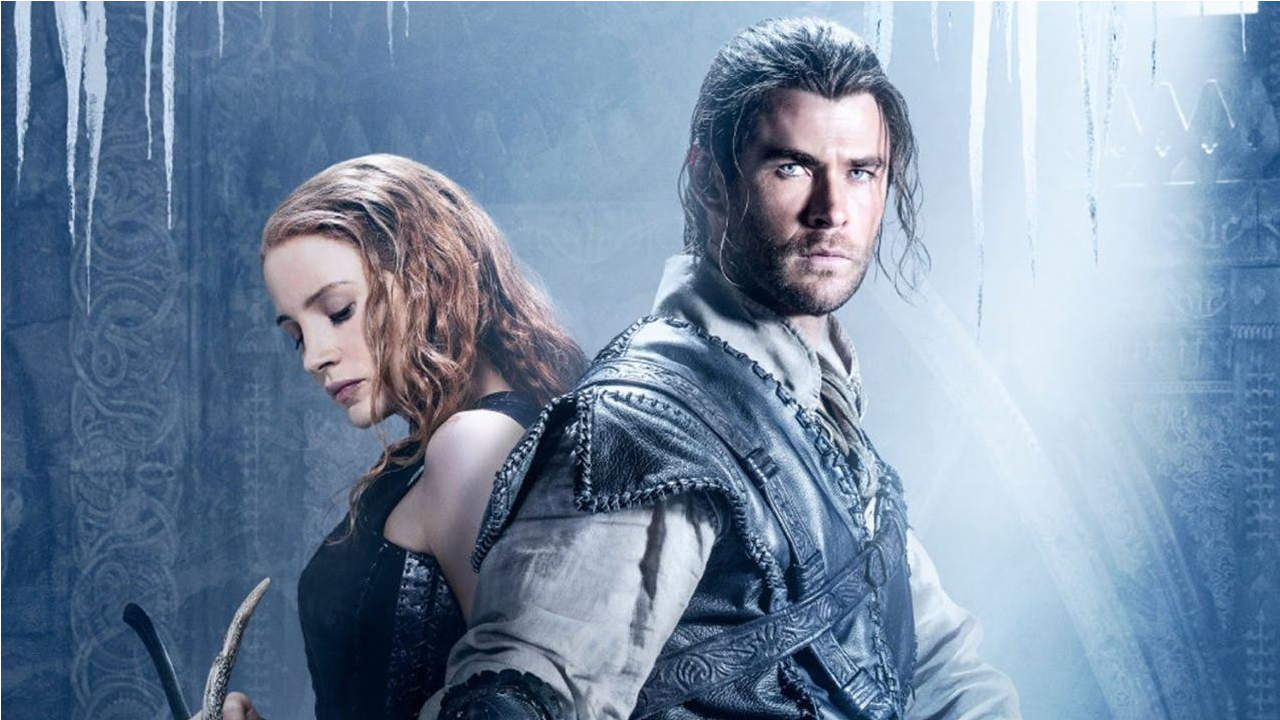
Jessica Chastain as Sara, and Chris Hemsworth as Eric in The Hunstman: Winter's War
Jessica Chastain as Sara, and Chris Hemsworth as Eric in The Hunstman: Winter’s War

Yesterday we saw The Hunstman: Winter’s War.

The reviewer in our local newspaper gave it one and a half stars.

I think they were a little harsh.  I enjoyed the movie. I thought it was much better than the first one.  Sure, it probably won’t win any Oscars, and it would have benefited from a deeper story. But the characters were great.

Ravenna (Charlize Theron’s Snow White’s stepmother) was probably the weakest character (although very in character from the last movie).  Freya (Emily Blunt) was sympathetic, even if she did capture all the kids in the district and set them to fighting for her.  Chris Hemsworth (Eric) and Jessica Chastain (Sara) were great.

In this prequel to the original I really liked the way the backstory for the first movie (Snow White and the Huntsman) was fleshed out and made whole.  Great storyline, and totally believable. It all fitted together nicely.

Plus, it was nice to have a romance without all the usual angst. I mean, there was angst, but most of it was engineered by external parties, and there was a fair bit of trust in the relationship too.

And without giving too much away, there was also a measure of trust between many of the Huntsmen, who, let’s face it, had grown up together.

It was a nice little story.  Just what I was in the mood for.

Categories
Talking about things

Starting a new story

How we feel about our stories -- stage by stage
How we feel about our stories — stage by stage

It’s starting to feel like autumn here in Melbourne, Australia. The other night, coming home, I smelled wood smoke for the first time.  The nights are cool, even if the days are hot. We’ve started to turn the heater on more regularly.  Not that we didn’t turn it on earlier this year, but that was irregularly.  Last month there was one week where it was so hot we turned cooler on, two days after that it was so cold we turned the heater on, and two days after that we turned the cooler on again.

Daylight saving is over. We’re going home in the dark.

Now that we’ve sent the next draft of Confluence away, we’re both reading books. Lots and lots of books.

Binge-reading is fun, but you get to a stage where you read so much you become picky about the books you read. I set aside two good books part-way through because I wasn’t in the mood for them.  I hope I go back to them, because both of them were good, they just didn’t interest me at the time.

Writing’s a bit the same.  How you receive one of your own stories depends on your mood at the time.

Right now, we’re looking at old stories.  At times we think, “Oh, I love this story. This character is so great, and it’s a neat story idea.” Other times we read the same story and all we can think of is, “This story needs so much work.”

Luckily for us, we tend to go through these stages at different times, so when I like a story, all Sherylyn can think about is the rewrites, and vice versa.

It’s fun, looking at the old ideas though. So many ideas already, so many new ideas. Waiting for the little spark that tells you this is the story you can live with for the months of writing it.

Categories
Progress report Writing process

Nearing the end of the first round of rewrites

The edits on the first hundred pages of Confluence.

First round of edits

Mid-February our editor, Anne Sowards, returned Confluence with marked up with comments and suggestions for revisions.

Sherylyn and I talked through the main changes she suggested—storylines to cut/add, suggestions for improvements—and agreed on the basic changes we planned to make.

Then we started work.  Sherylyn went through the story and added comments and highlights about the changes we wanted to make. I came along behind and started making those changes.  When Sherylyn finished the initial mark-up, she went back to the start and began editing the changes I had made.

When I finished my changes, I went back and started editing her changes.

We do this in a single document.  It’s shared on OneDrive.  We show all revisions and comments.  We have Anne’s comments scattered throughout as well, so there are three different reviewers that we’re trying to keep track of.

At the end of all this, we send two copies back to Anne.  The first copy shows the revisions and the comments (just in case she wants to see what we’ve done and where).  The second is a clean copy, with all revisions accepted, and all comments deleted. We’ve never asked if she wants the first one, we just send them both.

Hassles with Word

Around this time in the novel writing process we stop saying nice things about Microsoft Office and how handy the cloud is and start swearing at Word.  And we save every five minutes (which makes things much worse), and swear at Microsoft again.

I like Word. I prefer it to Scrivener and any other word processing software I know of. As a co-author, I also like OneDrive, and the ability for multiple people to work together on the same document.

Word is incredibly powerful.  It has its problems, however.

It struggles with a full 120,000-word novel with mark-up.  Especially when the revisions and comments add at least another 30,000 words. And when the mark-up is across three people.

Toward the end of the revisions, which is where we’re at now, the changes we make are small.  A couple of minor mods on every second page, say.  But they add up, and we might do fifty or more pages in a day.  That’s each person doing that.  If we lose our work we can’t get it back. So we back up frequently.

Every night.  Once onto the hard drive, once onto a flash drive, and once a week onto OneDrive itself.  Paranoid? Us?  Very. We have learned the hard way.

Word’s little foibles

I don’t even want to talk about syncing.  Suffice to say, OneDrive gets itself into a twist occasionally and mixes up which file is the latest.

It doesn’t like people touching the same part of the document.  If Sherylyn adds some text, then I update it by deleting part of it, next time we open the document Sherylyn’s text is back in all its glory. Along with mine.

Or if one of us adds a comment, saying, “Maybe we could fix this by …” and the other agrees, makes the change and then deletes the comment, next time we open the document that comment is back.

Lovely.

We’re nearly done

We’re almost complete. We’re about to change Australian spelling to US spelling. That’s scary, but the last two times we didn’t do it, and the poor copy editor had a lot of words to fix.

Once we send the rewrites off (due early April) we’ll start again with a nice, clean copy, all revisions and comments accepted, for the next round.