Categories
Writing process

Reading roundup 2015

This has been a big year in books for us, because our own first book, Linesman, was published this year.  Our second (Alliance) was edited and will be out in February 2016; and we’ve almost finished writing the third.  As a result, neither of us read as much as we’d like to, because we were writing.

Still, here are some of the stories we enjoyed, or that came to our attention, this year.

Favourite book

Even though we write together and enjoy many similar books, we don’t always have the same favourites.  I (Karen) tend to enjoy the harder science fiction and ideas in the stories, while for Sherylyn it’s all about the character.

Books_2015_VisionInSilver      Sherylyn loved Anne Bishop’s Vision in Silver. She loves all of the books in The Others series, and is waiting impatiently for Marked in Flesh. I like The Others too, but so far I have only read Written in Red.

I don’t know that I had a favourite book this year. I was hanging out for Ann Leckie’s Ancillary Mercy. I only read it on the 31 December, and enjoyed it, but haven’t really decided if it was my best book of the year yet.

Books_2015_AncillaryMercyFavourite character

Sherylyn opts for Meg, from Vision in Silver.  I like Translator Zeiat from Ancillary Mercy (although Sherylyn found her irritating).  I was also quite partial to Captain, from Sorceror of the Wildeeps.
 

Books_2015_FoolsQuest


Best cover

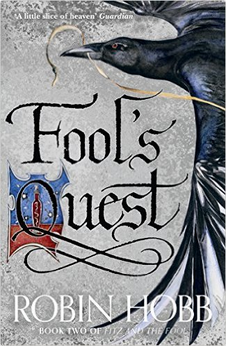
Fool’s Quest, even though we haven’t read it, yet. We’ve got the Jackie Morris covers, and it’s fascinating to see the evolution from drawing to cover on Jackie’s site.
 

Books_2015_TheFogDiverBest creature

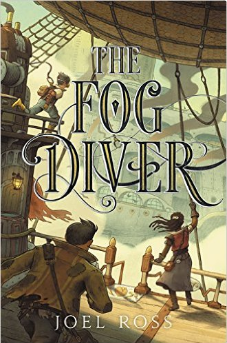
The Fog (nanobots) from Joel Ross’s The Fog Diver.

What can you say about thinking bots that deem humans as dangerous?

Book we want to read but neither of us have got to yet

Fool’s Quest, book two of Robin Hobb’s Fitz and the Fool series.  This came out in August, and we’ve had it on the bookshelf ever since. We got it at a time when we were doing some heavy editing, so it kind of slipped our mind until now.

Other books we read and enjoyed
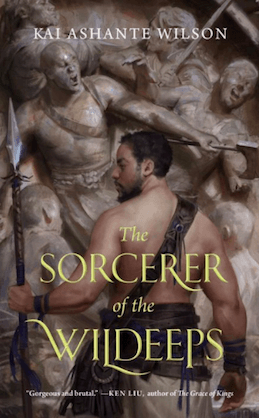
Books_2015_SorcerorOfTheWildeepsSorceror of the Wildeeps, by Kai Ashanti Wilson.

I loved the premise of this book. But the ending. No way. It’s the first book in a long time that I’ve flat out decided didn’t end the way the author implied it did. I so wanted to rewrite the end.
Books_2015_AshAndSilver


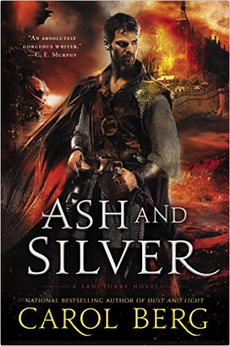
Ash and Silver, Carol Berg

A good follow-up to the first book, Dust and Light.  Lucien had a bit more control of his life (sort of), which was nice.
 

Books_2015_Mapmaker


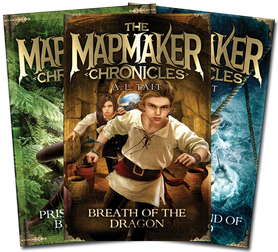
The Mapmaker Chronicles, Alison Tait

I think we read all of these this year. It’s middle grade, about a race around the world, from the point-of-view of the mapmaker on one of the ships. Should appeal to anyone who enjoyed the John Flanagan Ranger’s Apprentice books.

Joel Ross’s The Fog Diver was another enjoyable book for the same age group.
Book_2015_RachelAaronBach

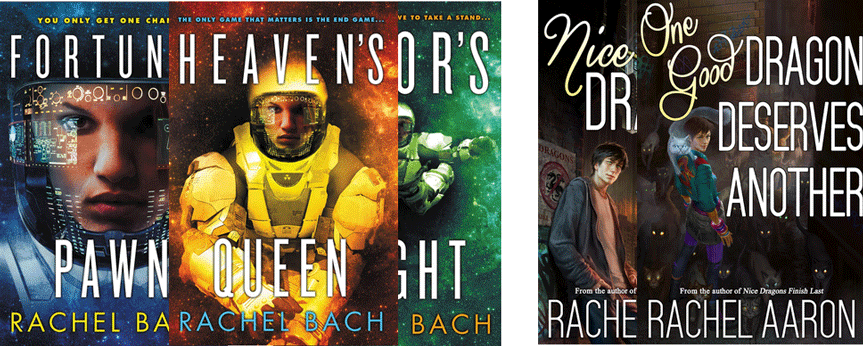
Rachel Aaron Bach’s Paradox trilogy and her Nice Dragons books

We binge read through some of Rachel Aaron Bach’s books this year.


That was our reading. Or some of it, anyway. How was yours?

Categories
Writing process

Reaching your limit for suspension of disbelief

worldwithinternationalmovmentsasshootingstarsThere’s a part in the new Star Wars movie (The Force Awakens) where the good guys are approaching the death star at close to light speed to avoid detection.

Just for a minute I flipped out of the movie, because in one second light can travel around the Earth seven and a half times. I had visions of the ship going round and round the planet in a loop, trying to slow down (undetected, of course), because you can’t stop in a second, no matter how hard you try. Not to mention, when the ship hits something (like trees or rocks), it’s going to hit hard.

The ship comes to a stop (just before a cliff) and I remembered that this is a Star Wars movie, and settled back to enjoy myself again.

Everyone has their own limits as to where they will suspend disbelief in science fiction. But when you hit that limit it can jolt you out of the story. Sometimes you can get back in, sometimes it ruins the story for you.

Take our novel, LINESMAN, in which humans discovered an alien spaceship five hundred years before the story starts. The ship has ‘lines’, bands of energy that allow the ship to jump into the void and come out somewhere else in the galaxy. Humans learned how to clone the lines, and have placed them on every human ship, giving them faster than light (FTL) travel.

Ship lines are maintained by ‘linesmen’, humans who have a special ability to sense the lines and can repair them.

No-one objects to the FTL component. Nowadays most readers of science fiction accept that to get anywhere in a reasonable amount of time we’ll need some form of hyperspace or warp drive. They don’t even object to some of our rather fast transfer times between shuttles and ships in space.

No, the sticking point for some people is that if it takes such specialist skills just to repair the lines, how is it possible that humans can build factories to clone them? We’ve had someone who couldn’t finish the story because they just couldn’t buy the way the lines were cloned.

Luckily for us, how the lines are reproduced isn’t an issue for most people.

It’s interesting how often what we deem less important facts take the reader out of the story, while the major story plot lines, no matter how improbable, don’t.

Categories
Talking about things

If your new Year’s resolution is to build a website

Hacker

Opportune theft is everywhere

Somewhere in the Ukraine there’s a team of hackers who seem to spend all their time trying to break into our website.  It feels like there is, anyway, because for months I’ve been banning Ukraine IPs from the site.

In reality, this Ukrainian hacker is probably a lone IT guy, with a single computer and a great algorithm, but boy do we get a lot of attempted logins from there.  So many it sometimes feels like it’s big business to them.

There are other problem spots that pop up from time to time.  One in China, one in India, one in Brazil, one in the US.  But the Ukraine site (same city, different IPs) just keeps coming.

It’s funny, but until I installed a security program on our website I didn’t realise how often people tried to hack us.

New year’s resolutions

This time next week it will be 2016, and many of us will have made new year resolutions. One year mine was to set up a website.

This year, other people will have the same goal.

Websites (with blogs) are a tad old hat by now. Most people Facebook or Twitter or use one of the multitude of social media outlets out there.  Me, I still love my blog best.  It suits the way I work.

Enough people will start up their own blog to make this particular post useful.  And if it stops a single person being hacked, well, I’ll be pleased to help.

So let’s say you’re someone like me—a writer—and you want to set up a blog or a website.  What can you do to keep the opportune thieves out?

How do you discourage the hackers?

I’m not going to tell you how to protect your site totally, but here are a three simple tips to make it a harder to hack your system.

Tip 1: Strong password

The first one, and the most obvious, is to choose a strong password.  Google ‘strong password’ on the internet and you’ll find out what a strong password is.

And yes, I know they can be hard to remember, but you can train yourself to remember them by turning off the ‘remember this password’ feature and typing in the password every day for a month. I guarantee it will stick eventually.

Tip 2: Don’t use ‘admin’ as a user name

Many programs give you a default login name of ‘admin’.  Don’t use this. Choose something else. 90% of all attempts to hack into your website will do it by using ‘admin’ as the user.  Don’t make it easy for them.

Tip 3: Don’t use the name that is displayed on your posts as the username

Your experienced hacker does try other names on occasion.  Do you know which names they try?  Those displayed on your blog posts. Thus, if you ensure the username doesn’t match the name displayed you’re making it a lot harder for them to log in.

It’s like burglary. You’ll never stop the determined thief with his lock picks and his bag of tools.  But you can stop the opportune thieves—those who see the door open, or the handbag ready to snatch.

There are other things you can do, of course, but these three simple tricks will go a long way to help make your website secure.

Go for it

If your new year’s resolution is to build a website, then go for it.  It’s a lot of fun.

Categories
Book news Progress report

Alliance – sample chapter

It's a peaceful Christmas for both of us. Enjoying it.
It’s a peaceful Christmas for both of us. Enjoying it.

Merry Christmas.

This year has gone so fast.  It’s hard to believe we’ve had one book published and the second is only two months away.

To celebrate, we’ve put up the first chapter of Alliance.

Enjoy.


Categories
Talking about things

Smart magpies

It’s 40 degrees Celsius outside and I’m trying to take a photo of the magpie outside the door.  So far, all I’ve done is scare it away.

So no photo for this blog.

We lived in the country when we were kids. We rode our bikes everywhere.  When we weren’t swimming in the creek, that was.

Spring added an extra hazard to any bike ride.  Swooping magpies, protecting their nests.  (I’m talking the Australian magpie here, which is a different species to the European magpie.)

If you’ve never been swooped by a magpie—it’s scary, and there’s nothing you can do about.  Well, there is, but some of the commonly accepted methods—like putting eyes on the back of your bike helmet, or on an upside-down ice-cream container worn on your head (sans ice-cream, of course)—don’t work.

Magpies are territorial, and we have magpies who live in our yard. They don’t swoop us.  (I hope I haven’t jinxed us by writing this blog.)  Their song is lovely in the morning.  They’re also great mimics.

Anyway the magpies quickly learned that evaporative cooling is as good for them as it is for us.  It doesn’t take them long to find the door we have open when we turn on the air conditioner. And that’s where they settle themselves, right in the breeze, for as long as we have the cooler on.

Categories
On writing

The LINESMAN that got us our agent is not the same LINESMAN that got published

Overheard at a literary function, one writer talking to another.

And now that I’ve sold it and the book’s doing well, you know what, I’m going to go back to that agent who passed and I’m going to say to them, “This is the book you passed on. Look how it’s doing now.”

The writer who was speaking took years to sell her book, but the published book was very successful, especially for a first novel. She and another writer were discussing a literary agent who’d passed on the book, saying something along the lines of, “I enjoyed this story, but I don’t think it will sell.”

So what’s wrong with the comment above? Other than that it’s bad form on the writer’s behalf.

Answer.  The book that is doing well is most likely not the book the original agent passed on.

Let’s talk about our own experience. The LINESMAN that was doing the rounds trying to get us an agent was a vastly different book to the one that finally got published.

The agent who took us on, gave us feedback. Great feedback. Based on her feedback we re-wrote parts of the book. I can’t remember how many times it went back and forth before she was finally happy with it.

Then she started sending it out to editors. We saw some of the feedback.

“Ean is a fantastic character, but the second half of the book needs rework. I don’t think I’d have the time to work with the authors to fix it.”

It went around for twelve months like that. Our editor, Anne, who finally took it on, initially passed on it. She liked the story, but the second half didn’t work for her. But, she said, if we wanted to rework the second half, she’d take another look.

We rewrote the second half. It was a massive rewrite. Sent it back to our agent, who sent it to Anne, who finally accepted.

But the story changes didn’t stop there. We went through at least two more big rewrites with Anne.

By the time the story was ready for publication it was majorly different to the one that got us our agent. Sure, the basic story was the same—Ean was a linesman, the other linesmen thought he was crazy because he sang to the lines—but the rest of it was dramatically different.

It was also a much better book.

So in our experience, that agent the writer at the function was talking about was probably right to pass on the original book. It wasn’t right for her, and she didn’t love the book enough to help turn it into something she could sell.

Categories
Writing process

Do you want to win a copy of Alliance?

Nineteen days to Christmas.  That came up fast.

Christmas in Australia is hot, as you can see by the photo we’ve put at the top of the blog. Except, you’d never see a beach that quiet at Christmas.

A lot of families sit down to roast turkey, ham and roast vegetables. Just as many sit around a barbeque out the back. Each family brings their own plate—salad, cold chicken, seafood or dessert—and puts it onto the table.  Our family has always been a byo plate type. (But without the seafood, as half of them are allergic to seafood. Sherylyn’s one of them.)

The kids run around the back yard while the parents talk.  Everyone plays cricket if the yard is big enough. Some retire after that for a snooze, or to curl up with a good book.

The following day it’s the Boxing Day sales, blockbuster movies and test cricket.

Post a reply here, or on Twitter, or on Facebook. But please, make sure you have the right post.

If you want the chance to curl up with a good book, we’re giving away one ARC* of Alliance, the second book in the Linesman series.  Add a comment here, below this blog post, or post a reply on Twitter to our tweet about the giveaway, or comment on the Facebook post.

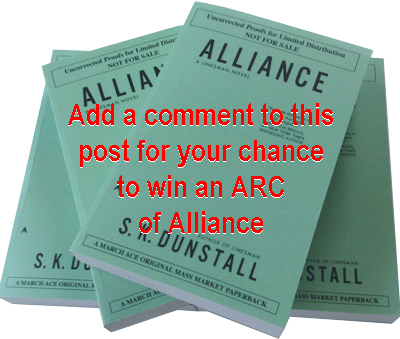
Note, you need to reply or comment to the specific post that mentions the giveaway. The one with the green image, with the red writing on top. Comments on other posts/tweets won’t be included.

It’s open to anywhere in the world.  Winner will be randomly selected.   Entries close midnight Thursday 10th December Australian Eastern Summer time.  (That’s 8am Thursday in New York and 1pm in London.

* The ARC is an Advanced Reader’s Copy. It’s typeset, but hasn’t had the final proofread yet.  There are still typos. Not many, but a few.

Categories
Book news

ALLIANCE – ARCs

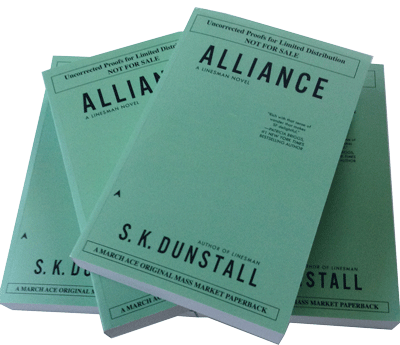
Received these from Penguin Random House a couple of days ago.

AllianceARCs
Uncorrected proofs, also known as advance reader copies (ARCs) and also known as galleys (short for galley proof).

Can you believe, we’ve both been so busy at work we haven’t had time to tweet about it.

These advance reader copies still contain some typos and other errors, but look, it’s a real book.

Categories
On writing

How honest should a writer be about themself?

Judging a work of fiction

There’s a book, I can’t recall which one at present, but it won a major award for fiction.  The Miles Franklin or the Man Booker, or something like that.  It was a memoir.  After it had won the prize, the memoir was exposed as a fake.

My memory is hazy.  I thought the whole kerfuffle happened last year.  (I also thought it was Norma Khouri but her book was written back in 2004 and she didn’t win any major awards that I can see.)  Google, normally reliable, couldn’t help me.

I still can’t find anything about it, so maybe I imagined the whole thing.

What I remember was the fuss that surrounded the outing of the memoir as a fake, and the calls for her (I think it was a her) prize be taken away.

At the time I remember thinking, hold on, this is a prize for fiction. Why should exposing the story as a piece of fiction make a difference to whether she won the prize or not?

It would be different if the prize had been awarded for a memoir rather than fiction.

Surely a work of fiction should be judged on its literary merit.  Shouldn’t it?

And yet, as readers, we can’t help judging the author

There are layers of—let’s call it understanding—between the author and the reader of his/her book.

There’s the reader.  There’s the story they read and interpret.  There’s the story the author thinks they wrote—which can be very different to the story the reader takes away.  There’s the reader’s opinion of that author, based on what they read in that story. And there’s the author him/herself.

As a reader, you start off with little to no idea who or what the author is, except by their writing.

If you like them enough, maybe you go onto the internet and do some research. Read their blog, follow them on social media sites, even interact with them. If you follow them long enough, eventually you get an idea of who you think they are.

If you’re not honest, expect an impact on your readers when they find out

A well-known m/m author who writes under a male pseudonym recently admitted that ‘he’ was a ‘she’.

When I heard, I shrugged, and said to myself, “So what.”  It wasn’t even unexpected. Most m/m writers are female, and a goodly proportion of them write under a male pseudonym or use their initials.

Yet when this writer’s latest book became available I realised I was reading it more critically than usual. Further, the reason I was reading it so critically was that this person who I had thought such a role model for young gay men, wasn’t.

Note that it wasn’t the author who had let me down so much as my perception of that author. I had an idealised image in my mind of who that author was and what they did.

Reader expectations—be honest about the big things

As in the case of the fake memoir I mentioned at the start of this post, the readers who called for the prize to be withdrawn had their own idealised version of who that author was, too.

I understand better now why they were so upset.

Of course, the writer is not responsible for what the reader thinks of them. They can’t be. Every reader has different thoughts, anyway.

But it made me think about the type of things an author should be honest about.

If I had to give advice to a writer about honesty

In these days of internet, especially when authors are encouraged to do some of their own marketing, it’s a rare author whose readers cannot find out something about them.

If I had to give one piece of advice to a writer about honesty, I’d probably say, “Be honest about the important things.”  Don’t pretend to be what you’re not. One of the reasons fake memoirs cause so much angst is because the reader has more invested in the author than they do normally, because this is the author’s supposed story.  And when that turns out to be lies …

You can’t control what a reader believes about you, but as a general rule, if the reader goes to meet you in a public author-reader space—such as a convention or a book-signing—it shouldn’t be a shock.*


*One piece of advice often given to authors is that your author photo should be close to your real age.  Sure, have a good photo if you can, but if you’re a portly 65 year-old, don’t make your author photo a picture of you back when you were eighteen, and skinny as a rake.

Categories
On writing

Stranger in a strange land

Ideas come from everywhere.

On Twitter at the moment there’s a tweet going around about Pet, the sheep, who was brought up with family dogs.

According to her owner, ‘Pet’ was an orphaned lamb who was brought up with the family’s four collies. She thinks the oldest dog is her mother, sleeps in the same basket and followed her everywhere from a very young age.

Watch the video. Watch this one too.

This one’s from a site called Tastefully offensive.

Look at the way she jumps, at the way she wags her tail, at the way she pricks her ears up. This sheep considers herself a dog. I don’t know if she’s ever met another sheep? How would she fare if she did?

How does she get on with strange dogs?

There is so much to Pet’s story. All you need is a little imagination.